
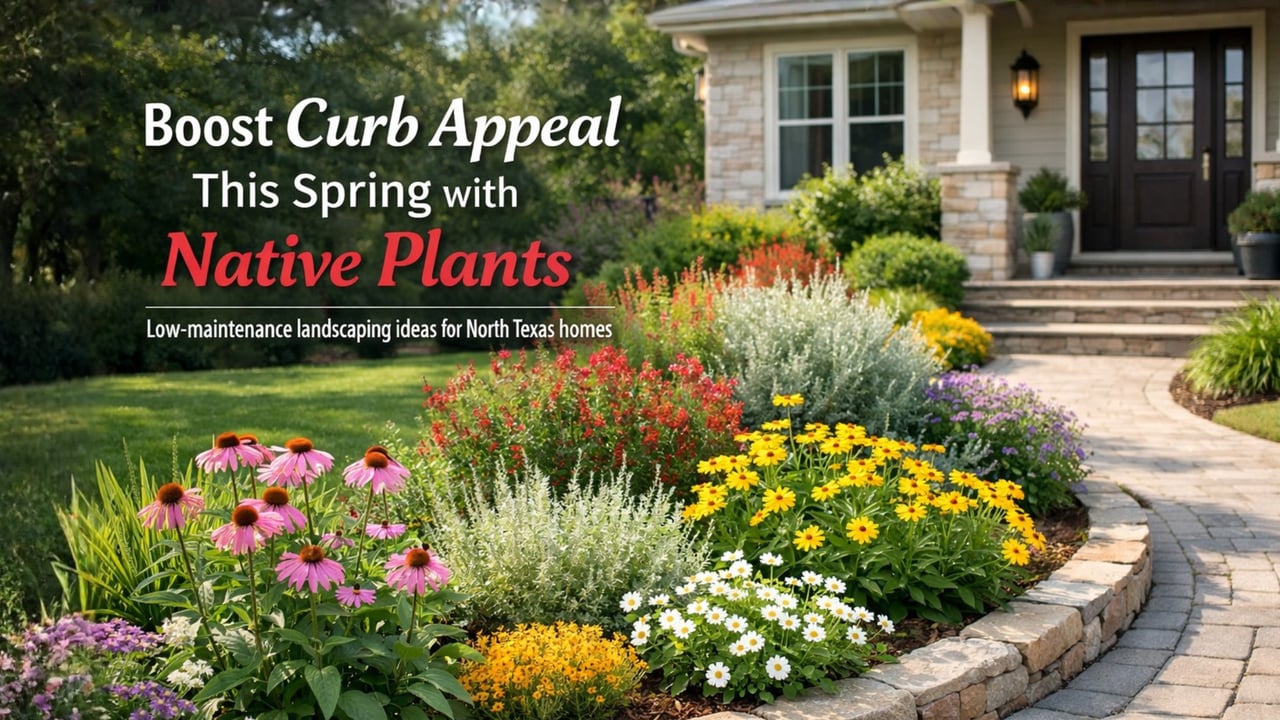
What’s one of the easiest ways to upgrade your curb appeal this spring without creating a high-maintenance yard?
Plant native species that naturally thrive in North Texas conditions.
Because they evolved in our climate, native plants typically require less watering, fewer chemicals, and less maintenance while still creating a beautiful landscape. Texas A&M AgriLife Extension notes that many native plants are naturally adapted to the region’s heat and soils, meaning they often have lower water needs and fewer pest problems than imported species.
If you’re thinking about selling your home—or simply want a more attractive yard—choosing the right plants for the right conditions can make a big difference.
Native Plants That Thrive in Full Sun
North Texas yards often have large sunny areas, especially in front landscapes. These plants perform well in full sun and heat:
-
Blackfoot Daisy – Compact mounds with white flowers that bloom through warm months
-
Texas Lantana – Bright blooms that attract butterflies
-
Autumn Sage (Salvia greggii) – Colorful blooms that handle heat and dry soil
-
Purple Coneflower (Echinacea purpurea) – Native perennial with pollinator-friendly blooms
-
Flame Acanthus – Red-orange flowers that tolerate heat and drought
These plants provide long seasonal color while handling the intense summer sun common in North Texas landscapes.
Native Plants for Shady Areas
Large trees and established neighborhoods often create shady front yards. These plants perform well with limited sunlight:
-
Turk’s Cap – A North Texas favorite with red flowers that thrives in shade
-
Wild Petunia (Ruellia) – Lavender blooms that tolerate shade or sun
-
Horseherb – A native groundcover that spreads easily under trees
-
Pigeonberry – Shade-tolerant with small berries and delicate flowers
Many of these plants grow naturally beneath tree canopies, making them ideal for older neighborhoods with mature landscaping.
Drought-Tolerant Options for Water-Wise Landscaping
With North Texas heat and occasional water restrictions, drought-tolerant plants are increasingly popular.
Consider these resilient choices:
-
Texas Sage (Leucophyllum frutescens) – Silvery leaves with purple blooms
-
Red Yucca – Architectural plant with tall coral flower spikes
-
Mealy Blue Sage – A pollinator favorite with blue flowers
-
Desert Marigold – Bright yellow blooms in hot, dry locations
Once established, these plants require minimal supplemental watering and are commonly used in xeriscape landscapes.
Native Plants for Wet or Poorly Drained Areas
Some yards have low spots where water collects after storms. Instead of fighting those areas, plant species that tolerate moisture:
-
Louisiana Iris – Beautiful blooms that tolerate wetter soil
-
Cardinal Flower – Bright red flowers that thrive in moist conditions
-
Spider Lily – Dramatic flowers that handle damp soil well
Matching plants to soil conditions reduces maintenance and helps landscaping stay healthy year-round.
Lawn Alternatives That Reduce Mowing and Watering
Another landscaping trend gaining popularity in North Texas is replacing part of the traditional lawn with low-maintenance groundcovers.
Common alternatives include:
1. Native Groundcovers
-
Horseherb
-
Frogfruit
-
Sedum varieties
These spread naturally and can create a soft, green appearance with less mowing.
2. Ornamental Grasses
-
Gulf Muhly
-
Little Bluestem
-
Inland Sea Oats
These add movement and texture while requiring minimal watering.
3. Gravel + Native Plant Beds
Many homeowners are replacing turf with native plant beds and decorative rock, a style often called xeriscaping.
Do Lawn Alternatives Hurt Resale Value?
The short answer: not when done thoughtfully.
Most buyers aren’t expecting a golf-course lawn. What they respond to is clean, intentional landscaping that looks easy to maintain.
A few tips if you’re preparing to sell:
-
Keep clear walking paths to the front door
-
Use defined planting beds and edging
-
Avoid designs that look overgrown or wild
-
Maintain some green space near the entry
Well-designed native landscaping can actually be a selling point because buyers often appreciate lower maintenance and lower water usage.
The Takeaway
Using native plants in your North Texas yard isn’t just good for the environment—it’s also a smart strategy for boosting curb appeal. By choosing plants suited to your yard’s sun, shade, and soil conditions, you can create a landscape that looks beautiful while requiring less water, mowing, and maintenance.
If you’re preparing to sell your home, thoughtful landscaping with native plants can help your property stand out while signaling to buyers that the yard will be easy to care for.
Thinking About Selling Your Home This Year?
If you're curious how landscaping improvements could impact your home's value or market appeal, reach out anytime. I’m happy to help you identify simple updates that can make a big difference before listing your home.