
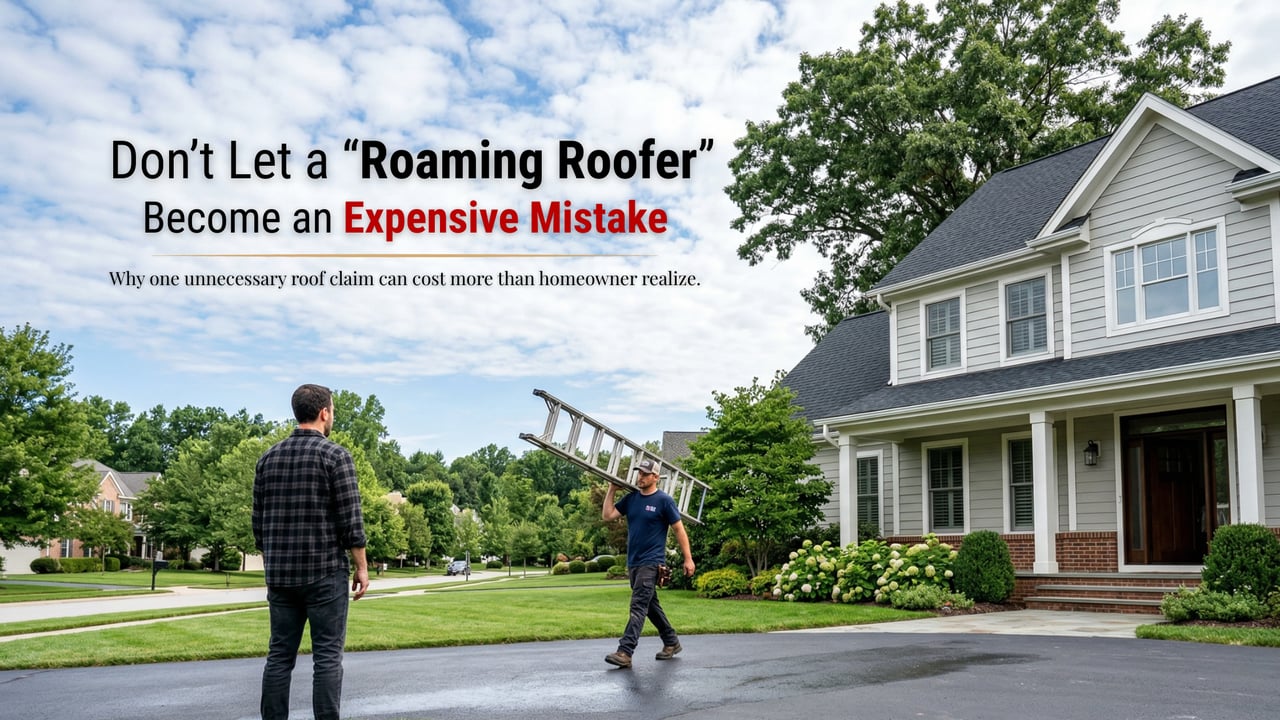
Would you let a stranger who knocked on your door climb onto your roof?
It sounds like an easy “no”—but it happens more often than you think, and it can lead to costly consequences you didn’t see coming.
A Real Story That Could Have Gone Very Wrong
Recently, a friend of mine was out in his front yard when a couple of guys approached him. They said they were roofers working in the area and asked if they could take a look at his roof.
He agreed.
A short time later, they came down with:
- Measurements
- A full diagram
- Photos of what they claimed was “hail damage”
They told him they could help him file an insurance claim and handle everything from there.
He paused.
Instead of moving forward, he decided to get a second opinion and called a trusted roofing professional.
The result?
No damage. None.
His roof is about 10 years old, and while we’ve had a few hailstorms come through, there was nothing that justified a claim.
Now imagine if he hadn’t made that second call.
The Real Risk Behind “Free Inspections”
Door-to-door contractors—often called “roaming roofers”—tend to show up after storms or in neighborhoods where they think homeowners may be vulnerable.
And while not every door-knocker is dishonest, this approach is a major red flag.
Here’s why:
- Misidentified (or exaggerated) damage can lead you to file a claim that gets denied
- Insurance claims—even denied ones—can impact your history and potentially your premiums
- You may be pressured into signing agreements you don’t fully understand
According to industry reports and insurance groups, contractor-related fraud and questionable claims spike significantly after major storm events, costing homeowners and insurers billions annually.
The Deductible Trap (And Why It Matters)
Here’s something you should know:
If a contractor offers to “cover” or “eat your deductible,” that’s not a deal—it’s insurance fraud.
- Your deductible is your legal responsibility as part of your policy
- Waiving or hiding it is considered misrepresentation
- If you participate, you could be implicated as well
Even worse, contractors who make these offers often cut corners elsewhere to make up the difference.
Why This Matters for You as a Homeowner
Filing an unnecessary claim isn’t harmless.
It can:
- Increase your insurance premiums over time
- Create a record of claims that follows your property
- Complicate future coverage or renewals
All of that… for damage that may not even exist.
How to Protect Yourself (Without Becoming an Expert)
You don’t need to become a roofing expert—you just need a simple filter:
Don’t trust someone just because they showed up.
Instead:
- Never rely on a single opinion—especially from someone who knocked on your door
- Avoid high-pressure situations or “we’re already working in your neighborhood” pitches
- Use trusted, vetted professionals with established reputations
- Call your own resource first, not theirs
The Bottom Line
The difference between a smart homeowner and a stressed one often comes down to a single decision: who you trust first.
My friend avoided a completely unnecessary insurance claim—and the long-term consequences that come with it—by simply getting a second opinion from someone reliable.
That’s it.
Need a Trusted Roofer (or Any Home Vendor)?
If you ever need a reliable, vetted professional, I’ve built a network of trusted vendors you can feel confident calling first.
Reach out anytime, and I’ll send you my go-to list.