
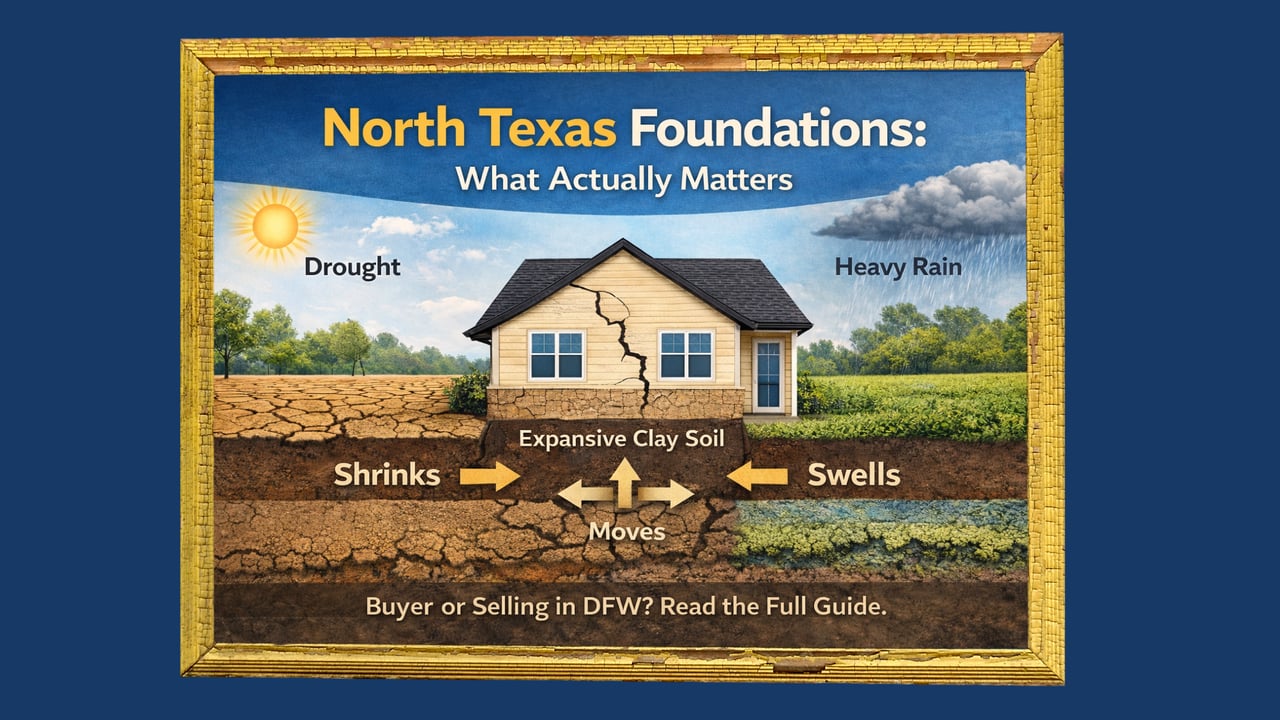
Thinking about foundation issues when buying or selling a home in DFW might not be the most exciting topic—but in North Texas, it is one of the most important. The region’s soil and weather patterns are practically designed to challenge a home’s foundation, and understanding what matters (and what doesn’t) can save you time, money, and stress.
Here’s your go-to guide — whether you’re entering the market or prepping to sell.
Foundations in DFW: What Really Matters for Your Home
The Dallas–Fort Worth area sits atop soil with a high clay content — often called expansive clay soil — that swells when wet and shrinks when dry. This constant movement puts uneven pressure on foundations and leads to common structural issues.
In fact:
-
Expansive clay is so reactive that in some areas of North Texas, moisture changes can cause soil to gain or lose a significant portion of its volume.
-
The climate — swing from drought to heavy rains — makes this worse.
Understanding these regional quirks is essential for buyers and sellers alike.
✅ 7 Things That Truly Matter About Foundations in DFW
1. Soil Type Is the #1 Factor
Homes in Dallas, Fort Worth, Collin, Denton, and surrounding counties commonly sit on expansive clay soils — Blackland Prairie clays — which react dramatically with moisture. This movement causes cracking, settling, and heaving when not properly managed.
2. Weather Extremes Amplify Soil Movement
North Texas weather swings — droughts followed by heavy rain — trigger repeated soil expansion and contraction, placing ongoing stress on foundations.
3. Drainage Around a Home Matters
Water pooling near a house softens soil and leads to uneven expansion. Good gutters, grading, and drainage systems help reduce pressure on the foundation.
4. Moisture Management Is Preventative
Maintaining consistent soil moisture — especially in dry months — helps prevent extreme shrinkage and settlement. Simple methods like soaker hoses around the perimeter can make a difference.
5. Proper Soil Prep at Construction Reduces Problems
Even before a home is built, soil compaction and preparation affect long-term stability. Poorly prepared soil under a slab can lead to early settlement.
6. Inspection Is Key (Especially When Buying)
Minor cracks and shifts are common. What matters is knowing which signs indicate serious foundation distress — a professional inspection can differentiate between normal settling and structural concern.
7. Foundation Work Protects Your Investment
Foundation problems can significantly affect resale value and safety. Addressing issues early — either before selling or after purchasing — protects your investment long-term.
❌ 3 Things That Don’t Really Matter (or Are Overhyped)
✖️ 1. Every Crack Is a “Foundation Problem”
Tiny hairline cracks are often just normal settling or cosmetic. The real concern is consistent or widening cracks tied to soil movement or structural stress.
✖️ 2. Foundation Issues Only Happen in Older Homes
Even newer homes on expansive clay can experience movement if soil wasn’t properly prepared or drainage isn’t effective.
✖️ 3. DIY Fixes Solve Structural Issues
Short of addressing moisture levels and drainage, true foundation repair typically requires professionals and engineering — not DIY patchwork.
🏡 What This Means for Buyers and Sellers
If you’re buying in the DFW metroplex:
-
Ask about the history of foundation issues.
-
Review inspection reports carefully for foundation and drainage notes.
-
Know that slightly shifting foundations are common — but serious movement is not normal.
If you’re selling:
-
Consider a pre-listing foundation inspection to avoid surprises for buyers.
-
Address drainage and moisture control before listing photos and showings.
💬 Got Questions About Foundations in DFW?
Whether you’re navigating buying a home in DFW or helping clients understand potential foundation risks, I’m here to help.
DM or email me anytime for tailored recommendations, inspection referrals, or foundation insights.