
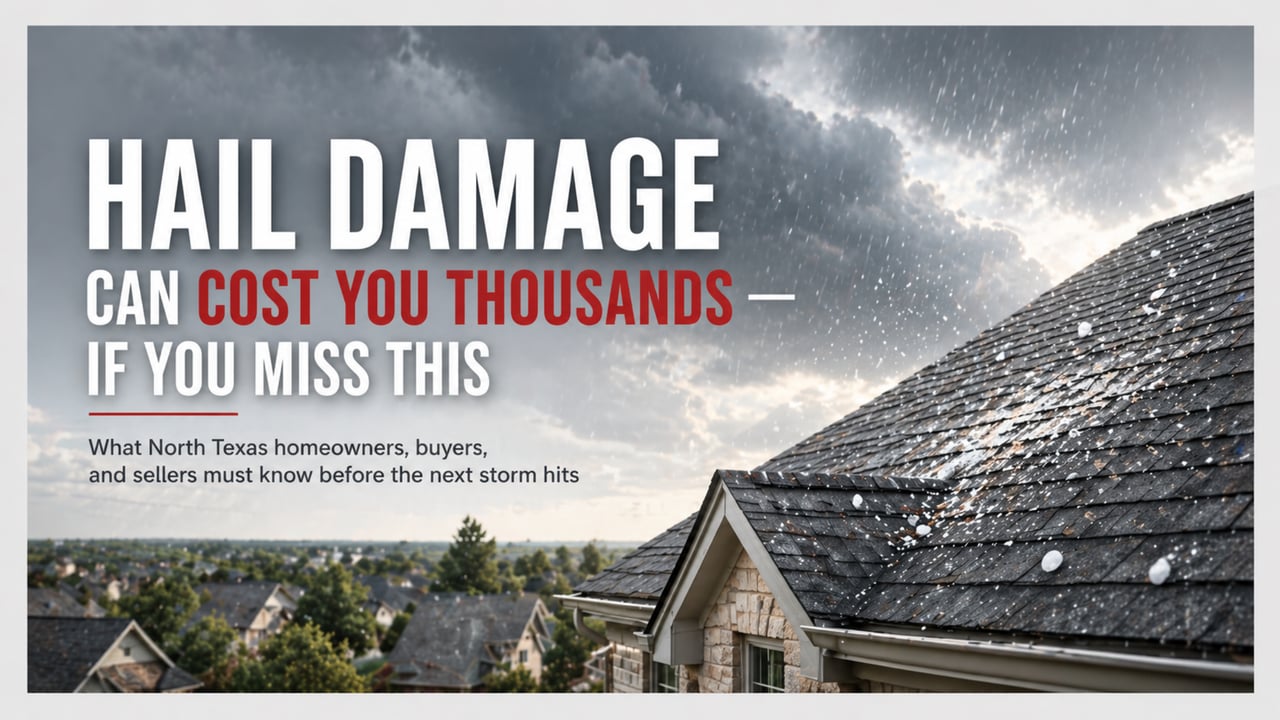
What should North Texas homeowners, buyers, and sellers know about hail damage? Hail damage is one of the most common — and most mishandled — property issues in the DFW area. Knowing how to inspect, disclose and negotiate around it can protect your investment whether you're living in your home, selling it or buying one.
If you've lived in Sachse, Wylie, Murphy, Lavon or anywhere else in North Texas for more than a few years, you already know: hail season is not a maybe. It's a when. We sit in one of the most active hail corridors in the country and a single storm can peel years off a roof's lifespan without leaving a single hole you can see from the ground.
That creates real problems — for homeowners who don't know they have damage, for sellers who don't disclose it and for buyers who skip the inspection and inherit a problem they didn't price in. This post covers all three.
North Texas Hail Damage Guide for Buyers, Sellers & Owners
What Hail Damage Actually Looks Like
You don't need to get on the roof yourself — in fact, please don't. But you need to know what a qualified roofer is looking for so you can verify the assessment.
Hail damage on asphalt shingles shows up as soft spots or bruising — dark, circular indentations where the granule surface has been knocked away. Press gently on a suspected area and you may feel the mat beneath flexing, which means structural integrity is already compromised. You'll also see granule loss: the small sandy coating that protects shingles from UV rays ends up in your gutters and downspout splash guards. After a significant storm, check your gutters. A heavy deposit of granules is a reliable indicator that the roof took a hit.
Don't stop at the roof. Walk the property and check:
- AC condenser fins — hail bends and flattens them, reducing efficiency immediately
- Gutters and downspouts — look for dents, dings, and separation at joints
- Window screens — punctures or tears
- Wood or vinyl siding — hail leaves distinct circular dents or cracks
- Fences — painted wood fences often show fresh dings or paint chips after a storm
Filing a Claim: Do This in Order
- Document everything first. Take photos and video before anything is moved, cleaned or repaired. Include close-ups of individual damage and wide shots that show context.
- Get an independent estimate. Do not let the insurance adjuster's report be the only estimate in the room. Get your own from a licensed, established local roofer before you agree to anything.
- Call your insurer. Report the loss promptly — most policies have a window for storm claims. Ask specifically about your roof coverage and your deductible.
Know What Your Policy Actually Covers
There are two types of roof coverage and the difference matters:
- Actual Cash Value (ACV): The insurer pays what your roof is worth today — depreciated. A 15-year-old roof won't get you a new one.
- Replacement Cost Value (RCV): The insurer pays what it actually costs to replace the roof with comparable materials, regardless of age.
Check your policy right now, before the next storm. If you have ACV coverage on an aging roof, you may want to talk to your agent about upgrading. The Insurance Information Institute has a solid breakdown of policy types if you want to compare.
The Storm Chaser Scam: Know It, Avoid It
Within 48 hours of a major hail event in DFW, out-of-town roofing crews flood neighborhoods like Sachse, Royse City and Lavon going door to door. They offer free inspections, promise to "work with your insurance," and pressure you to sign an Assignment of Benefits before you've had time to think.
Here's what actually happens: they take the insurance payout, do substandard work with cut-rate materials and are gone before you know there's a problem. There's no warranty to call, no local office, no recourse.
How to spot a storm chaser:
- Out-of-state license plates and a crew that appeared right after the storm
- High-pressure tactics or same-day signing pressure
- No physical local address or established online presence
- Reluctance to provide a written contract with material specs
Hire a roofing contractor with a verifiable local presence and references you can actually call. The Texas Department of Insurance has resources on contractor fraud and what to watch for.
For Sellers: Don't Skip This
Disclosure Is Not Optional
In Texas, sellers are required to disclose known material defects on the Seller's Disclosure Notice — and roof damage absolutely qualifies. If you had a claim, disclose it. If you know you have hail damage and choose not to disclose it, you're not just risking the deal; you're risking a lawsuit after closing.
Buyers' agents in this market are trained to look for undisclosed roof issues and independent inspectors will find what you missed or ignored.
Get a Pre-Listing Roof Inspection
Before you put your Sachse or Wylie home on the market, have a trusted roofer out to assess the roof's current condition. This accomplishes two things:
- You know what you're working with before a buyer does.
- You can either address the damage upfront or price accordingly, rather than scrambling during the option period.
A proactively disclosed, properly repaired roof is a selling point. An undisclosed damaged roof found during inspection is a negotiation crisis.
How It Plays Out at the Contract Stage
If a buyer's inspector finds hail damage you didn't disclose, expect one of three outcomes: the buyer asks for a repair, the buyer asks for a price reduction or credit or the buyer walks. All three are worse than disclosing it upfront and having a plan. Sellers who address roof condition before listing spend less time under contract uncertainty.
For Buyers: Protect Yourself Before You Close
Get an Independent Roof Inspection — Every Time
Even on homes built in the last five years. Even if the seller says the roof was just replaced. Even if the home passed the general inspection.
A general home inspector typically does a visual scan of the roof from the ground or eave level. A roofer gets up there and looks at individual shingles, flashing, valleys and penetrations. Those are different products and different findings.
Use your option period. You're paying for it.
Read the Seller's Disclosure Carefully
Look specifically for:
- Roof age — anything over 10–12 years warrants close attention in North Texas
- Prior insurance claims — how many, for what, and when (I ask my trusted Insurance Broker to run a CLUE report for my client. This reports any claims on the property in the previous 5-7 years.)
- Known repairs — who did them and whether permits were pulled
If the disclosure shows multiple hail claims and a roof that hasn't been replaced, that's a conversation to have before you proceed.
Negotiating Hail Damage as a Buyer
If your inspector finds hail damage, you have options. You can ask the seller to replace the roof before closing, request a closing credit equal to the replacement estimate or ask the seller to file a claim (if the damage predates their ownership or policy period). What you shouldn't do is assume the damage is minor and move on without addressing it — a compromised roof can lead to leaks, decking rot, and interior damage that costs multiples of what the repair would have been.
Work with your agent to request the appropriate remedy in writing during the option period.
Frequently Asked Questions
How do I know if my North Texas home has hail damage after a storm? Check your gutters for granule buildup, look for dents on your AC condenser unit and metal gutters, and have a trusted local roofer inspect the shingles for bruising and soft spots. These are the most reliable indicators of hail impact.
Does a new roof always mean a home is hail-damage-free? Not necessarily. A recently replaced roof may have been installed by a low-quality contractor, may use lower-grade materials or may have flashing or penetration issues. Always get an independent inspection during the option period regardless of roof age.
How long do I have to file a hail damage insurance claim in Texas? Texas law generally gives homeowners one year from the date of the storm to file a claim, but your specific policy may have different terms. Review your policy and contact your insurer promptly after a storm event — don't wait to see if the damage gets worse.
Work With an Agent Who Knows This Market
Hail damage is one of the most common negotiation points in North Texas real estate transactions — and one of the most mishandled. Whether you're buying in Murphy, selling in Sachse, or figuring out what that last storm did to your roof in Royse City, having the right guidance makes the difference between a smooth transaction and a costly surprise.
If you have questions about hail damage and how it affects your home's value, your listing, or your purchase, reach out. At Jeanie Marten Real Estate, we help clients navigate this stuff every day.