
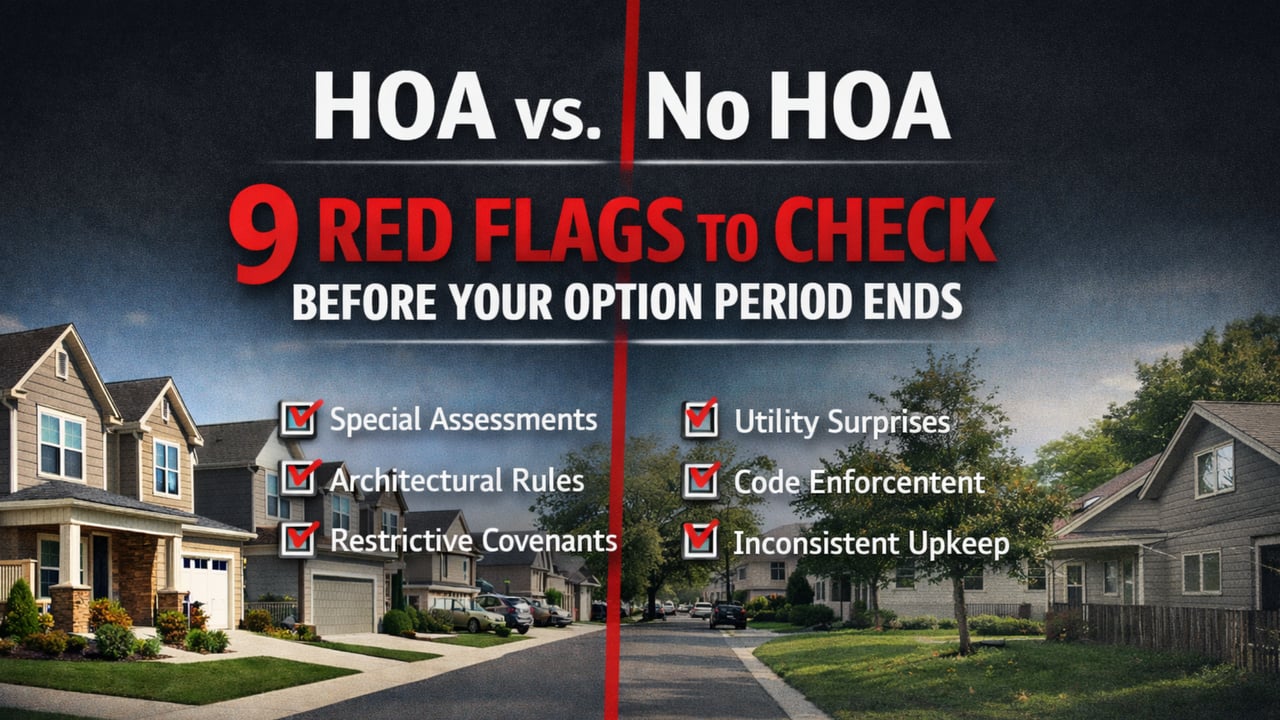
Thinking about buying in an HOA — or intentionally avoiding one?
Before your option period expires, you need more than a surface-level review. The wrong assumptions can cost you time, money, and flexibility.
Whether the property has an HOA or not, there are critical red flags you must review while you still have leverage.
Why This Matters During the Option Period
In Texas, your option period is your window to investigate the property and back out with limited risk. Once it ends, your negotiating power shrinks dramatically.
That means HOA documents, restrictions, and property-level issues shouldn’t be an afterthought — they should be part of your due diligence strategy.
Let’s walk through nine red flags you should review before your option period runs out.
1. HOA Financial Health (If Applicable)
If the home is in an HOA, request and review:
-
Current budget
-
Reserve study (if available)
-
Pending special assessments
-
Delinquency rates
If reserves are low and major repairs are coming, you could be looking at a surprise bill after closing.
In Texas, sellers must provide resale certificates and certain HOA documents, and the standard contract approved by the Texas Real Estate Commission gives you termination rights if you object within the HOA review period — but only if you actually review the documents.
Red flag: Deferred maintenance in common areas paired with low reserves.
2. Restrictive Covenants That Don’t Fit Your Plans
HOAs can regulate:
-
Exterior paint colors
-
Fence types
-
Roof materials
-
Short-term rentals
-
Home-based businesses
-
Parking (including work vehicles)
If you plan to lease the property, add a pool, build a workshop, or run a business from home, check the restrictions carefully.
Red flag: Rental caps or vague “board approval” language that gives wide discretion.
3. Pending Litigation
Is the HOA involved in a lawsuit? Construction defect claims, contractor disputes, or homeowner litigation can:
-
Delay financing
-
Impact property values
-
Create future assessments
Ask directly. Don’t assume it’s minor.
Red flag: Ongoing litigation combined with limited financial reserves.
4. Neighborhood Condition (HOA or Not)
In a non-HOA neighborhood, you won’t have association rules — but you also won’t have enforcement standards.
Drive the area more than once:
-
Weekday evening
-
Weekend afternoon
Look at:
-
Property upkeep trends
-
Long-term maintenance patterns
-
Obvious code issues
In an HOA, check consistency. In a non-HOA area, check variability.
Red flag: Visible long-term neglect nearby that could affect resale appeal.
5. Special Assessments — Current or Likely
Even if there isn’t one now, ask:
-
Are major projects scheduled?
-
Has the board discussed increases?
HOA dues that haven’t increased in years aren’t always a good sign. They may simply be delaying reality.
Red flag: Upcoming roof, road, or exterior projects without adequate reserves.
6. Architectural Review Process
Planning upgrades? You need to understand:
-
Approval timelines
-
Required applications
-
Denial authority
Some associations respond quickly. Others move slowly or inconsistently.
If you’re buying during peak season, timing matters.
Red flag: No clear guidelines or inconsistent enforcement.
7. Insurance Gaps
For HOA properties (especially condos or townhomes), clarify:
-
What the master policy covers
-
What you’re responsible for insuring
There’s a big difference between “studs-in” and “walls-out” coverage.
Red flag: Ambiguity around who insures structural components.
8. Utility and Infrastructure Surprises (More Common in Non-HOA Areas)
In non-HOA properties, especially outside major metro cores, verify:
-
Septic vs. sewer
-
Water source (municipal vs. well)
-
Road maintenance responsibility
If the road is privately maintained, who pays for repairs?
Red flag: Shared private infrastructure without clear agreements.
9. Dues vs. Value Equation
Not all HOA fees are bad. Some provide:
-
Community maintenance
-
Amenities
-
Exterior insurance
-
Landscaping
But the real question is: Are you getting value for what you’re paying?
Low dues with no services? High dues with minimal transparency? Both deserve scrutiny.
Red flag: Fees that don’t align with actual benefits.
Bonus Caution: HOA Rental Caps Can Trap You
Even if you plan to live in the home full-time, life changes.
Job relocation. Market shifts. Investment strategy pivots.
Many Texas HOAs now enforce:
-
Rental caps (a fixed percentage of homes allowed to lease)
-
Waiting lists for landlords
-
Minimum lease terms
-
Board approval requirements
If the community is already at its rental limit, you may not be able to lease the property when you need to.
That restriction can impact:
-
Your flexibility
-
Your exit strategy
-
Your resale pool of buyers
We’ve written an entire breakdown on this issue at Martenteam.com/blog, because it’s becoming more common and more consequential in today’s market.
Bold truth: If long-term flexibility matters to you, rental restrictions deserve serious attention before your option period expires.
HOA vs. No HOA: It’s Not About Preference — It’s About Fit
There’s no universally “better” option.
-
An HOA offers structure and consistency — but less flexibility.
-
No HOA offers freedom — but fewer guardrails.
The key is knowing what you’re walking into before your option period ends.
Because once that deadline passes, you don’t want surprises.
Final Takeaway
Your option period isn’t just about inspections. It’s your investigation window.
Review documents. Ask direct questions. Compare restrictions to your long-term plans. Think beyond today and consider resale positioning.
You don’t just want a home that works now — you want one that still works when it’s time to sell.
Want More Smart Buyer Strategies?
If you’re navigating the Texas market and want to avoid costly missteps, check out our Buyer Guide for more advice and practical next steps.
The right strategy upfront protects your leverage — and your investment.