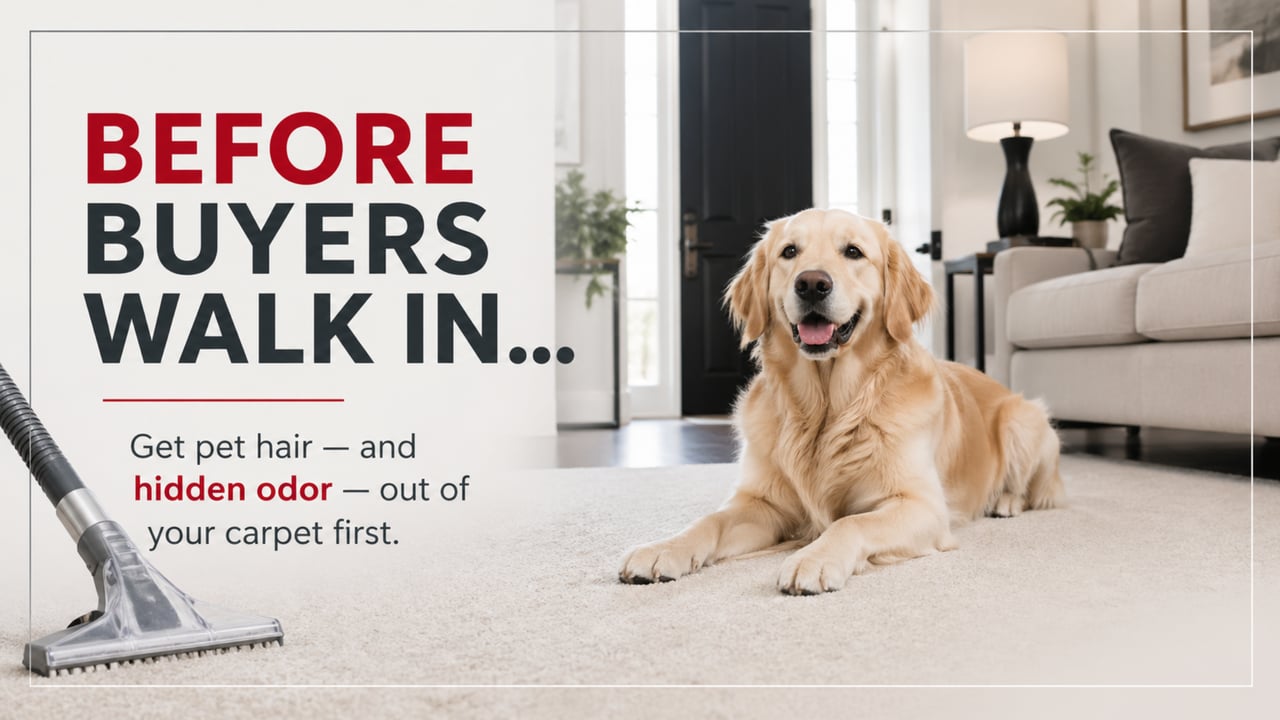
How do you get pet hair out of carpet before selling your home? Start with a rubber squeegee or pet hair removal brush to pull embedded hair to the surface, then vacuum in multiple directions with a high-suction vacuum. Follow with a professional steam clean because the real issue isn't the hair you can see. It's the smell you can't.
Let me tell you what happens when a buyer walks into a home with pets.
In the first ten seconds, before they've looked at the ceiling height or noticed the granite countertops or asked about the backyard, they know. They don't always say it out loud. But their face changes just slightly, they take a half-step back and somewhere in the back of their mind a switch flips from maybe to probably not.
Smell is the number one reason buyers emotionally check out of a showing before it's even started. Not the price. Not the floor plan. Not the paint color. The smell. And in homes with dogs, cats or both, carpet is almost always the source, even when it doesn't look dirty, even when you've vacuumed that morning, even when you genuinely cannot smell it yourself.
That last part is the hardest thing for sellers to hear: you have likely gone nose-blind to your own home. It happens to all of us but it happens faster and more completely when you have pets. You stop registering the odor because your brain filters it out. Your buyers' brains have not.
This is not a character flaw. It's just biology. And it's completely fixable if you address it the right way before you list.
Why Carpet Is the Biggest Offender
Carpet is a trap. It holds pet hair, dander, oils from skin and fur and, in the case of any accident that ever happened, even years ago, odor compounds that survive regular vacuuming and don't go away on their own.
Pet hair that has been walked on and compressed into carpet fibers doesn't come up with a standard vacuum pass. It has to be physically loosened first. And even perfectly hair-free carpet can still smell because the issue isn't the hair itself, it's what lives beneath it and within the fibers.
When buyers walk into a home and catch that first wave of pet smell, a few things happen simultaneously:
- They begin to wonder what else has been neglected
- They start mentally calculating remediation costs
- They lose the emotional connection that makes someone fall in love with a home
In markets like Sachse, Wylie and Murphy where buyers often have multiple options in the same price range, you cannot afford to lose them in the entryway.
Step-by-Step: How to Actually Get Pet Hair Out of Carpet
This is not a job for one quick vacuum pass before a showing. Done properly, it takes a few steps and the results are worth every minute of it.
Step 1: Loosen the Hair First
Before you vacuum anything, you need to break the hair loose from the carpet fibers. The most effective low-cost tool for this is a rubber squeegee or a rubber-bristle pet hair removal brush, the kind sold at pet stores for around $15–20. Drag it across the carpet in short strokes and watch what comes up. What you'll see will likely surprise you, especially in high-traffic areas and anywhere your pet sleeps regularly.
A slightly damp rubber glove dragged across the carpet works almost as well if you don't have a squeegee.
Step 2: Vacuum Slowly — in Multiple Directions
Most people vacuum too fast. For embedded pet hair, you need slow, deliberate passes. Go north-south, then east-west. The change in direction catches hair that one-directional vacuuming misses.
Use the highest suction setting your vacuum allows. If you have a bagless vacuum, empty the canister before you start — a full canister dramatically reduces suction. If you have a bagged vacuum, use a fresh bag.
Attachments matter too. Run the upholstery brush along baseboards and carpet edges, where hair accumulates and is almost never reached by a standard vacuum pass.
Step 3: Treat Any Stains or Accident Areas
Be honest with yourself here. If there have been any accidents on the carpet (even old ones, even ones that were cleaned up immediately) those spots may still hold odor compounds. Use an enzymatic cleaner like Nature's Miracle or Rocco & Roxie, which are specifically formulated to break down pet waste odor at the molecular level. Regular carpet cleaners mask the smell temporarily. Enzymatic cleaners actually eliminate it.
Apply, let it sit for the time indicated on the label, and blot, don't scrub.
Step 4: Get a Professional Steam Clean
This is non-negotiable before listing if you have pets. Not a rental unit from the grocery store, a professional steam clean from a reputable carpet cleaning company. Professional equipment operates at higher heat and extracts more deeply than consumer rental machines.
Ask specifically for a pet odor treatment or deodorizing additive when you book. Most companies offer this as an add-on. It's usually $30–60 extra and absolutely worth it.
Time this right: schedule the professional clean within a week of your listing photos, after you've done the manual hair removal steps above. Cleaning the carpet before clearing the hair out first means the machine is working against embedded debris, always do the manual work first.
Step 5: Address the Air, Not Just the Floor
Once the carpet is clean, the air in the room needs attention too. Pet dander and odor particles don't live only in carpet, they're in the air, on the walls and on soft surfaces like upholstered furniture and drapes.
Run an air purifier with a HEPA filter in the main living areas and any bedroom where pets sleep for at least a week before listing. Wash any pet bedding, blankets or throws that live on furniture. Wipe down walls in rooms where pets spend a lot of time, a diluted white vinegar solution works well and dries odorless.
Do not spray air freshener or plug in fragrance devices to compensate. Buyers notice this immediately and it signals that you're covering something up because you are. Clean air has no smell. That's what you're aiming for.
Before Showings: The Daily Protocol
Once your home is listed, every showing matters. Pets should not be in the home during showings and their presence should be as invisible as possible.
Before each showing:
- Remove all pet bowls, beds, toys, crates, and litter boxes from sight
- Do a quick vacuum of the main traffic areas
- Air out the home for 20–30 minutes if weather allows, open windows and run fans
- Take your pets with you or arrange for them to be elsewhere
If you have a dog door, make sure the area around it is clean. Buyers notice the rubber flap and they immediately look at the floor around it. Keep it spotless.
A Honest Word About Replacement
Sometimes the carpet is beyond what cleaning can fix. If your home has older carpet with years of pet use and the odor is significant, it may be worth having a conversation about replacement, particularly in the main living areas and primary bedroom.
New carpet is not cheap but neither is sitting on the market for an extra 45 days or accepting a lowball offer from a buyer who felt the remediation risk in their offer price. In the North Texas market, entry-level carpet replacement for a main living area typically runs $1,500–$3,500 depending on square footage. Compare that to what a price reduction costs you.
At Jeanie Marten Real Estate, we'll walk through your home with honest eyes before you list and tell you what needs to be addressed, including the hard conversations about odor that most people don't want to have but absolutely need to hear.
FAQ
Can buyers really smell pet odor if I can't? Yes, almost certainly. Pet owners become desensitized to the smell of their own home through a process called olfactory adaptation. Buyers walking in for the first time have no such adaptation. Even low-level pet odor is immediately detectable to someone who doesn't live with it.
Do I need to replace carpet or just clean it before selling? It depends on the age and condition of the carpet and the level of pet use. A professional steam clean with enzymatic treatment handles most situations. However, if the carpet is more than 7–8 years old with heavy pet use, replacement may return more than it costs in your final sale price.
What's the best product for pet odor in carpet before selling? Enzymatic cleaners like Nature's Miracle or Rocco & Roxie are the most effective for odor elimination, not masking. Use them before your professional carpet cleaning appointment. Avoid heavily fragranced carpet powders, which can irritate buyers' senses and signal that you're covering up an issue.
Pet owners make up a significant portion of sellers across Sachse, Wylie, Murphy, Lavon, Royse City and the broader North Texas market and the sellers who address this before listing almost always have better showings, fewer objections, and stronger offers.
Don't let something fixable cost you a sale.