
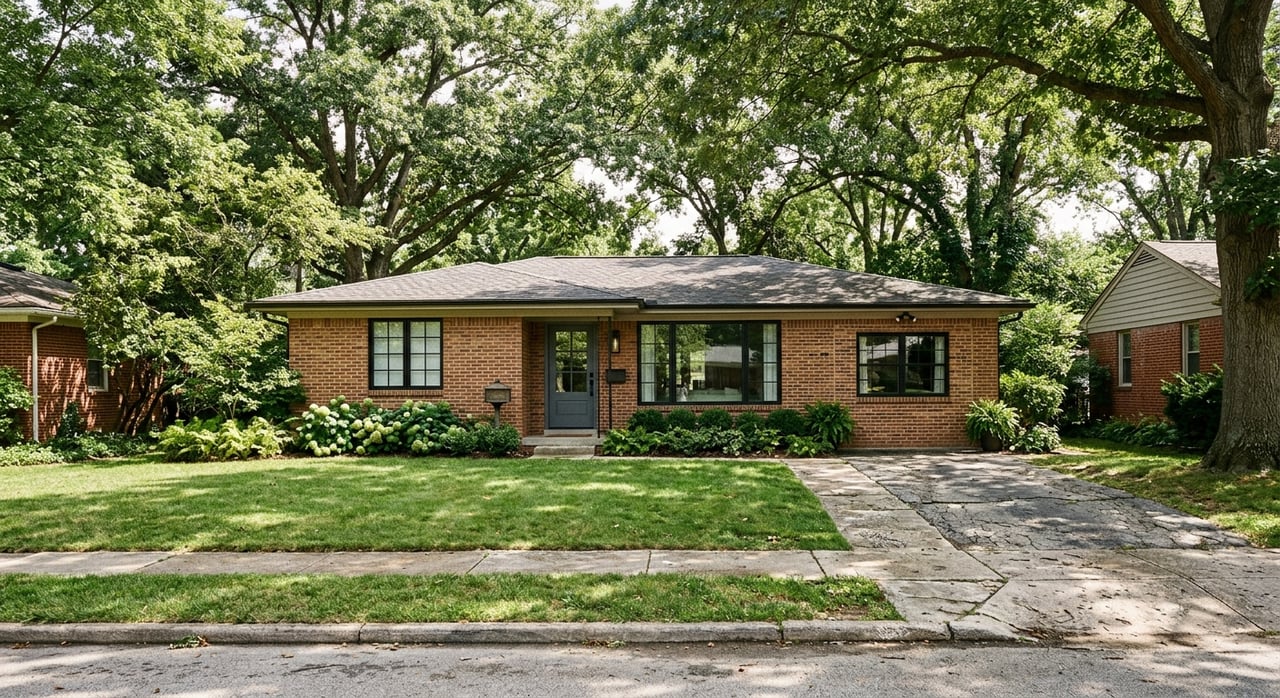
Wondering why one Garland home gets strong offers fast while another sits longer, even when the square footage looks similar? You are not imagining it. Garland is not one simple housing market, and if you read it like a single citywide price point, you can miss what really drives value. In this guide, you will learn how to spot Garland’s micro-markets, what data matters most, and how buyers and sellers can make smarter decisions. Let’s dive in.
Start With Garland’s Baseline
A citywide snapshot is useful, but it is only the starting point. Garland’s current Census profile shows 250,431 residents, a 61.6% owner-occupied housing rate, a median household income of $76,320, a median owner-occupied home value of $270,800, and a mean commute of 29.7 minutes.
That gives you a broad sense of the market, but Garland’s neighborhood story is more detailed. Redfin places Garland’s median sale price at about $295,000, yet that number hides meaningful differences from one area to the next.
Garland’s housing stock also shapes the market in a big way. The city’s comprehensive plan describes Garland as a mature suburb, with nearly 60% of housing built before 1980 and 76% of the housing stock in single-family, duplex, and townhome forms.
For you as a buyer or seller, that means age, updates, lot size, and street layout still carry real weight. In many Garland neighborhoods, condition and modernization can matter just as much as square footage.
Read Garland As Micro-Markets
Garland’s own planning documents support this neighborhood-by-neighborhood view. The city separates different neighborhood and center types, and its 2026 strategic plan focuses reinvestment in selected economic focus areas instead of spreading resources evenly everywhere.
That matters because public investment, access patterns, and neighborhood form can influence how a market behaves. A home near a reinvestment corridor or transit-oriented center may attract a different buyer pool than a home in an established interior subdivision.
The simplest way to read Garland is this: do not compare homes only by city name or ZIP code. Compare them by micro-market, product type, condition, and access to the features buyers in that area actually want.
Firewheel And Northeast Garland
Firewheel is one of Garland’s more premium-leaning submarkets. Redfin shows Firewheel with a median sale price of $422,000 and Firewheel Estates at $585,000, while the 75044 ZIP code overall shows a median listing price of $365,000, a 97.2% sale-to-list ratio, and homes going pending in about 34 days.
Part of that pricing strength comes from amenities. Firewheel Town Center is a major outdoor shopping, dining, and entertainment destination, and Firewheel Golf Park offers three regulation courses on 600 acres.
This area also has a mixed housing profile. Representative listings show homes from the late 1980s, the 1990s, and even newer infill, which suggests buyers here may be comparing updated resale homes, original master-planned homes, and newer product at the same time.
If you are buying in Firewheel, look beyond list price and focus on how each home fits the submarket. Proximity to shopping, golf, and key road connections near the George Bush Turnpike and SH 78 corridor can help explain why two similar homes may not command the same price.
If you are selling here, your strongest pricing story usually comes from nearby homes with similar age, finish level, and amenity access. A broad Garland average is far less useful than hyper-local comps in this part of town.
Central And Established Garland
Central Garland is more mixed, which makes local reading even more important. Realtor.com shows 75040 at a $319,000 median listing price with 41 median days on market, while 75041 sits at a $307,900 median listing price with 53 median days on market.
Inside those ZIP codes, the spread is wide. Realtor.com’s Garland map shows neighborhoods such as Faulkner Point around $149,900, East Garland around $275,000, West Garland around $285,000, and Oakridge around $485,000. In 75041, the same map shows English around $264,700, Axe around $335,000, and Club Hill around $435,000.
That range tells you something important. In central Garland, one neighborhood can behave very differently from another, even when the homes are not far apart on a map.
Downtown Garland adds another layer. Redfin shows a Downtown Garland median sale price of $185,000, while the city continues to position the historic square and surrounding streets as a walkable, event-friendly district with ongoing redevelopment.
Housing age is part of the story here. Garland’s Travis College Hill Historic District includes homes built in 1915 and 1916, and nearby areas also include 1960s-era homes and newer infill.
For buyers, this often means paying close attention to renovation quality, maintenance history, and block-by-block feel. For sellers, it means your home may need to be priced against very specific comparable homes rather than a broad central Garland average.
South Garland And Corridor Markets
South Garland tends to be more price-sensitive and more affected by road access. Realtor.com shows 75043 at a $299,994 median listing price, 48 median days on market, and a 100% sale-to-list ratio, while Redfin shows South Garland at a $295,000 median sale price.
Even within 75043, there is variation. Realtor.com shows Lakeview Windsor Park around $329,000, which is another reminder that ZIP code averages only tell part of the story.
This area is also shaped by corridor activity. Garland’s strategic plan identifies a South Garland wedge bounded by I-635, Centerville Road, Broadway Boulevard, and South Garland Avenue as an Economic Focus Area, and the I-635 East project is continuing through fall 2026.
That does not make every corridor-adjacent home equal. Some buyers may value access and long-term reinvestment, while others may be more sensitive to construction timing, traffic patterns, or noise.
Representative listings in 75043 show homes built in the 1970s, 1980s, and 1990s. So if you are reading South Garland, think in terms of product mix, access, and condition rather than assuming one uniform market.
What Moves Price In Garland
Several factors tend to shape price across Garland, but they do not carry the same weight in every neighborhood. That is why context matters.
Home Age And Updates
Because Garland has a large older housing base, updates can have a major effect on value. In established neighborhoods, buyers often respond strongly to kitchens, baths, flooring, windows, roof condition, and overall maintenance.
If two homes have a similar floor plan but one is more updated, the pricing gap can be meaningful. This is especially true in areas where much of the housing stock dates back several decades.
Amenities And Access
Amenities matter, but differently by location. In Firewheel, destination retail, golf, and road access can support stronger pricing. In Downtown Garland, walkability and the district’s historic setting may matter more. In corridor-influenced areas, commute convenience and reinvestment activity can play a larger role.
Market Speed
Days on market can tell you a lot about leverage. Recent snapshots show about 34 days in 75044, 41 days in 75040, 48 days in 75043, and 53 days in 75041.
For buyers, that can shape how quickly you need to act and how much negotiating room you may have. For sellers, it can help set realistic expectations about timing and pricing strategy.
Product Type And Nearby Comps
The best comparable sale is usually not just the nearest home or the one in the same ZIP code. It is often the home with the most similar age, condition, layout, lot feel, and amenity access in the same micro-market.
That is why a Firewheel listing should not be benchmarked only against Downtown Garland, and a corridor home should not be priced like a premium pocket just because it shares the same city name.
How Buyers Can Read The Market Better
If you are buying in Garland, start by narrowing your search to the neighborhood style and access pattern that fit your daily life. Then compare homes within that same submarket instead of jumping between very different areas.
Pay close attention to these factors:
- Renovation quality
- Home age and maintenance level
- Commute routes and road access
- HOA or community amenities, if applicable
- Nearby redevelopment or corridor activity
School-related demand works a little differently in Garland than in places with fixed attendance-zone assumptions. Garland ISD operates under a Freedom of Choice plan and does not designate school attendance zones during the choice period, so it is smart to confirm campus options and program availability early in your search.
How Sellers Can Price More Accurately
If you are selling, the biggest mistake is relying too heavily on a citywide number or a broad online estimate. Garland’s spread is too wide for that to be a reliable pricing method.
Instead, focus on the closest product match. The most useful comps are usually homes in the same micro-market with similar age, condition, lot characteristics, and access to the same amenities or corridors.
It also helps to be honest about where your neighborhood sits in the market. A beautifully updated home in an older area may outperform nearby listings, but it still needs to be measured against what buyers are willing to pay in that specific pocket.
The Big Takeaway
Garland is best understood as a patchwork of neighborhood markets, not one flat citywide price band. Age, access, amenities, and reinvestment trajectory all shape value, and they do so differently in Firewheel, central Garland, Downtown Garland, and South Garland.
When you read the market at the neighborhood level, your decisions get clearer. You can price with more confidence, compare homes more accurately, and move forward with a better understanding of what is really driving value.
If you want help reading Garland’s neighborhoods with a local, practical approach, reach out to Jeanie Marten. You will get personalized guidance rooted in the way this market actually works.
FAQs
How should buyers compare Garland neighborhoods?
- Buyers should compare Garland neighborhoods by micro-market, home age, condition, amenities, and access rather than relying only on a citywide average or ZIP code.
Why do Garland home prices vary so much?
- Garland home prices vary because housing age, lot patterns, neighborhood amenities, commute access, and reinvestment activity differ widely across the city.
What is the median home price in Garland?
- Recent citywide data shows Garland’s median sale price is about $295,000, but neighborhood-level prices can vary significantly.
How does Garland ISD affect Garland home searches?
- Garland ISD uses a Freedom of Choice plan, so buyers should verify campus options and program availability rather than assuming a home is tied to a single attendance zone during the choice period.
What should Garland sellers use for pricing comps?
- Garland sellers should use comps from the same micro-market with similar home age, condition, and amenity access, because broad citywide numbers can miss important neighborhood differences.