
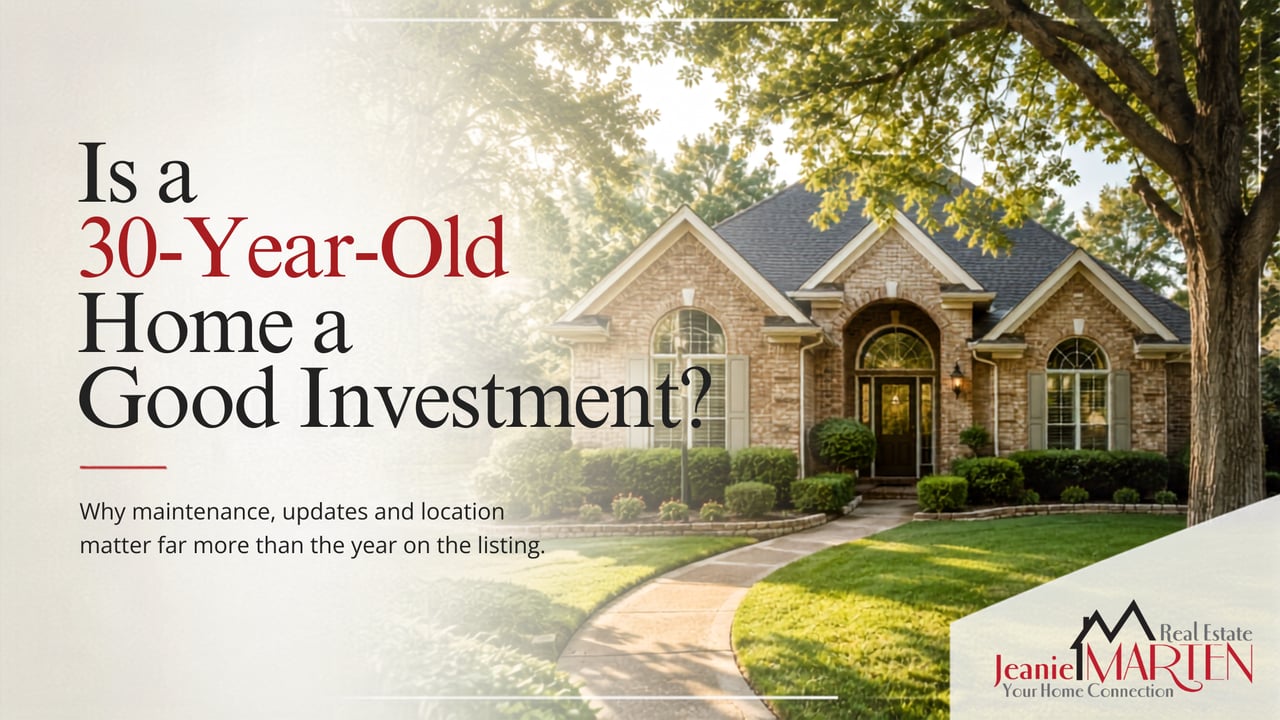
Is a 30-Year-Old Home a Good Investment?
Is a 30-year-old home a good investment? Usually, yes. Nationally, the median U.S. home is about 42 years old and in Texas the median is closer to 28, so a 30-year-old home isn't old by any real standard. What actually matters is maintenance and updates, not the year on the survey.
Last week I was talking with another agent who talked about a 30-year-old home like it was tragic, like the sellers had some nerve asking today's prices for something “that old.” My own home was built in 1996. It turns 30 this year. It is not tragic and neither is a well-maintained 30-year-old home anywhere in North Texas. Let's look at the actual numbers and then talk about what actually matters when you're evaluating an older home.
Are 30-Year-Old Homes a Smart Investment in North Texas?
According to 2024 American Community Survey data, the median age of owner-occupied homes nationally is 42 years. In Texas specifically, the median is just 28 years, one of the youngest housing stocks in the country, alongside Nevada and Arizona. A 30-year-old home here isn't just “not old”, it's sitting almost exactly at the state median and it's 12 years younger than the typical American home. If someone's treating a 30-year-old Texas home like a liability, they're working off a national mental model that simply doesn't apply here.
Older Doesn't Mean Outdated
A home built 30 years ago may have been well maintained and thoughtfully updated the entire time it's been standing. Plenty of owners have already replaced the roof, HVAC, water heater, flooring, or windows which means a buyer gets the benefit of those upgrades without paying new-construction prices for them. Before purchasing any home, it's still worth reviewing the maintenance history and getting a professional inspection, but “30 years old” tells you almost nothing about the home's actual condition on its own.
Established Neighborhoods Have Their Advantages
Many 30-year-old homes sit in mature neighborhoods with large trees, established landscaping and a real sense of community that a brand-new subdivision simply hasn't had time to build yet. These neighborhoods often come with:
● Larger lots
● Wider streets
● Parks and walking trails
● Convenient access to shopping and restaurants
● Nearby schools
● Easy access to major highways
For a lot of buyers, these features matter just as much as anything inside the house.
You May Get More Space
Many homes built in the 1990s offer generous floor plans, larger living areas, spacious bedrooms, sizable backyards. Compared to some newer homes built on tighter lots, older homes often deliver more indoor and outdoor space for a similar price.
Renovations Can Add Value
If a home needs cosmetic updates, don't cross it off the list too fast. Fresh paint, updated lighting, new flooring, or modern kitchen finishes can meaningfully increase both your enjoyment of the home and its resale value over time. A lot of buyers see an older home as a chance to personalize a property while building equity, rather than paying a premium for someone else's finish choices.
Maintenance Is Part of the Equation
Every home requires maintenance, regardless of age but with a 30-year-old home, it's worth specifically understanding the condition of:
● Roof
● Heating and air conditioning
● Plumbing
● Electrical systems
● Foundation
● Windows
A thorough inspection can flag repairs or future maintenance costs before you're locked into closing.
Location Often Outweighs Age
One of the biggest factors in real estate is still location. Many older homes sit in genuinely desirable North Texas neighborhoods close to schools, employment centers, shopping, dining and parks. A strong location contributes to long-term property value in a way that a home's build year simply doesn't.
Compare the Total Cost
New construction often comes with modern finishes and energy-efficient features, while older homes tend to offer more space and more established neighborhoods. Instead of anchoring on age, compare the full picture:
● Purchase price
● Property taxes
● Insurance
● Potential maintenance costs
● Future renovation plans
● Neighborhood amenities
Every Home Is Different
Two homes built in the same year can be completely different properties. One may have been meticulously maintained and updated along the way; another may need significant repairs. That's exactly why it's worth evaluating each home on its own condition and history, not writing it off or assuming it's a bargain, based on the year it was built.
Frequently Asked Questions
Is a 30-year-old home considered old in Texas?
Not by Texas standards. The median age of owner-occupied homes in Texas is around 28 years, so a 30-year-old home is close to typical, not unusually old.
What should I check before buying an older home?
Focus on the major systems (roof, HVAC, plumbing, electrical, and foundation) along with the home's maintenance history and a full professional inspection, rather than the age alone.
Do older homes hold their value as well as new construction?
Often, yes, especially in established neighborhoods with strong locations. Value tends to track condition, updates and location more closely than the year a home was built.
Ready to Find the Right Home?
Whether you're considering a brand-new build or a home that's been part of the community for decades — like mine — the right choice depends on your lifestyle, budget, and long-term goals, not a number on a listing sheet. Jeanie Marten Real Estate can help you compare your options, understand the local market, and identify homes that offer lasting value throughout North Texas. Visit MartenTeam.com or book a consultation.
If you liked this blog, check out this one: What North Texas Homes Built in the 1990s Need Today — a real-life walkthrough of what one 1990s North Texas home has actually needed over the years, and what buyers should plan for.