
What does “location, location, location” actually mean in real estate — and why does it matter so much when you’re buying a home?
In simple terms, location is the one thing you can’t change. You can remodel a kitchen, update flooring, or add square footage — but the surrounding area, access, and long-term desirability of where a home sits are permanent. That’s why location plays such a powerful role in value, demand, and resale potential.
Why Location Matters When Buying a Home
Location isn’t just the city or ZIP code. It’s the entire environment around the home, including convenience, surroundings, accessibility, and how future buyers are likely to perceive the area.
That broader context is why two nearly identical homes can sell for very different prices — simply because of where they’re positioned.
What Makes a Location Desirable for Buyers
Proximity to Everyday Amenities
Homes near shopping, dining, parks, entertainment, and transportation tend to attract stronger buyer demand. Convenience matters — and buyers consistently pay more for locations that make daily life easier.
Neighborhood Demand and Buyer Preferences
Buyer surveys repeatedly show that neighborhood appeal is one of the top decision-making factors when purchasing a home. In fact, studies indicate that over 60% of buyers rank neighborhood quality as a primary influence on their decision.
High demand supports stronger pricing, quicker sales, and better long-term value.
Access and Connectivity
Location also affects how easily you can move through your day. Areas with efficient access to major roads, employment centers, and services typically perform better in resale because they appeal to a wider range of buyers.
Long-Term Appreciation Potential
Upgrades eventually age. Location doesn’t.
Homes in desirable, convenient areas historically experience more consistent appreciation than those in less accessible or less appealing locations — which is why buyers often benefit from prioritizing location over size or finishes.
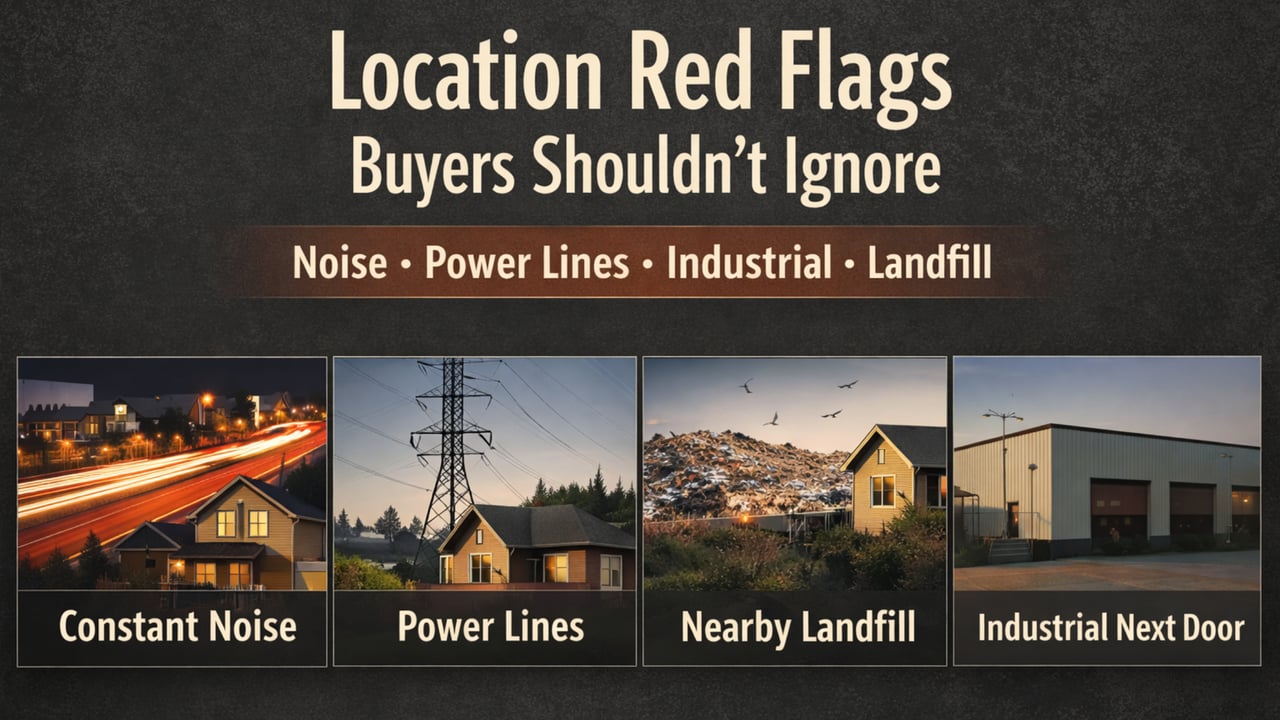
Location Issues Smart Buyers Should Avoid
Just as important as knowing what makes a location desirable is understanding what can hurt value, livability, or resale potential.
Persistent Noise Sources
Ongoing noise is one of the most common location-related deal breakers.
Be cautious with homes near:
-
Highways or major roads
-
Rail lines
-
Airports or flight paths
-
Busy commercial corridors
Homes affected by constant noise often sell for 5–10% less than comparable properties in quieter settings.
High-Voltage Power Lines
Homes located near high-voltage transmission lines can face:
-
Reduced buyer demand
-
Longer time on market
-
Increased price sensitivity at resale
While these properties can still sell, buyer hesitation often impacts value — even when the home itself is well maintained.
Proximity to Landfills or Waste Facilities
Landfills and waste-handling facilities can affect:
-
Odors
-
Visual appeal
-
Perception among future buyers
Even when properly managed, proximity alone can reduce demand and resale confidence, which is why these locations should be evaluated carefully.
Adjacent Commercial or Industrial Uses
Mixed-use development can be convenient, but some adjacencies raise red flags:
-
Loading docks
-
Warehouses
-
Industrial operations
-
Late-night commercial activity
Homes next to incompatible land uses often experience longer selling timelines and a narrower buyer pool.
Environmental or Geographic Constraints
Some locations require extra due diligence, including:
-
Flood-prone areas
-
Drainage challenges
-
Steep slopes
These factors don’t automatically disqualify a home — but they can affect insurance costs, maintenance, and resale appeal.
Overly Isolated Locations
Privacy is attractive, but extreme isolation can limit future demand.
Homes far from services and amenities often:
-
Appeal to fewer buyers
-
Take longer to sell
-
Experience more price volatility
Balance is key.
Why Location Matters More Than the House Itself
Location influences:
-
Buyer demand
-
Resale value
-
Time on market
-
Long-term appreciation
Unlike cosmetic features, location issues can’t be fixed later. That’s why experienced buyers evaluate location just as carefully — if not more so — than the home itself.
Final Takeaway for Buyers
“Location, location, location” isn’t a cliché — it’s a buying strategy.
A great home in the wrong location can be a frustrating compromise.
A good home in the right location often delivers stronger value, flexibility, and peace of mind over time.
When you understand both what to prioritize and what to avoid, you’re better positioned to make a confident, informed purchase.
Thinking About Buying in This Area?
If you’d like help comparing neighborhoods, evaluating location pros and cons, or understanding how specific factors affect resale value in this market, I’d be happy to help you navigate your options strategically.
Reach out anytime to start a smart home search.