
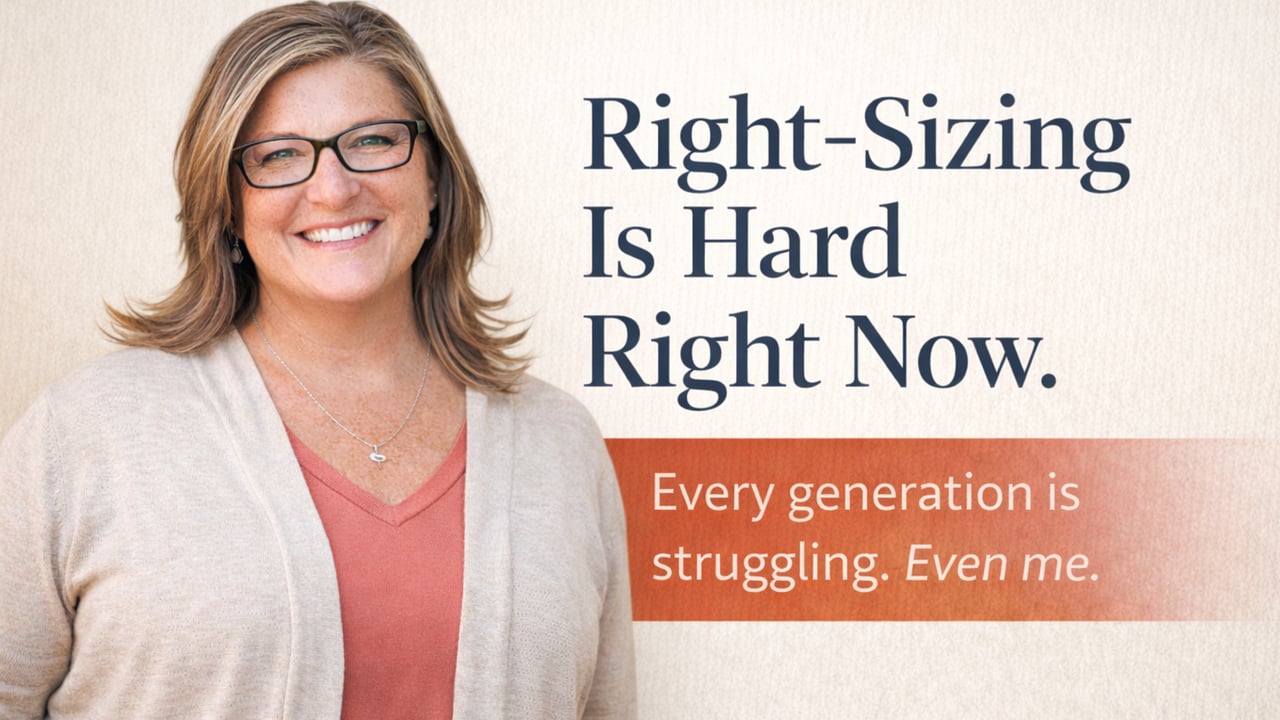
Have you ever looked around your home and thought: “This place doesn’t fit my life anymore… but moving feels impossible”?
That tension is exactly what people mean by right-sizing—and it’s becoming one of the biggest housing challenges of this decade because four generations are colliding in the market at once.
Right-sizing isn’t just downsizing or upsizing. It’s choosing a home that fits your life, layout needs, budget, and future plans—without being forced into a move that creates new problems.
Why right-sizing is suddenly such a big deal
Two forces are squeezing everyone at the same time:
-
The “lock-in effect”: many homeowners are reluctant to move because they don’t want to give up a low mortgage rate. Research from the New York Fed and others has documented how higher rates suppress homeowner mobility.
-
Affordability + limited inventory: entry-level and “next-step” homes are scarce in many markets, making it harder to move up, down, or laterally.
Now, here’s how that plays out—generation by generation.
Baby Boomers: “I might be aging in place… even if it isn’t safe.”
A lot of Boomers want to stay put. AARP’s 2024 survey found 75% of adults 50+ want to remain in their homes as they age.
At the same time, a meaningful share feel they may not have a real choice: Redfin found about 1 in 3 boomer homeowners say they’ll never sell, and many plan to hold for a decade or more.
The biggest Boomer right-sizing challenges
-
Where do I go next? One-level, low-maintenance options can be limited, and competition can be fierce.
-
“The math doesn’t work anymore.” Even if you have equity, a new purchase can mean higher monthly costs (or a mortgage you don’t want).
-
Aging-in-place risk: Staying in a home with stairs, narrow halls, slippery bathrooms, or deferred maintenance can create real safety concerns. Falls are a major issue for older adults, with the CDC reporting falls among adults 65+ caused over 38,000 deaths in 2021 and nearly 3 million ER visits.
Real estate takeaway: For some homeowners, right-sizing isn’t about preference—it’s about reducing risk and improving day-to-day livability.
(Important note: I’m not giving medical advice—if home safety is a concern, it’s worth talking with a healthcare provider and a qualified home-modification professional.)
Gen X (including me): “I need one story… but I’m not giving up my space.”
This is the part I personally relate to: I’m Gen X, and I can see the writing on the wall—a one-story layout makes sense. But I’m also unwilling to shrink my life into half the square footage “just because.”
The biggest Gen X right-sizing challenges
-
Layout matters more than size now. You’re not always trying to go smaller—you’re trying to go smarter: fewer stairs, better flow, flexible rooms.
-
The one-story premium. In many markets, single-level homes (especially with modern finishes) can command a premium, limiting “lateral moves.”
-
The lock-in effect hits here, too. Even if you can move, it might feel like a financial step backward to trade a low rate for a higher one.
-
Life logistics: work-from-home needs, caregiving for parents, supporting kids launching—Gen X often carries multiple responsibilities at once.
Millennials: “We’re trapped between today’s costs and tomorrow’s needs.”
Millennials are often past the “starter home” conversation and into the family/space/function stage—while also getting squeezed by affordability and timing.
The biggest Millennial right-sizing challenges
-
Affordability + financing pressure: Higher rates and prices make “moving up” expensive—even when you need more space or a different layout.
-
Student debt + saving friction: NAR has long tracked how student debt can reduce down payment savings and impact qualification through debt-to-income.
-
A first-time buyer squeeze that ripples upward: NAR reported the first-time buyer share fell to 21% (a historic low), which matters because first-time purchases often free up inventory and keep the “move-up” chain moving.
-
The “make one home do everything” problem: Many Millennials feel pressure to buy a home that works for remote work, future needs, and long-term wealth—so decisions take longer and compromises feel bigger.
Gen Z (my boys’ reality): “The barrier to entry is the entire battle.”
My boys are Gen Z and just entering the market, and their challenge isn’t right-sizing yet—it’s crossing the starting line.
The biggest Gen Z barrier-to-entry challenges
-
Upfront cash hurdle: Down payment, closing costs, inspections, moving—these are tall obstacles, especially while rent is high.
-
Monthly payment shock: Rates + prices can push payments beyond comfort quickly, even when income is decent.
-
Debt burden: Student loans can directly limit saving and qualifying. (This is showing up widely in consumer research and mainstream housing reporting.)
-
Competition and scarce entry-level inventory: When inventory is tight and all-cash or higher-down-payment buyers are active, it can feel like the goalpost keeps moving.
-
Fear of making a “forever mistake”: With affordability stretched, many Gen Z buyers feel like they only get one shot—so they hesitate, overanalyze, or wait.
Other challenges affecting every generation right now
-
Low inventory limits good options, especially “in-between” homes (not tiny, not luxury).
-
Higher insurance + taxes in some areas can change the affordability math after you move.
-
Renovation costs make “buy and adapt” harder than it used to be.
-
Longer homeowner tenure means fewer homes cycling back into the market—keeping pressure on supply.
Final takeaway
Right-sizing isn’t a simple downsize/upsize decision anymore. It’s a strategy problem—and every generation is facing a different version of it:
-
Boomers: safety + suitable options + emotional/financial friction
-
Gen X: layout needs + one-story premium + “don’t take my space” reality
-
Millennials: affordability + life-stage needs + debt/savings drag
-
Gen Z: barrier-to-entry + payment shock + competition
If you’re thinking about right-sizing (or trying to help a parent or adult child navigate it), the smartest first step is clarity: What do you need your home to do for you over the next 3–5 years? From there, you can map options that fit your lifestyle and the math.