Which rugs should you use when staging your home to sell? Choose neutral-colored, properly sized rugs for each room. A rug that's too small is the most common staging mistake sellers make and it makes rooms read as smaller in listing photos.
If you've already read our guide on how to stage your home for under $500, you know that small updates drive big results in listing photos. Rugs deserve their own conversation. They're one of the most misused staging tools sellers have and one of the easiest to get right once you know the rules.
The reason rugs matter so much is simple: listing photos are where buyers make their first decision. A rug anchors a room, defines the space and gives buyers an intuitive sense of scale. When you walk into a properly furnished room in a photo, you don't consciously notice the rug. But take it away, or use the wrong size and the room suddenly feels flat and hard to read.
In open floor plan homes (which describes most of the new construction in Sachse, Wylie and Murphy), rugs are especially critical. Without them, a large open living and dining area reads as one undefined blob of flooring in photos. A properly placed rug in each zone creates two distinct spaces and that's exactly what buyers want to see.
The Single Biggest Rug Mistake Sellers Make
It's using a rug that's too small.
A rug that floats in the center of a room with furniture around its edges makes the entire room look smaller than it is. It draws the eye inward instead of outward. Every room you're staging needs a rug that's large enough to anchor the furniture in it.
Here's how to get the sizing right, room by room.
Living Room
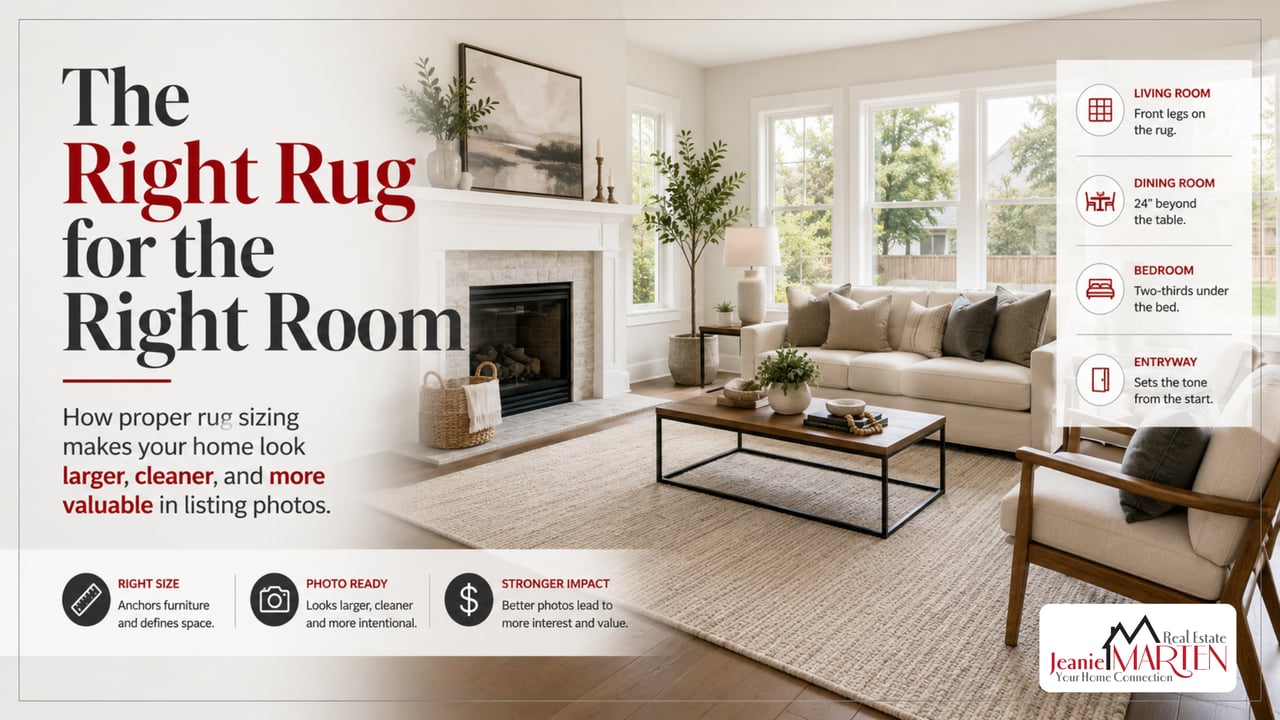
Size: At minimum, an 8x10 rug for most living rooms in North Texas builds. The front legs of every major piece of furniture (sofa, chairs, sectional) should sit on the rug. If you're not sure whether your rug is big enough, it probably isn't.
Color: Stick to warm ivory, light gray or natural fiber (jute or sisal). These photograph cleanly and don't compete with the walls or furniture.
Pattern: Avoid bold patterns. A solid rug or one with a subtle texture is almost always the better call. Bold geometric prints and busy medallion designs draw attention to themselves rather than letting the room breathe.
What to remove: Persian rugs with lots of color, anything with a heavy fringe and busy medallion patterns. These tend to read as dated in photos, even when they're high quality in person. Put them in storage for the listing period.
Dining Room
Size: The rug should extend at least 24 inches beyond all sides of the table. The test is simple: when you pull a chair out from the table to sit down, all four legs of that chair should still be on the rug. If a chair leg drags off the edge of the rug when someone sits, the rug is too small.
Pile: Go flat-weave or low-pile here. Dining room rugs take a beating during showings (foot traffic, chair movement) and a flat-weave stays clean and presentable far more easily than anything shaggy or high-pile.
Avoid: Shag rugs under a dining table. They're hard to keep clean, they photograph poorly and they make the space feel less intentional.
Primary Bedroom
Size: An 8x10 rug placed so that roughly two-thirds of the rug slides under the bed frame. You want equal exposure at the foot of the bed and on both sides. The alternative is two matching runners, one on each side of the bed, which works especially well in rooms where a full area rug would crowd the space.
Color: Same principle as the living room: warm ivory, light gray or a natural fiber. The rug should support the bedding, not compete with it.
Avoid: Animal print, bold color or anything that pulls focus away from how the bed is dressed. Buyers are looking at the bedroom as a retreat, the rug should fade into that feeling, not fight it.
Entryway and Foyer
This is the first room buyers see when they walk in and it sets the tone for everything that follows. A fresh, clean runner or accent rug in the entry signals that the home has been well maintained.
Replace worn or stained entry mats before photos are taken. This is non-negotiable. A beat-up mat at the front door sends exactly the wrong message before a buyer has even stepped inside.
Avoid: The rubber-backed utility mats sold at big box stores. They look temporary because they are. Spend $30 to $50 on a proper cotton or low-pile runner and the entryway immediately looks more finished.
What If You Have Carpet?
Generally, you do not need a rug on top of carpet. It adds visual clutter and makes a room feel smaller and busier.
The exception: if you have worn or stained carpet in an entryway or bedroom and replacing it before listing isn't in the budget, a strategically placed rug can cover the damage. This is a practical solution but make sure the rug you choose still follows the sizing and color rules above. A small, cheap rug thrown over a stain calls more attention to itself than it hides.
According to the National Association of Realtors, flooring updates are among the top staging priorities flagged by real estate professionals. Getting the rugs right is part of that calculus.
Where to Buy on a Staging Budget
You don't need to spend a lot. Good neutral rugs in the right sizes are widely available under $150:
- Ruggable — washable covers are practical for active listings with lots of foot traffic
- IKEA — reliable neutral options, affordable sizing
- Target — consistent quality in the under-$100 range
- HomeGoods — hit or miss on selection, but worth checking in person
- Wayfair — wide size selection, easy to filter by color and pile height
The goal isn't a permanent design investment. You need rugs that photograph well, hold up through showings and give buyers the right impression.
FAQ
Does the size of the rug really matter that much in listing photos? Yes. A rug that's too small is one of the most common staging mistakes and it's highly visible in photos. It makes rooms look smaller and less finished. Buyers browsing online listings on Zillow or Realtor.com are making split-second decisions and a room that looks off will get passed over.
Should I use a rug in every room when I sell my home? Not necessarily. Focus on the living room, dining room, primary bedroom and entryway. These are the rooms buyers spend the most time evaluating in photos and during showings. Skip rugs in rooms with carpet unless you're covering a specific problem.
What colors should I avoid when choosing staging rugs for a North Texas home? Avoid anything bold, heavily patterned or color-specific. Bright red, deep navy, bold geometric prints and Persian-style patterns with lots of color all pull focus in photos. Warm ivory, light gray and natural fiber tones (jute, sisal, natural cotton) are the safest choices because they work with almost any wall color and furniture finish.
Selling in Sachse, Wylie, Murphy, Lavon or Royse City? The team at Jeanie Marten Real Estate will walk you through exactly what your home needs before it hits the market, from rug placement to pricing strategy. Small details add up, and we know which ones buyers in this area actually notice.