
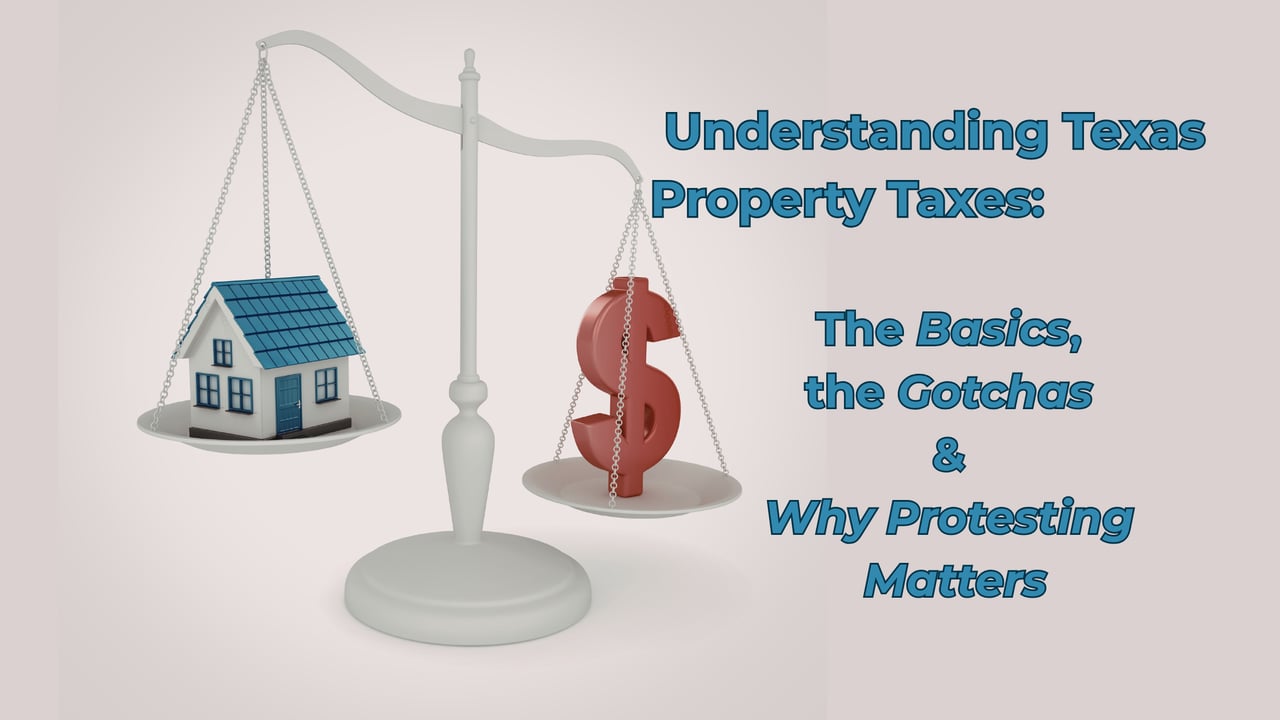
Are you confused about how Texas property taxes actually work—and why your bill seems to climb even when your home hasn’t changed?
You’re not alone. Texas property taxes are one of the most misunderstood (and frequently frustrated-about) parts of homeownership, especially for people relocating to or investing in the state.
Here’s a clear breakdown of how Texas property taxes work, a few advanced details most homeowners miss, and why protesting your value is often more important than you think.
The Basics: How Texas Property Taxes Really Work
Unlike many states, Texas has no state property tax. Instead, your property taxes are assessed and collected at the local level.
Your annual property tax bill is based on three main components:
-
Appraised Value
This is the value assigned to your home by your local appraisal district. It’s meant to reflect market value as of January 1 of each year—not what you paid and not what your neighbor paid. -
Taxing Entities
Multiple local entities can levy taxes on your property, including:-
County
-
City
-
School district
-
Special districts (like MUDs or hospital districts)
-
-
Tax Rates
Each entity sets its own rate annually. Your total tax rate is the combination of all applicable entities.
Simple formula:
Appraised Value × Combined Tax Rate = Property Tax Bill
Why Appraised Value Matters More Than Tax Rate
Many homeowners focus on tax rates—but your appraised value is the lever you can actually influence.
If your value jumps 10%, your tax bill usually follows, even if rates stay flat.
Important nuance:
-
Appraisal districts use mass appraisal models, not individual home inspections
-
Errors happen—often
-
Homes are frequently overvalued based on limited or outdated data
Advanced Insight #1: Market Value vs. Assessed Value
Texas law requires appraisal districts to assess property at market value, but that doesn’t mean the number is automatically correct.
Common reasons values are inflated:
-
Sales used as “comps” don’t reflect condition differences
-
Renovations are assumed but never verified
-
Declining or softening micro-markets aren’t reflected quickly
If your home would realistically sell for less than its appraised value, you may already have a strong protest case.
Advanced Insight #2: Homestead Caps Don’t Stop All Increases
If your property has a homestead exemption, your assessed value increase is capped at 10% per year—but that doesn’t mean your taxes are.
Here’s why:
-
New improvements can bypass the cap
-
Tax rates can increase
-
A capped value can still rise every year
Many homeowners assume the cap protects them more than it actually does—and stop paying attention.
Advanced Insight #3: “Everyone’s Value Went Up” Is Not a Defense
One of the most common myths is that protesting doesn’t matter because “everyone’s taxes went up.”
That’s exactly why protesting matters.
Appraisal districts don’t automatically correct overvaluations. If you don’t challenge your value, it becomes the new baseline for future years—compounding the issue over time.
Why Protesting Your Texas Property Taxes Is So Important
Protesting isn’t about gaming the system. It’s about making sure your value is fair, accurate, and defensible.
A successful protest can:
-
Lower your current tax bill
-
Reduce future increases
-
Correct errors that would otherwise compound
-
Take surprisingly little time with the right data
Even modest reductions can add up to thousands of dollars saved over time.
Final Takeaway
Texas property taxes aren’t just about rates—they’re about valuation, accuracy, and advocacy.
If you own property and haven’t reviewed your appraisal critically, you may be overpaying without realizing it. Understanding the system is the first step. Taking action is the second.
Want to Know If You Have a Strong Protest Case?
If you’d like a quick, no-pressure analysis of your property value, email me and I’ll review your appraisal against real market data to see if a protest makes sense for you.
A few minutes of review could save you years of overpaying.