
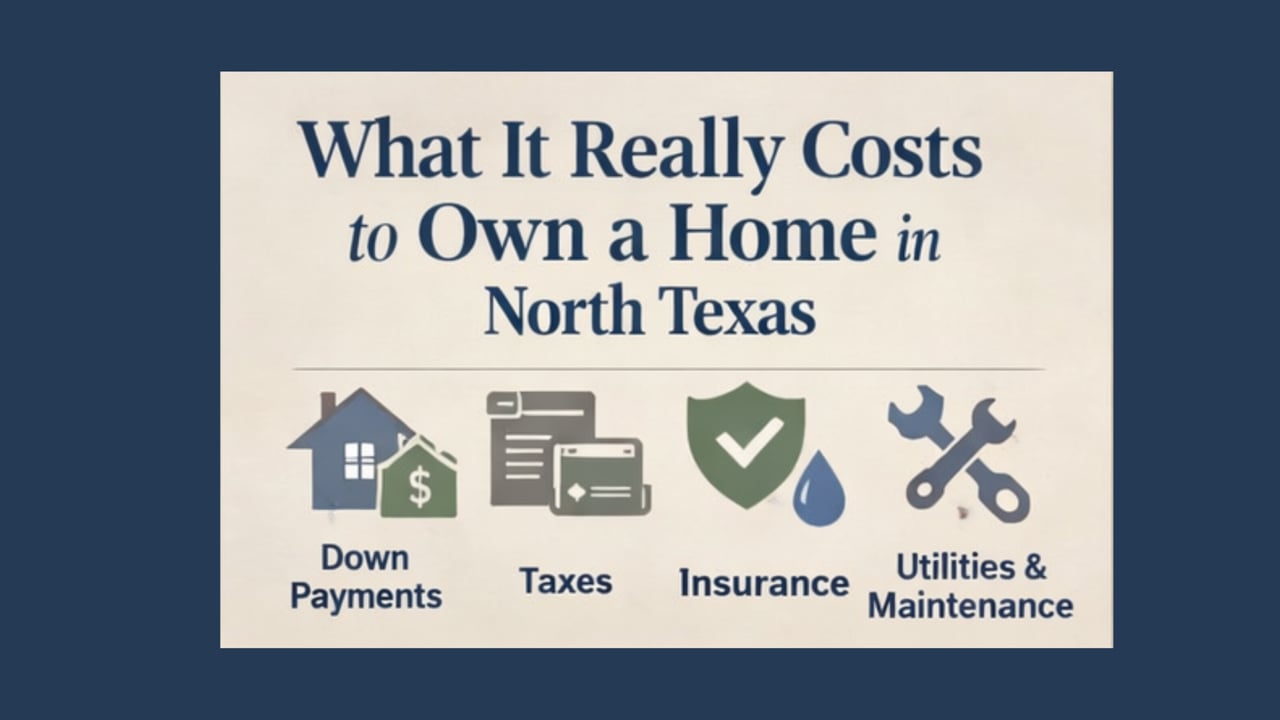
What You Really Need to Budget When Buying and Owning a Home in North Texas
Buying a home is one of the most exciting financial milestones you’ll ever reach — but it’s also one of the most expensive. Beyond just saving for a down payment, there are several upfront and ongoing costs that new homeowners in North Texas need to budget for to avoid surprises and protect their financial future.
1. Down Payment & Closing Costs — Upfront Must-Haves
Down Payment
The first big number you’ll think about is the down payment. In Texas, buyers typically put down between 3% and 20% of the home’s purchase price depending on the loan type and your credit profile.
For example — on a:
-
$350,000 home, 3% = $10,500 minimum
-
$350,000 home, 20% = $70,000
The bigger your down payment, the lower your monthly mortgage and interest costs.
Closing Costs
These are the fees paid at closing for things like title insurance, loan origination fees, appraisal, and local taxes. In Texas, the average closing cost is about $3,700, which is roughly 0.9% of the home’s price — lower than the national average.
It’s smart to budget 2–5% of the sale price overall for these costs, especially if buying in the Dallas-Fort Worth metroplex where costs can vary.
2. Monthly Homeownership Expenses
Once you’ve closed on your home, there are ongoing expenses that become part of your monthly household budget.
Mortgage Payment
Your mortgage payment is usually the largest monthly bill and includes principal and interest. Based on 2025 data:
-
The average monthly mortgage payment in Texas was about $2,174 — slightly lower than the U.S. average.
This amount will vary depending on your loan terms, interest rate, and down payment.
Property Taxes — A Big Texas Cost
Texas is known for having higher property taxes than many states. Effective rates across the state average around 1.6–1.7% of a home’s value, and North Texas rates commonly fall between 2.1%–2.8% of assessed value.
That means on a $400,000 home, annual property taxes could easily be $8,000–$11,000 or more, and they won’t disappear once your mortgage is paid off.
Homeowners Insurance
You’ll also need insurance to protect your investment. In Texas, most homeowners pay about $1,200–$2,000 per year, though premiums can be higher depending on coverage and age of the home.
This insurance is usually paid monthly or through an escrow account tied to your mortgage.
3. Ongoing Maintenance & Utilities
Owning a home means being responsible for everything — and that comes with costs.
Maintenance & Repair Budget
A common rule of thumb is to budget about 1% of your home’s value annually to cover maintenance and repairs.
On a $350,000 property, that’s about $3,500 a year to replace worn systems or fix unexpected issues.
Utilities
Unlike renting, you’ll pay all utilities yourself — water, electricity, gas, internet, and trash services. Monthly utility bills in Texas commonly range from $300–$500 total depending on usage and home size.
4. Optional But Important: HOA & Special Fees
Many newer neighborhoods in North Texas are part of homeowners associations (HOAs). These can add:
-
Monthly or quarterly dues
-
Fees for community amenities like pools, parks, or landscaping
According to broader Texas data, about 40% of homes for sale have HOA fees averaging $125 per month, with single-family homes often ranging $200–$300 per month — and sometimes more.
While HOAs can maintain neighborhood standards, it’s important to include these costs in your long-term budget.
💡 5. Budgeting Smart — Why It Matters in North Texas
Homeownership costs in Texas have risen in recent years. According to the U.S. Census Bureau, monthly homeowner costs increased by about 7% since 2019, with the typical homeowner spending over 22% of their income on housing costs.
Adding up these numbers before you buy — and keeping reserves for repairs, taxes, and insurance — will help ensure you’re financially ready for life as a North Texas homeowner.
Final Takeaway
When you’re budgeting to buy a home in North Texas, it’s not just about the sale price. Plan ahead for:
✅ Down payment (3–20% of purchase price)
✅ Closing costs (about 0.9–3% of price)
✅ Monthly mortgage payments
✅ Property taxes — often higher than the national average
✅ Homeowners insurance
✅ Maintenance, utilities, and HOA fees
Taking all costs into account ensures you’re prepared not just for buying — but for owning your home with confidence.
If you want help estimating what your monthly payments or upfront costs might look like based on current market data, just let me know — I can help run the numbers.