
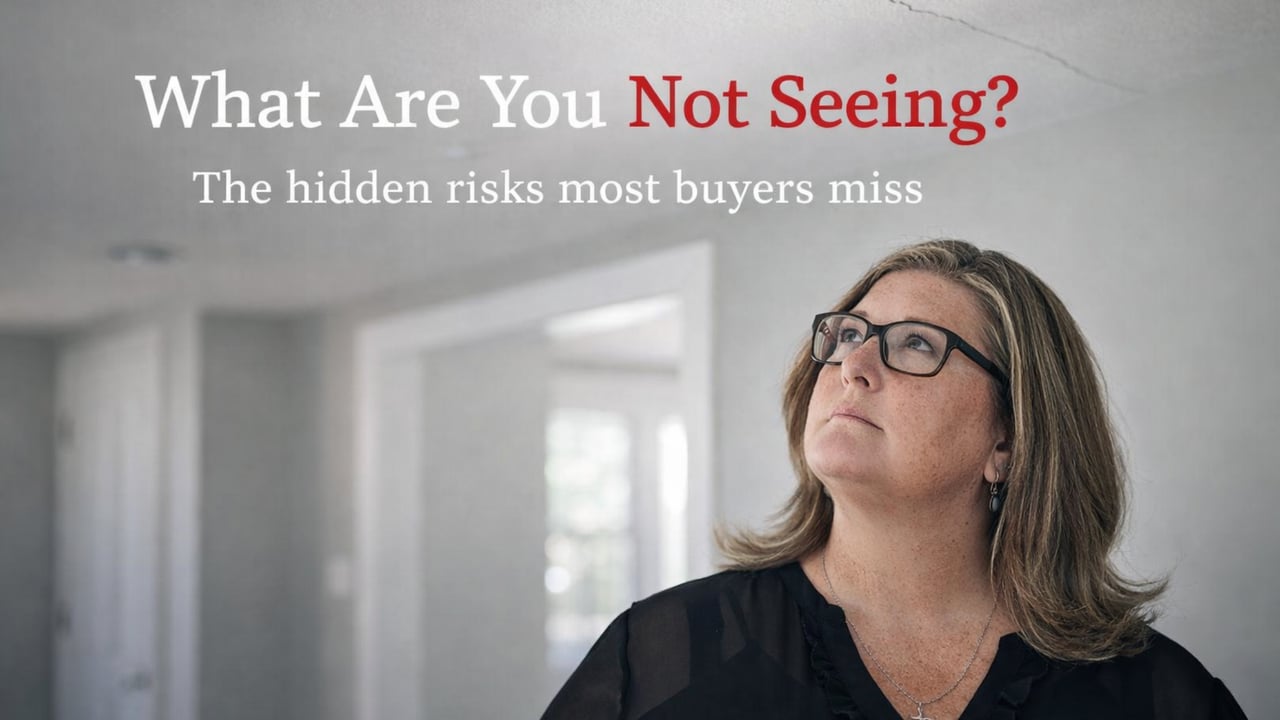
Have you ever walked through a home and thought, “What am I missing?”
That feeling is more common than you think—and it’s not a bad thing.
When you’re making one of the biggest financial decisions of your life, a little uncertainty is actually healthy. No matter how good a home looks, there are always things you can’t see at first glance.
The goal isn’t to eliminate that feeling.
The goal is to work through it with the right process so you can move forward with confidence.
Start With the Right Realtor
Before you even step into a home, this matters more than anything.
The right Realtor doesn’t just open doors—they help you evaluate risk.
You want someone who will:
- Spot red flags early
- Ask better, deeper questions
- Help you stay objective when emotions kick in
👉 You’re not just trying to find the right house.
👉 You’re trying to avoid the wrong one.
Read the Seller’s Disclosure Early—Not Later
One of the biggest mistakes buyers make is waiting too long to review this document.
Ask for the seller’s disclosure before you get emotionally attached.
Pay close attention to:
- Past foundation repairs
- Roof or plumbing issues
- Previous insurance claims
- Anything marked “unknown”
Then review it with your Realtor.
👉 This document tells a story—most buyers just don’t know how to read it yet.
If Something Feels “Off,” Trust It
You don’t need to be an inspector to notice when something doesn’t feel right.
If a home looks:
- Slightly uneven
- Recently patched in certain areas
- Just a little “off” overall
There’s usually a reason.
Too often, buyers talk themselves out of this instinct.
👉 Don’t ignore it—lean into it and ask questions.
Pay Attention to Foundation Clues (Especially in North Texas)
In North Texas, foundation movement is common—so you need to know what to look for.
Keep an eye out for:
- Cracks in brick or exterior walls
- Cracks in sheetrock
- Fresh patches or paint that may be covering repairs
- Soil pulling away from the foundation
These don’t automatically mean a major issue.
👉 But multiple signs together mean it’s time for a deeper conversation.
Look Up… and Down
Small details can tell you a lot about how a home has been maintained.
Here are a few quick checks:
- Air vents and registers:
Heavy dust buildup may mean filters haven’t been changed regularly, which can impact HVAC lifespan - Water heater:
Check the age and look for rust, water, or sediment in the pan - HVAC system:
Ask the age—replacement is one of the bigger expenses you’ll face
👉 These simple observations can save you thousands later.
You Don’t Need to Diagnose—Just Notice Patterns
As a Realtor, I’m not the one writing your inspection report.
But after walking through enough homes, patterns start to stand out:
- Poor maintenance leaves clues
- Deferred repairs tend to stack up
- Small issues often point to bigger ones
👉 Your job isn’t to diagnose the problem.
👉 Your job is to notice when something deserves a closer look.
The Inspection Is Non-Negotiable
Every single time.
This is where you get clarity on:
- What’s actually wrong
- What’s minor
- What could become expensive
👉 Skipping the inspection is one of the fastest ways to regret a purchase.
Where Deals Actually Fall Apart
This is the part most buyers don’t hear about.
Negotiating repairs is where deals most often break down.
Here’s how to think about it:
Major Systems
(Roof, HVAC, plumbing, foundation)
- These should be in working condition
- Repairs are often expected—and sometimes required by lenders
Everything Else
Instead of asking for repairs, consider negotiating a closing cost credit.
Why?
- Sellers often choose the cheapest repair option
- You lose control over quality
With a credit:
- You control the repair
- You choose the contractor
- You ensure it’s done right
The Bottom Line
That feeling of “what am I not seeing?” doesn’t mean you should walk away.
It means you should:
- Slow down
- Ask better questions
- Pay attention to details
- Surround yourself with the right professionals
👉 You’re not looking for a perfect house.
👉 You’re making a well-informed decision.
Thinking About Buying?
If you’re walking through homes and feeling unsure, you’re not doing anything wrong—that’s part of the process.
Having someone beside you who knows what to look for—and what actually matters—can make all the difference when it’s time to move forward.