What North Texas Homes Built in the 1990s Need Today (A Real Example: Mine)
What do 1990s North Texas homes typically need updated? Roofs and HVAC systems are the highest-priority items since they wear out on a set schedule. Kitchens and bathrooms matter more for buyer appeal than function. My own 1996 home has needed both and I'm still working through my list.
After I wrote about defending my own 30-year-old home last week (it's a 1996 build, and no, that's not tragic), a few people asked what I've actually done to keep it up. Fair question. So instead of another generic checklist, here's the real list, straight from my own house, including the parts I still haven't gotten to.
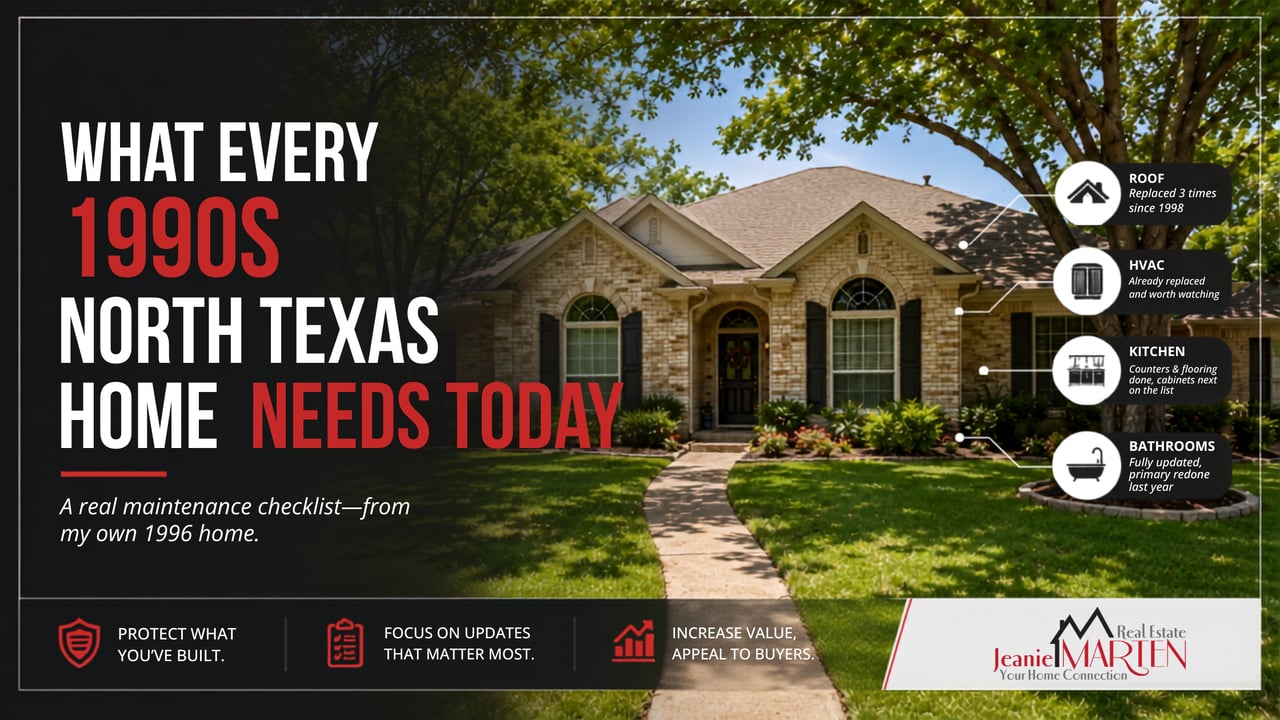
Roof and Exterior: Replaced Three Times Since 1998
Forget the national roofing numbers. Manufacturers rate asphalt shingles for 20 to 30 years but that assumes ideal conditions, and North Texas doesn't have those. Between triple-digit summers, constant UV exposure and a spot squarely inside hail alley, most DFW roofs realistically last 15 to 20 years before they need replacing, regardless of what the shingle package promised.
We bought our house in 1998 and I've replaced the roof three times since. That's roughly every nine or ten years, which is on the more frequent end even for this area but it's the honest reality of owning a home here. If you're budgeting for a 1990s North Texas home, plan around 15 years for a roof, not 30 and don't be surprised if hail moves that timeline up.
Paint takes a beating too. We've repainted the exterior about three times since we bought the house. Caulking gets redone every time we paint and we also check it every fall before winter weather sets in. Beyond paint and caulking, keep an eye on gutters and downspouts, siding or brick mortar and windows and doors. A well-kept exterior prevents bigger repairs down the line and sets the tone before a buyer ever walks through the door.
HVAC: Already Handled, Worth Watching
A typical HVAC system lasts 10 to 15 years, so a 1990s home is realistically on its second or third system by now if it's been maintained properly. I've replaced mine at least once. A newer, energy-efficient unit makes a real difference in comfort and utility bills, and it's one of the first things buyers ask about when they're evaluating an older home.
Insulation: Added, and Worth It
I added insulation at some point along the way and it's one of the more underrated upgrades for a 1990s home. Additional attic insulation, energy-efficient windows, weather stripping and a smart thermostat all work together to keep a Texas summer bill from getting out of hand.
Kitchen: Counters and Flooring Done, Cabinets Still on the List
I've updated my countertops and flooring but I'll be honest: I still have the honey oak cabinets and a stacked breakfast bar that scream 1996. They're on my list. I'm not alone in this. A lot of 1990s kitchens share the same bones (oak cabinets, laminate counters, a more closed-off layout) and today's buyers tend to respond better to brighter, more open spaces.
The good news is a full renovation isn't required to make a real difference. Painting or refinishing cabinets, new hardware, updated lighting, a modern backsplash and upgraded appliances can shift a kitchen's whole feel without touching the layout.
Bathrooms: Fully Updated, Primary Redone Last Year
All of my bathrooms have been updated at this point, including my primary bath, which I redid just last year. Smaller updates go a long way here too: new faucets, mirrors, lighting, and shower fixtures modernize a bathroom without a major investment and fresh paint with updated flooring makes even a small bathroom feel cleaner and more current.
Flooring and Paint Throughout
Flooring trends have shifted a lot over three decades. Swapping worn carpet or dated flooring for luxury vinyl plank, engineered hardwood, or modern tile refreshes a home instantly, and neutral paint colors make rooms read larger, brighter and more broadly appealing when it's time to sell.
The Small Stuff Adds Up
Light fixtures, cabinet hardware, door handles, and ceiling fans are easy to overlook but they're exactly the kind of detail buyers notice during a showing without necessarily being able to say why a room feels dated or fresh. We've already replaced ours throughout the house. The one holdout is a run of can lights I haven't swapped for LEDs yet. That's happening the next time we paint, since it's much easier to handle both at once.
Curb Appeal Still Matters Most
First impressions happen before anyone opens the front door and this is the one area we never let slide. Every spring gets a full overhaul: trimming everything back, pulling out whatever didn't survive winter, adding new plants where needed and putting down fresh mulch. We've also added trees over the years, which is one of those upgrades that quietly pays off. A 1990s lot with mature trees you planted yourself looks nothing like the same lot did when the house was new.
Frequently Asked Questions
How do I know if my roof needs replacing?
Most roofs last 20 to 25 years depending on material and weather exposure. Signs it's time include missing or curling shingles, granule loss, visible sagging or leaks and a roofer can give a clear read on remaining lifespan during an inspection.
Is it worth updating a kitchen before selling, even without a full renovation?
Often, yes. Cosmetic updates like countertops, hardware, lighting and cabinet refinishing can meaningfully improve buyer response without the cost or timeline of a full remodel.
What's the biggest return-on-investment update for a 1990s home?
It varies by property but roofs, HVAC systems and kitchen or bathroom refreshes consistently rank among the highest-impact updates, since they address both function and buyer appeal at once.
Is It Time to Sell?
Homes built in the 1990s continue to be in demand throughout North Texas because they offer larger lots, mature trees, and established neighborhoods buyers genuinely want. If you're thinking about selling, you don't have to guess which updates are worth making. Every home is different, and some improvements provide a much better return than others. Jeanie Marten Real Estate can walk through your home, talk through today's market, and help you decide what's actually worth doing before you list. Visit MartenTeam.com or book a consultation.
If you liked this blog, check out this one: Is a 30-Year-Old Home a Good Investment? — the companion post that started this series, with national data showing why 30-year-old Texas homes are closer to average than you'd think.