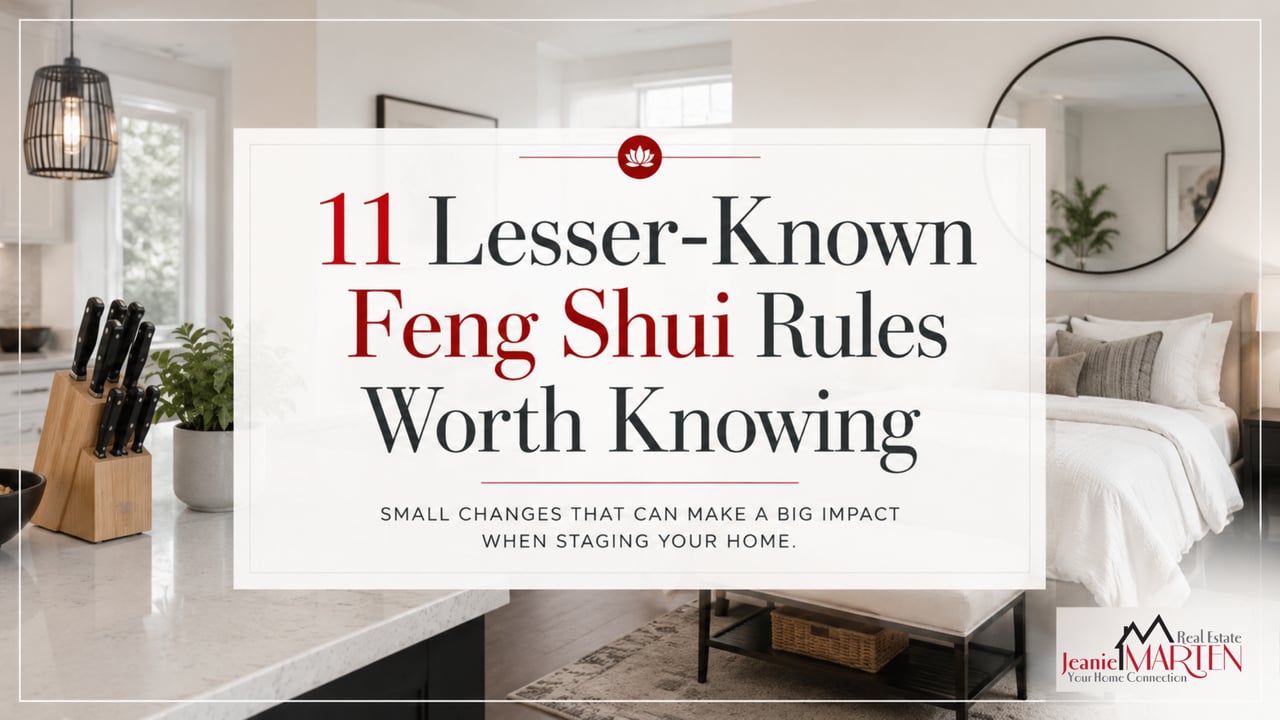
What are some lesser-known feng shui rules that matter when staging a home? Beyond the well-known concerns about front doors and staircases, smaller details like exposed knife blocks, mirrors facing a bed, an open bathroom door, and clutter under the bed are all considered meaningful and they're easy to fix before a showing.
Feng shui is a centuries-old Chinese practice focused on arranging a home to support the flow of energy, and it genuinely shapes real buyer decisions, not just aesthetic taste. A survey by Better Homes and Gardens Real Estate and the Asian Real Estate Association of America found that 75% of Chinese-American respondents named specific home features that would keep them from buying, including a staircase facing the front door, a sloped backyard, and front and back doors aligned with each other. Those big, architectural concerns get most of the attention. What I actually walk clients through more often are the smaller, fixable details that don't require a renovation, just some thought before a showing.
1. Knife Blocks Left Out in the Open
I tell every seller this one directly: put the knife block away. Visible blades, especially pointed toward a room or a walkway, read as a small “poison arrow,” a sharp object aiming aggressive energy into the space. It's an easy five-second fix before every showing.
2. Mirrors Facing the Bed
A mirror that directly faces the bed is considered disruptive to rest and to relationships within the home. It's a simple staging adjustment, angle it, move it or cover it during showings, if a bedroom happens to be set up this way.
3. An Open Bathroom Door or Lifted Toilet Lid
A bathroom is associated with drainage, so an open door or a lifted lid is seen as a place where energy and symbolically money, can quietly leak out of the home. Keep the lid down and the door shut, especially for any bathroom near the front entry or kitchen.
4. Sleeping in Line With the Bedroom Door
A bed positioned so it lines up directly with the door, feet pointed straight at it, is sometimes called the “coffin position” and is considered poor energy for rest. The fix is simple: angle the bed rather than lining it up straight across from the doorway.
5. The Command Position
This one shows up in general staging advice too, it just has a specific name here. A bed, desk, or sofa should ideally have a solid wall behind it and a clear view of the door, without sitting directly in line with it. It reads as more secure and grounded and it's one of the easier principles to apply to almost any room.
6. Exposed Beams Directly Over a Bed
An exposed structural beam positioned directly above where someone sleeps is considered a source of pressure or heavy energy during rest. This one's harder to fix architecturally but it's worth being aware of when staging a room that has one, a canopy or repositioned bed placement can help soften it.
7. Broken Items Left Around the Home
A stopped clock, a cracked mirror, a broken drawer pull anything visibly broken is considered stagnant or negative energy sitting in the home, not just an eyesore. This lines up neatly with the most basic seller advice there is: if something's broken, fix it, for more reasons than one.
8. Clutter Under the Bed
Storage bins, shoes and general clutter tucked under a bed are believed to block restful energy specifically, beyond the general decluttering advice you'd hear from any stager. Clearing it out is a five-minute task with an outsized impact on how the room feels.
9. Sharp Corners Aimed at Seating
A square table or shelf corner pointed directly at where someone regularly sits, a sofa, a favorite chair, is considered its own kind of poison arrow, subtly aggressive energy aimed at a person rather than a walkway. Rounded furniture or a simple angle adjustment addresses it.
10. Thorny or Spiky Plants Indoors
Cacti and other spiky plants are generally avoided inside the home, particularly in bedrooms, while healthy, leafy plants are considered welcoming. Worth knowing if you're adding greenery to stage a room.
11. House Numbers, Especially the Number 4
The number 4 sounds similar to the word for “death” in Mandarin and Cantonese, and it's avoided by some buyers the same way many Western buildings skip a 13th floor. It's not something you can change about an address, but it's worth understanding if a specific property draws unexpected hesitation for no obvious reason.
Frequently Asked Questions
Why do knife blocks matter in feng shui staging?
Visible blades are considered a “poison arrow,” a sharp object projecting aggressive energy into a room. Tucking the knife block into a drawer or cabinet before showings is a simple, no-cost fix.
What is the “command position” and why does it matter for staging?
It refers to placing a bed, desk, or sofa against a solid wall with a clear view of the door, without lining up directly across from it. It's widely used in general staging advice as well, since it reads as more secure and intentional regardless of a buyer's personal beliefs.
Do these smaller details really affect how a home shows?
For buyers who evaluate homes through a feng shui lens, yes, and many of these fixes, like decluttering under a bed or repositioning a mirror, also happen to be good general staging practice regardless of belief.
Getting a Home Ready to List?
Small, specific details like these are easy to miss and easy to fix once you know to look for them. Jeanie Marten Real Estate walks sellers through exactly what's worth adjusting before a showing. Visit MartenTeam.com or book a consultation.