Do honey oak kitchen cabinets hurt your home's resale value in North Texas? Original 1990s and early-2000s honey oak usually costs a seller more in price negotiation than a refresh would cost to do. The oak designers are calling back is new, clean-lined cabinetry — not the arched raised-panel oak already sitting in most North Texas kitchens.
I have been reading trend pieces all year telling me honey oak is having a moment. Livingetc ran one where a designer said, and I am quoting directly, "The resurgence of honey is here!" Another designer in that same piece said some homeowners are "even starting to regret painting their cabinets."
I would like to state, on the record, that I regret nothing. I haven't painted mine yet. That is the only regret I have.
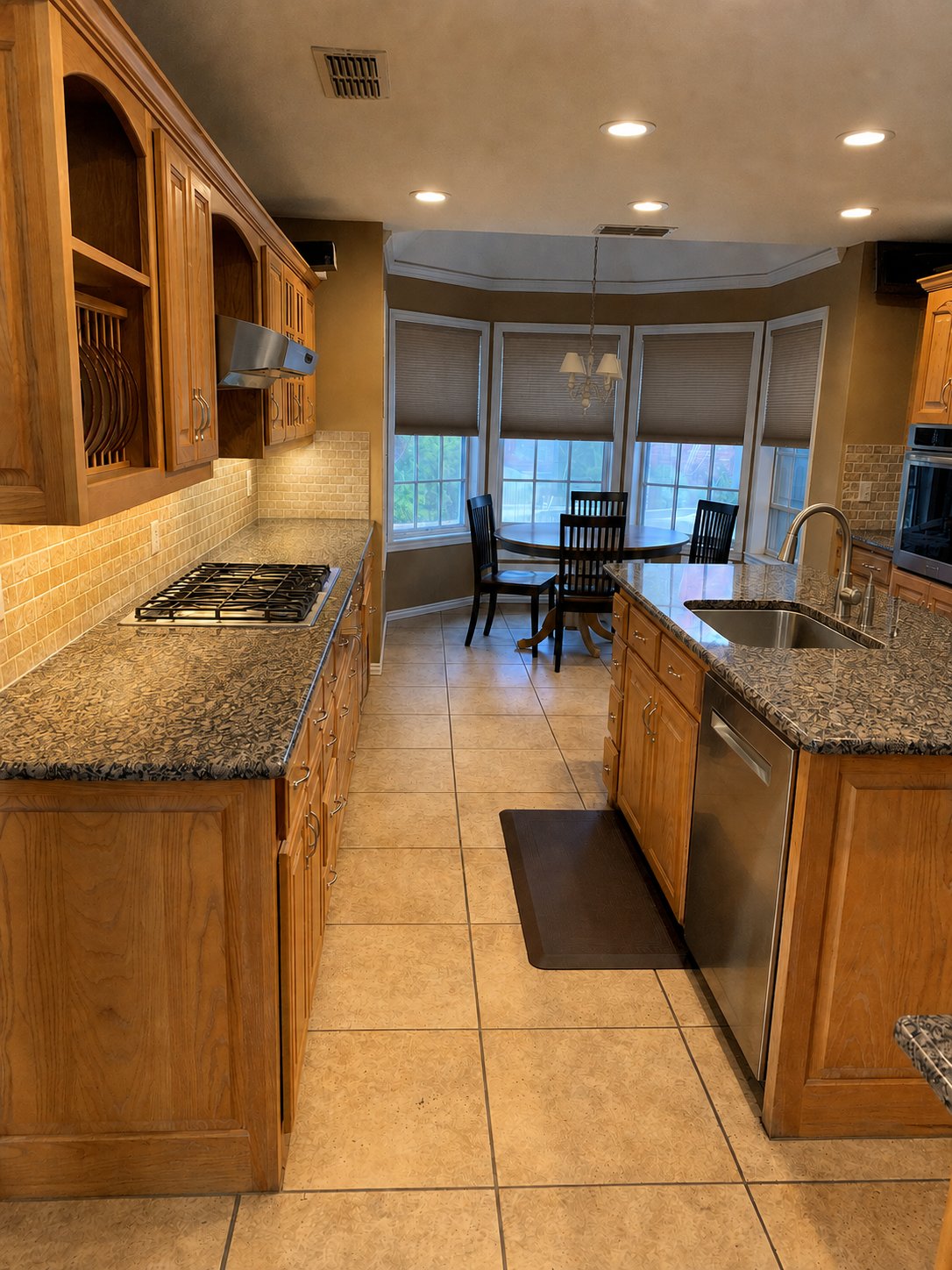
Here's the part that actually gets me. My kitchen has been updated. Not the cabinets, everything else. We put in granite. The appliances are stainless, including a double wall oven and a gas cooktop. There's a tumbled stone backsplash. Somebody, at some point, went around and swapped every knob for a long brushed nickel bar pull. Every single element in that room has been brought forward except the boxes and doors, and the boxes and doors are the first thing anyone sees.
That's the real problem with oak. It doesn't matter what you put around it. It wins.
I walk a lot of kitchens that look like mine, Sachse, Wylie, Murphy, Lavon, all through Collin and Rockwall counties. Same oak, different floor plan. So even while I'm personally irritated at my own cabinets, I owe you the honest version of the question underneath all this: if honey oak really is coming back, can sellers just leave it alone?
The Oak Designers Want Back Is Not the Oak in Your House
This is what gets lost every time one of these articles goes around.
When designers say honey oak is returning, they mean new cabinetry in a warm honey stain with flat slab or simple shaker doors, modern hardware, and light neutral surroundings. One designer quoted in that Livingetc piece was explicit that the appeal comes through "clean-lined cabinetry" paired with "modern hardware and light, neutral finishes", specifically not 90s styling.
Now let me describe my kitchen, and see if any of this sounds like a magazine spread:
- Raised panel doors with an arch cut into the top rail
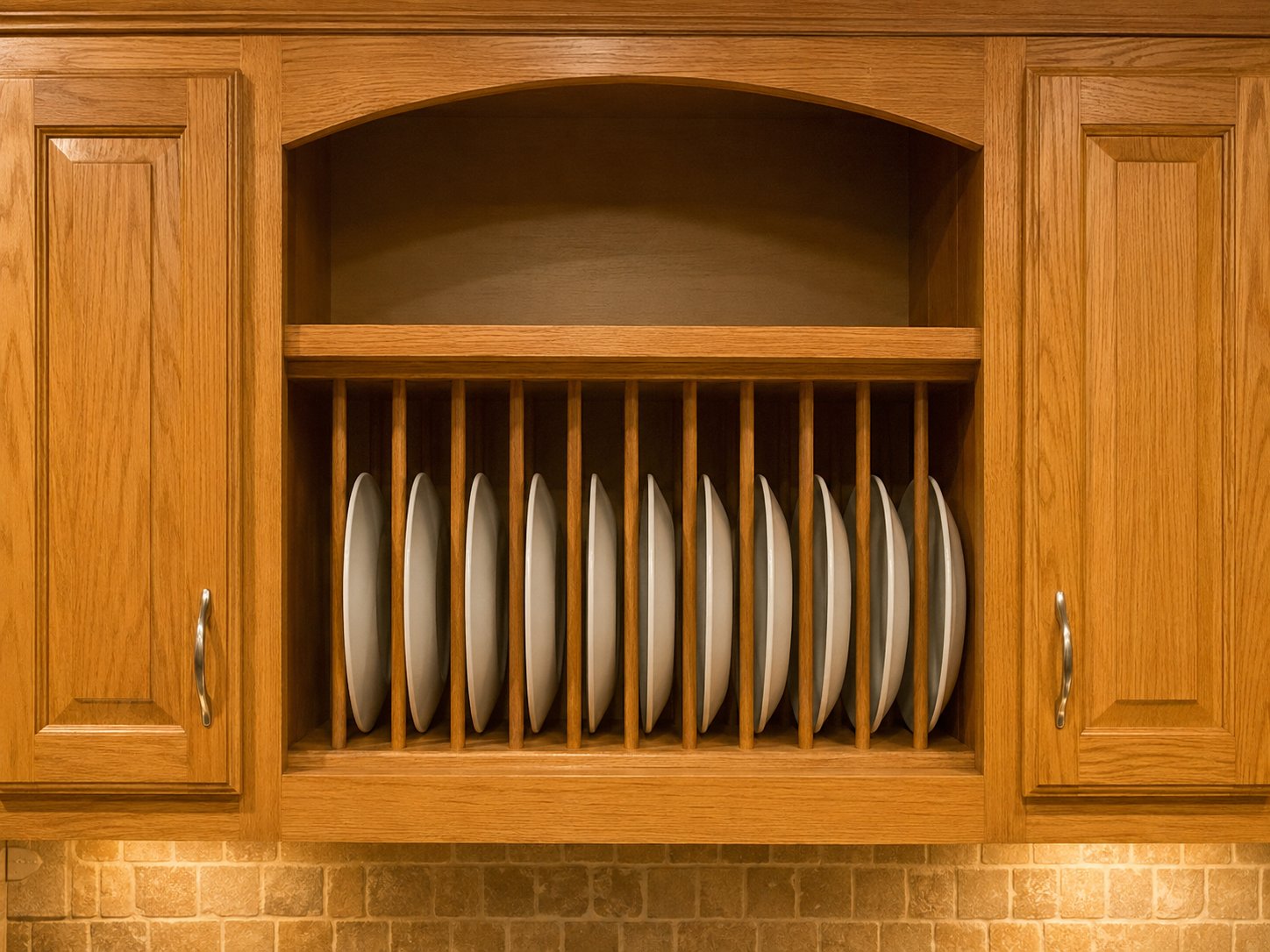
- Arched open display cubbies built into the upper run
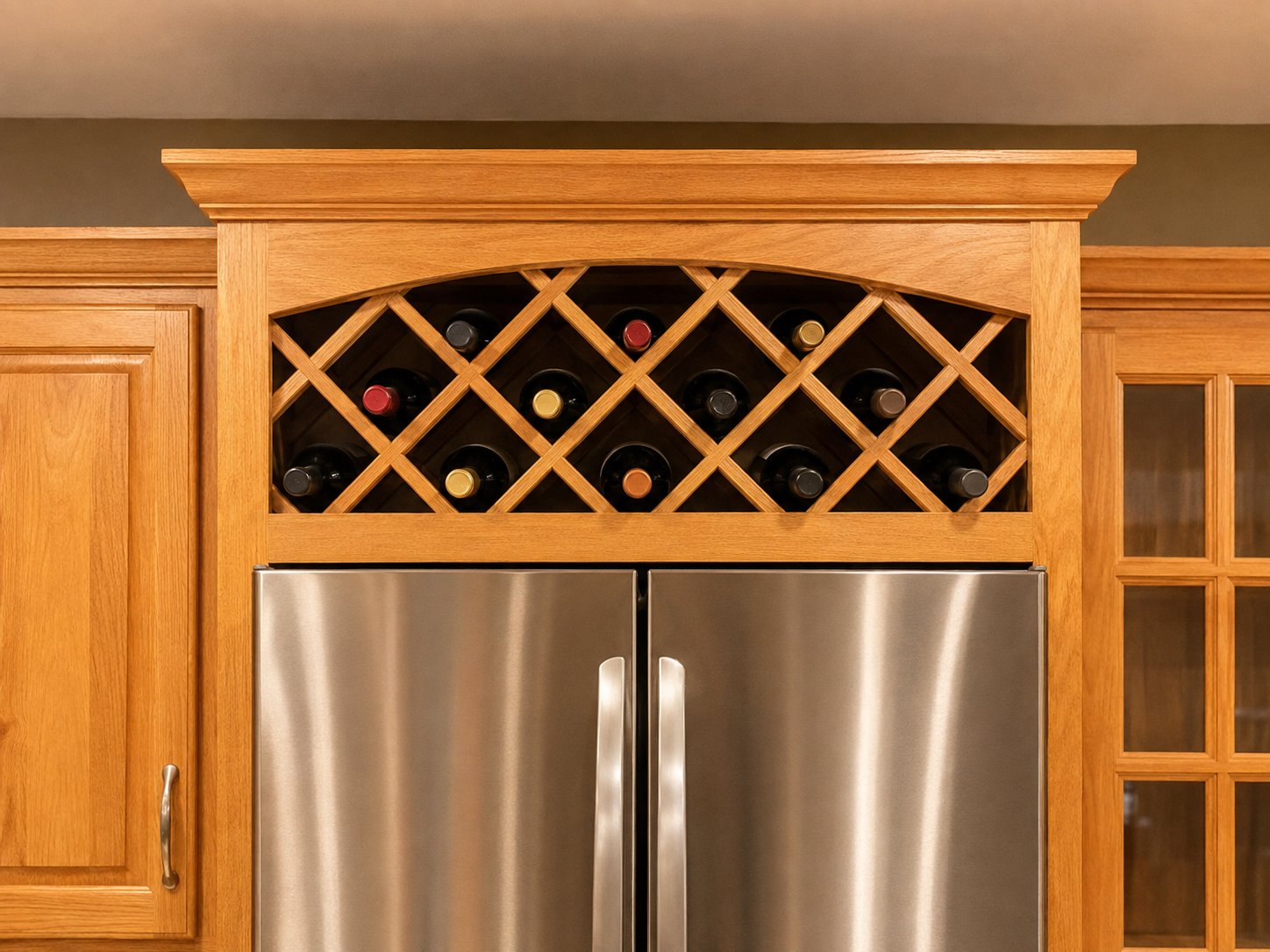
- A lattice wine rack mounted above the refrigerator
- A built-in plate rack, because at some point we all thought we needed one
- Glass mullion doors with a nine-square grid
- Oak so orange it has its own color temperature
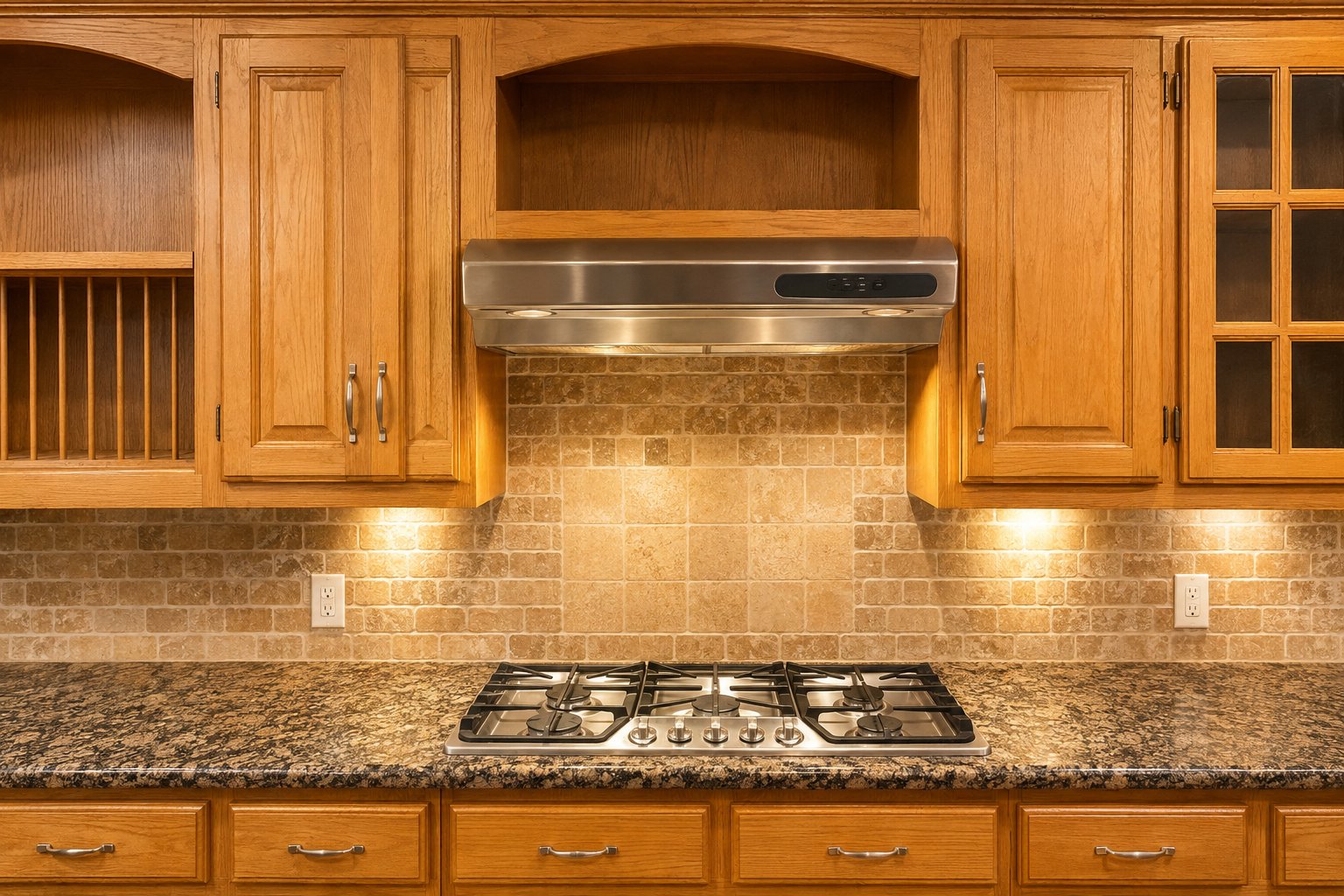
That is not "warm natural wood." That is a specific decade with a specific vocabulary, and the arch is the tell. A trend piece about warm oak is not a trend piece about arched raised panels and a lattice wine rack. Being honest about that difference is the whole ballgame when you're pricing a house.
What Buyers Actually Do With a Dated Kitchen
Buyers don't calculate. They react and then they subtract.
Zillow's 2026 analysis of listing features, covering more than two million homes, found that homes described as fixer-uppers sold for 14% less than expected. Homes described as remodeled sold for 2.2% more, and turnkey homes for 2.9% more. That's a wide spread, and a dated kitchen is the fastest way to land your house on the wrong side of it, even a kitchen with granite and stainless in it, like mine.
And this is not a market where buyers feel rushed. Median days on market across Dallas–Fort Worth was 54 days as of July 2026. A buyer looking in Sachse or Murphy is seeing several options in the same price range on the same Saturday. When they walk into orange oak and then walk into painted cabinets two streets over, they aren't thinking about trend cycles. They're thinking, "I'd have to redo that."
Then they subtract a number from your list price. In my experience that number is always bigger than what the work would have cost you.
Do Not Gut Your Kitchen. The Math Is Brutal.
Before anyone reads this as "rip it all out," look at the numbers.
The National Association of REALTORS® publishes a Remodeling Impact Report with NARI and it does something Cost vs. Value doesn't: it asks agents what a project actually recovers at resale and separately asks homeowners how much joy the finished project brought them. Both numbers matter and they don't agree.
Here's what the 2025 report found for kitchens, nationally:
Kitchen project | Cost recovered at resale | Joy Score (out of 10) |
|---|---|---|
Minor kitchen upgrade | 60% | 10 |
Complete kitchen renovation | 60% | 9.8 |
Look at that first column twice because I did. The same 60% either way. Gutting the kitchen down to the studs does not buy you a better return than a modest upgrade. It just costs a great deal more to arrive at the same sixty cents on the dollar. Forty cents of every dollar you spend in there stays in the house and never comes back to you at closing.
For context, the same report has a new steel front door recovering 100%, a closet renovation 83% and a bathroom renovation 50%. Kitchens sit in the bottom half of the list.
Now look at the second column. A kitchen upgrade earned a perfect 10, the highest Joy Score in the entire report, tied with adding a primary bedroom suite and a new roof. Kitchens are the most satisfying thing you can do to a house and one of the worst-paying. That gap is the entire decision, and which side of it you're on depends on one question: are you doing this for you, or for the next owner?
If it's for the next owner, spend the smallest amount that changes the first impression.
So the answer to honey oak is almost never a new kitchen. It's a refresh and if your counters and appliances are already decent, it's a very short list.
What I'd Actually Do, In This Order
Refinish the cabinets. Let's talk honestly about the number because the "average cost" articles will lie to you. Professionally refinished cabinets run $2,000 to $6,500 for an average-size kitchen and $5,000 to $10,000 for a large one. A friend of mine did hers a couple of years ago, in a kitchen about the size of mine, and it was $2,500.
Ignore the averages and price it the way the painters do: $70 to $125 per door, plus every drawer front. Go count yours. That number will tell you more in ninety seconds than any online estimate and if your kitchen is big, brace yourself, mine has a galley run on both sides plus an island and the door count is not small.
Yes, that's real money. It's still a fraction of what a buyer deducts for a kitchen they've decided they'll have to redo.
For color, I'd go Sherwin Williams Alabaster (SW 7008) if the room gets good light or Accessible Beige (SW 7036) if you want warmth without going stark white. On an island, Iron Ore (SW 7069) gives you contrast without committing the whole room. Skip gray everywhere, buyers can date that now almost as fast as they date oak.
Decide whether you want the grain to disappear or not. This is the fork in the road and nobody explains it before you're standing in the paint aisle.
If you want a flat, modern, factory-painted look, the grain has to be filled before priming. It's an extra step, it costs more and a painter who shrugs when you ask about it is not your painter.
If you'd rather keep the wood reading as wood, don't fill it, use a solid or tinted stain, or a tinted 2K polyurethane, which colors the cabinets evenly without burying the grain and is tough enough for a working kitchen without a separate topcoat. This is the route I'm taking on mine. I have solid wood cabinets, which is the one genuinely good thing I can say about them, so I'm sanding them down and going with a tinted stain in a matte finish. Not because it's cheaper because I'd rather have oak that reads as intentional than oak pretending to be something it isn't.
That's a personal choice and it's the one place in this post where I'm not giving you seller advice. If you're listing in the next six months, opaque paint is the safer bet with buyers. I'm not listing. I'm just done looking at orange.
Remove the arches and the lattice. If you do nothing else on this list, do this. The arched cubbies, the wine lattice, the plate rack — those aren't storage, they're a date stamp. Filling in an arch and running a clean panel there is inexpensive carpentry and it changes how the whole run reads.
Update the pulls again if they're chrome. Long brushed nickel bars were the fix ten years ago. Matte black or unlacquered brass is the fix now and it's a couple hundred dollars.
Then look at the counters but only if they need it. That Zillow data found quartzite carried the largest premium of any material at 5.3%, with quartz at 3%. But if you already have granite in decent condition, leave it. Painted cabinets change granite's whole personality anyway.
Leave the layout alone. Moving plumbing and walls is where kitchen budgets go to die.
When You Should Ignore Every Word of This
If you're not selling for another eight or ten years, do whatever you want. Genuinely. Go back to that Joy Score of 10, that's homeowners telling NAR that a kitchen they love is worth more to them than what it returns. Your kitchen should serve the people eating in it, not a buyer who doesn't exist yet. Trends will turn over twice before you list, and if warm oak makes you happy, that's a completely valid reason to keep it.
And if you have honest-to-goodness quality oak, flat panel or simple shaker, solid construction, no arches anywhere, the designers actually have a point. That's the wood worth restaining rather than painting. A refinish to a lighter, less orange tone can look current and costs less than a full repaint.
I just don't have that kitchen. I have the other one, with the lattice wine rack. And I'm painting it.
Frequently Asked Questions
Should I paint or replace my honey oak cabinets before selling? Paint, in nearly every case. Cabinet painting in the Dallas area averages under $1,000, while a major kitchen remodel recoups only about half its cost at resale. Replacement makes sense only if the boxes themselves are damaged or failing.
Will honey oak cabinets make my house sit longer on the market in Sachse or Wylie? It's rarely the cabinets by themselves. But with median days on market around 54 across Dallas–Fort Worth, buyers have choices, and a kitchen that reads as dated gives them a reason to pick a different house or write a lower offer. Price and condition work together.
Is the honey oak trend going to make my existing cabinets valuable again? Not the arched raised-panel version. Designers are describing new, clean-lined oak with modern hardware — a different product entirely. Existing honey oak with simple door styles and solid construction is the exception worth keeping.
If you're weighing what to fix before you list, I'd rather tell you what to skip than watch you overspend. I'll walk your house, tell you honestly which projects come back to you at closing and which ones don't, and we'll price it accordingly.
Finally, if you liked this post then you should also take a look at
Visit MartenTeam.com or book a consultation.