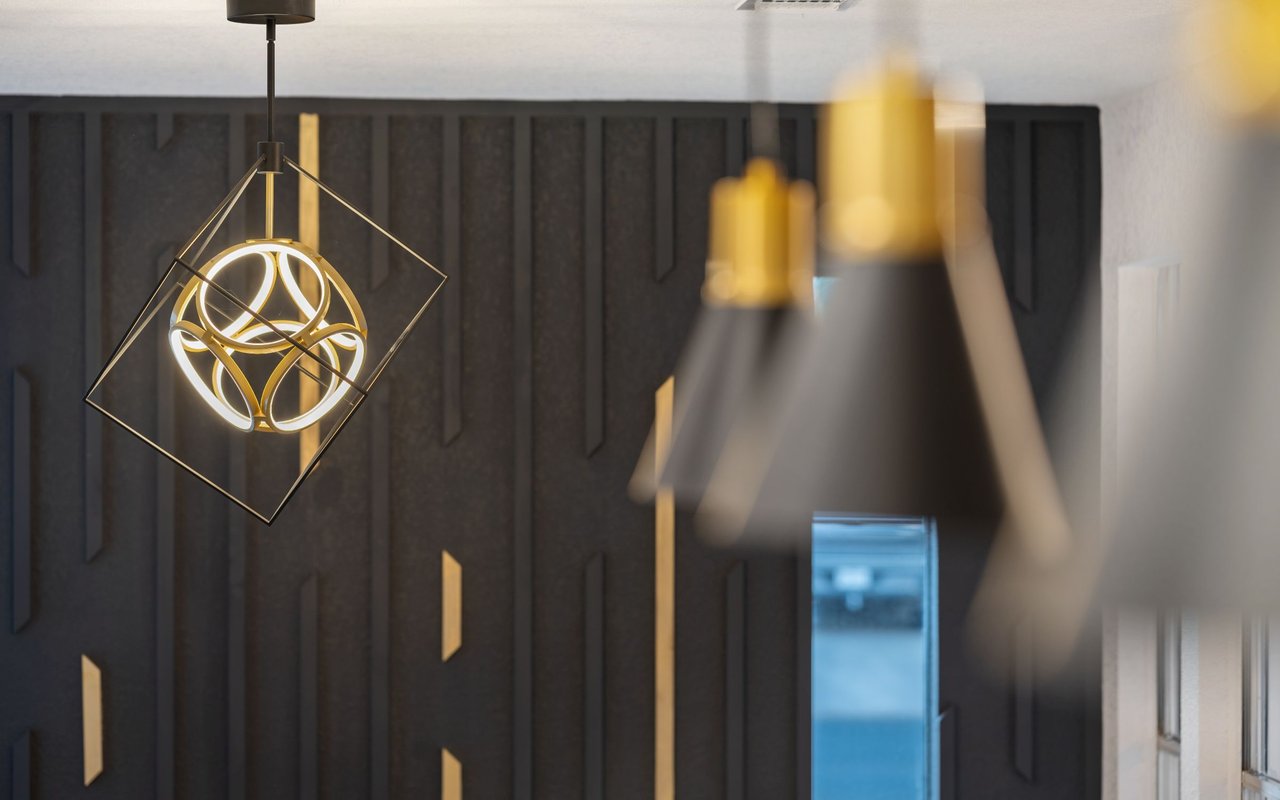

Lighting Mistakes That Hurt Your Home Sale
Does lighting really affect what your house sells for? Yes. Dim, mismatched and burned out bulbs make a home look smaller, dingier and more dated in photos and in person and fixing them costs less than any other pre-listing update you could make.
I showed a house this week that had no business feeling dark. Good bones, decent finishes, a fine floor plan. But every blind in the place was shut, the bulbs were too weak for the rooms they were in and the color of the light changed every time we walked through a doorway. The living room read yellow. The hall read blue. Two corners of the primary bedroom just quit.
Then we started flipping switches. Half of them did nothing at all. One fixture turned out to be run by a remote and the remote was not in the house as far as either of us could tell. My buyer stood in the middle of the family room holding her phone flashlight up at the ceiling fan. That is not the feeling you want a buyer to leave with.
The house was probably fine. It did not feel fine. It felt dark, inconsistent and a little neglected and this is the cheapest problem on the entire pre-listing list to solve.
Buyers Do Not Separate the Lighting From the House
Sellers think of bulbs as equipment. The bulb comes on so the bulb is working.
Buyers do not think about bulbs at all. Nobody walks into a Sachse living room and announces that the color temperature is inconsistent. They just decide the room feels gloomy, or harsh, or older than it is. Then that feeling gets attached to your paint, your cabinets and your floors, which had nothing to do with it.
Bad light makes walls look dingy, makes oak cabinets look orange, makes luxury vinyl plank look flat, and makes clean corners look dirty. I have watched buyers talk themselves out of finishes that were genuinely nice because the light was fighting them. If you want the full list of what else quietly costs sellers money at this stage, I wrote about that in 6 staging mistakes that are costing North Texas sellers real money right now.
Good lighting should not call attention to itself. It should let buyers see the house.
Start by Opening the Blinds
Before we talk about bulbs at all, let the daylight in.
Closed blinds make buyers suspicious. Is the view bad? Does the neighbor look straight into this room? Is the window cracked? None of that may be true and it does not matter, because now they are thinking about your window treatments instead of your kitchen.
Open the blinds and the interior shutters. Pull the curtains back off the glass. Clean the windows and the sills and trim back anything outside that is blocking light. If a screen is torn, take it off. In Wylie and Murphy I see a lot of west-facing rooms with real afternoon glare and that is the one honest exception where we may soften a window instead of opening it all the way. Shutting every blind in the house is almost never the answer.
Lumens and Kelvin Are Two Different Things
There are only two numbers on a bulb box that matter to you.
Lumens are brightness. Watts tell you what the bulb costs to run, not how bright it looks. An old 60 watt incandescent put out about 800 lumens and an LED does the same job on about 9 watts, so wattage stopped being a useful shortcut years ago. The FTC's guide to shopping for light bulbs explains the Lighting Facts label on the package which is where both numbers live.
Kelvin is the color of the light. Lower is warmer and yellower, higher is cooler and bluer. You will see bulbs sold roughly as 2700K warm, 3000K warm but cleaner, 3500K fairly neutral and 4000K and up, which starts looking like an office.
Here is my actual opinion. For most homes in Sachse, Wylie, Murphy and the rest of Northeast Dallas, 3000K is the right starting point. It reads warm without turning everything butterscotch and it is kind to the gray and greige paint most of these houses already have. What people grab by accident is 5000K "daylight," usually in the garage or a closet and it turns a family room into a dental office.
Whatever number you pick, the number is less important than the consistency. One warm bulb next to one cool bulb makes a room look patchy and makes your paint and flooring appear to change color across the space. If a buyer can see two fixtures at the same time, those bulbs should match. Buy them in a multipack, replace each fixture as a complete set and stop topping off with whatever bulb was left in the garage.
One Ceiling Light Is Not a Lighting Plan
That builder-grade fixture in the middle of the ceiling is doing its best and it is not enough. It lights the center of the room, leaves the edges dark and flattens everything it touches. In a big family room or an open concept space, it is very obvious.
A room that photographs well has light at three levels: ambient light overhead, task light where people actually do things and accent light from lamps and sconces. NAR's staging writers make the same case in how to layer the lights for a soft, warm inviting feel and it is the single biggest visual upgrade available to you for under a hundred dollars.
You are not installing a lighting system before you list. Most of the time the missing layer is two properly sized lamps with matching bulbs in them.
A Switch That Does Nothing Reads as a Defect
Buyers try the switches. All of them. When one does nothing, they do not assume there is a reasonable explanation. They assume broken switch, broken fixture or a wiring problem and it goes in the mental column next to the foundation.
So before you list, walk the house and find out what every switch controls. If one runs an outlet, plug a lamp into that outlet so its purpose is obvious. If a switch is genuinely dead, ask an electrician what to do with it rather than leaving buyers to guess.
If a fan or light runs on a remote, make that impossible to miss. Put the remote in a wall holder next to the switch, replace the batteries and check that every button works. And please handle the smart bulbs. Nobody should need your phone, your app or your Wi-Fi password to turn on a light during a showing. Lighting should make a house easier to experience not turn it into a scavenger hunt.
Kitchens and Bathrooms Will Punish You for This
Kitchens are nothing but reflective surfaces. Cabinets, counters, backsplash, appliances, floor. Mixed light in a kitchen makes finishes that genuinely coordinate look like they do not. Under cabinet lights should match the ceiling cans, pendant bulbs should match each other and if the kitchen is open to the living room, judge the whole sightline at once instead of one fixture at a time.
Bathrooms have the opposite problem. A single light directly overhead drops shadows onto a person's face and buyers standing at the mirror feel that even when they cannot name it. You want vanity light that lights a face without going icy blue. While you are in there, check that your dimmers are not buzzing or flickering because not every LED bulb is dimmable and older dimmer switches are picky.
Your Photographer Cannot Edit This Away
A good photographer can do a lot. Mixed lighting is the one thing that genuinely fights back. Daylight coming in a window reads neutral or cool while the lamp four feet away throws yellow and correcting one makes the other worse.
Heavy editing has its own cost. Photos that look bright online and nothing like the house in person set the buyer up to be disappointed before they reach the kitchen. The goal is not maximum brightness. It is clean, consistent light that looks the same on their phone and in your hallway.
Do This Walkthrough Before Photo Day
Not five minutes before the photographer pulls up. A few days before, in the middle of the day, with every light in the house turned on:
- Replace every burned out bulb, and replace multi-bulb fixtures as a set
- Match color temperature within each fixture and across any sightline
- Stand in hallways and doorways and look into adjoining rooms, which is where mismatched bulbs give themselves away
- Add a lamp to any dark corner instead of asking the ceiling light to reach it
- Clean the globes, shades and glass, including the bugs
- Test every switch and learn what it controls
- Check the exterior bulbs, including the porch, the garage coach lights and the back patio
- Then ask someone who does not live there to walk through and tell you what feels dark
That last one matters more than the rest. If your bulbs got replaced one at a time over eleven years, your eyes adjusted right along with them. A neighbor's eyes have not. Buyers will notice in about four seconds. This is the same reason I ask sellers to do a cold walkthrough of their own house which I get into in what I consistently tell my sellers to do and not do before listing.
Small Fix, Outsized Effect
Replacing bulbs is not a renovation. Opening blinds does not require a contractor. A pair of lamps costs less than a gallon of paint and a weekend.
Before you blame your cabinets, your flooring or your paint color, turn everything on and look at your house honestly. It may not need an update. It may need brighter bulbs, one consistent color temperature and some daylight.
Because if buyers cannot see your house clearly, they are not going to see its value either.
Frequently Asked Questions
What is the best light bulb color temperature for selling a house? 3000K is a safe, flattering starting point for most North Texas homes. It reads warm without going yellow and works with the neutral paint colors common in Sachse, Wylie and Murphy. Consistency matters more than the exact number, so match every bulb a buyer can see at one time.
Should I leave the lights on for a showing? Yes, every one of them, plus open blinds. Buyers are often walking in behind an agent who is still finding the lockbox, and the first ten seconds set the tone. Leaving lights on also keeps a buyer from hunting for a switch that may not do anything.
Is it worth replacing light fixtures before listing? Usually not, unless a fixture is broken, missing or clearly dated in a room buyers will focus on, like an entry or a dining room. Bulbs, lamps and clean glass get you most of the improvement for a fraction of the cost. Put the money into the fixture only when the fixture itself is the problem.
If You Found This Useful, Read These Next
- 5 Red Flags in Listing Photos That Most Buyers Scroll Right Past walks through what makes buyers keep scrolling, which is the next thing to fix once your lighting is right.
- What Buyers Notice in the First 8 Seconds (And How to Control It) covers the first impression a showing makes, and lighting is doing a lot of that work before anyone says a word.
Thinking about listing in Sachse, Wylie, Murphy, Lavon or anywhere in Northeast Dallas? We will walk your house room by room and tell you exactly what is worth doing and what is not. Visit MartenTeam.com or book a consultation.
Jeanie Marten Real Estate 972-414-0719 | MartenTeam.com