
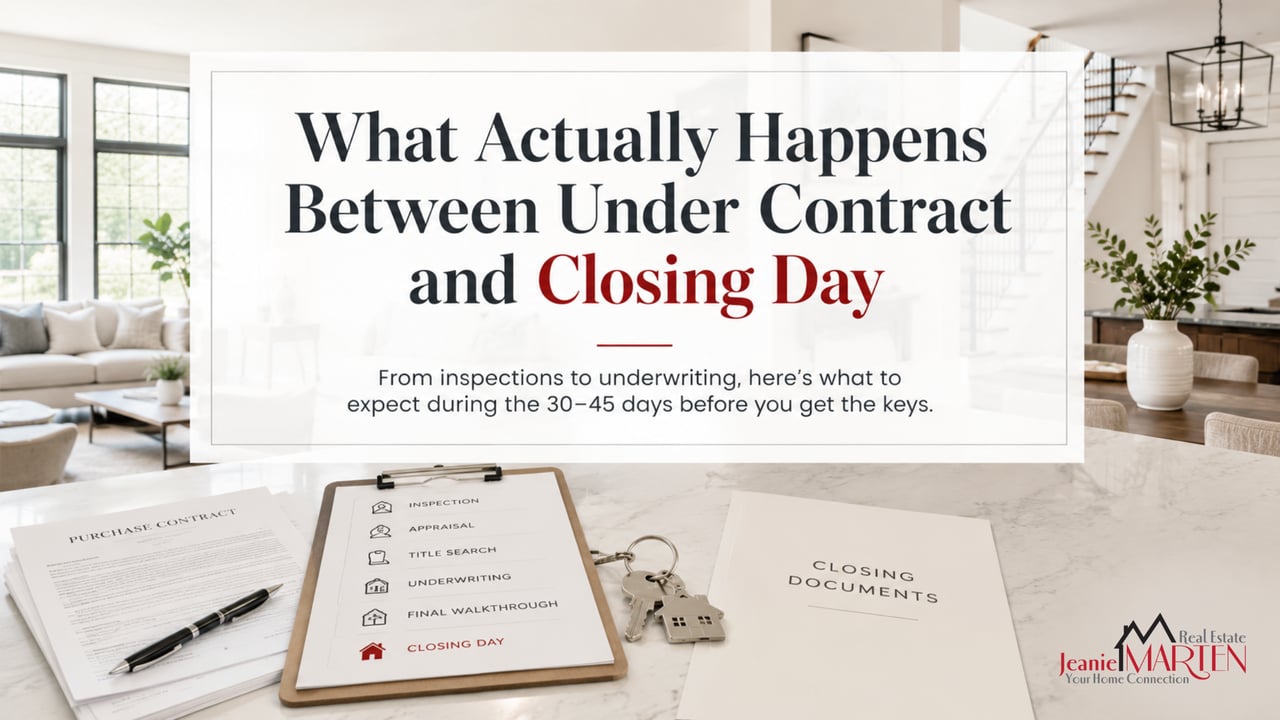
What Actually Happens Between Under Contract and Closing Day
What happens after a home goes under contract in Texas? A roughly 7 to 10 day option period for inspections, an appraisal ordered by the lender, a title search, underwriting review of your loan and a final walkthrough, typically spanning 30 to 45 days before closing.
Getting an offer accepted feels like the finish line, especially after competing for a home. It isn't. It's the start of a several-week process with real deadlines and most of the anxiety buyers feel in this stretch comes from not knowing what's supposed to happen next. Here's the actual sequence.
The Option Period: Your Real Inspection Window
In Texas, most contracts include an option period, typically 7 to 10 days, during which the buyer pays a small option fee directly to the seller for the right to terminate the contract for any reason, no explanation required. This is when your inspection happens. If the inspection turns up something significant, this is your window to negotiate repairs, a price adjustment, or walk away with your earnest money intact. Once the option period ends, backing out gets considerably harder and can put your earnest money at risk.
The Inspection
A general home inspection typically happens within the first few days of the option period, giving enough time afterward to review the report, request any specialized inspections it recommends, roof, foundation, or HVAC specialists, for instance and still negotiate before the option period closes.
Negotiating Repairs or Credits
Based on the inspection, buyers commonly request either specific repairs, a price reduction or a closing cost credit in lieu of repairs. This negotiation happens fast, usually within the option period's final days, since the deadline doesn't move.
The Appraisal
Once you're past the option period, your lender orders an appraisal to confirm the home is worth at least the loan amount. If the appraisal comes in at or above the contract price, this step is mostly invisible to you. If it comes in low, it opens a separate negotiation, since your lender won't lend more than the appraised value supports.
Title Search and Survey
A title company researches the property's ownership history to confirm the seller can legally transfer clear title and flags any liens, easements, or ownership disputes that need resolving before closing. An existing or updated survey often comes into play here too, confirming boundaries and any encroachments.
Underwriting
While the appraisal and title work happen, your loan file moves through underwriting, where your lender verifies income, assets, credit and the property details all still support the loan. This is the stage where buyers sometimes get requests for additional documentation and it's worth responding quickly, since underwriting delays are one of the most common reasons closings get pushed back.
Homeowners Insurance
Your lender will require proof of a homeowners insurance policy before closing. It's worth shopping this earlier rather than later in the process, since insurance costs and availability can vary significantly by area and roof age, and a surprise here late in the process can complicate an otherwise smooth closing.
The Closing Disclosure
Federal rules require you to receive your final Closing Disclosure, spelling out your exact loan terms and closing costs, at least three business days before closing. This is your real opportunity to review the numbers closely and flag anything that doesn't match what you expected.
The Final Walkthrough
Typically scheduled within a day or two of closing, this is your chance to confirm the home is in the condition agreed upon, any negotiated repairs were completed, and nothing has changed since your last visit.
Closing Day
You'll sign a stack of documents at the title company, the loan funds, and ownership officially transfers. From an accepted offer to this point typically takes somewhere between 30 and 45 days, depending on your lender, the complexity of the title work, and how quickly each step moves.
Frequently Asked Questions
How long is a typical option period in Texas?
Most option periods run 7 to 10 days, though the exact length is negotiated as part of the contract and can vary.
What happens if the appraisal comes in below the contract price?
The buyer, seller, or both typically need to renegotiate, since the lender won't finance more than the appraised value supports. Options include the seller lowering the price, the buyer covering the gap in cash, or the deal falling through.
Can I still back out after the option period ends?
It's much harder and often risks your earnest money, since most standard contract contingencies have already been satisfied or waived by that point. This is why the option period is the real decision window.
Under Contract and Wondering What's Next?
This stretch between contract and closing has a lot of moving parts, but none of them have to be a mystery. Jeanie Marten Real Estate walks clients through every step of this timeline so nothing catches you off guard. Visit MartenTeam.com or book a consultation.