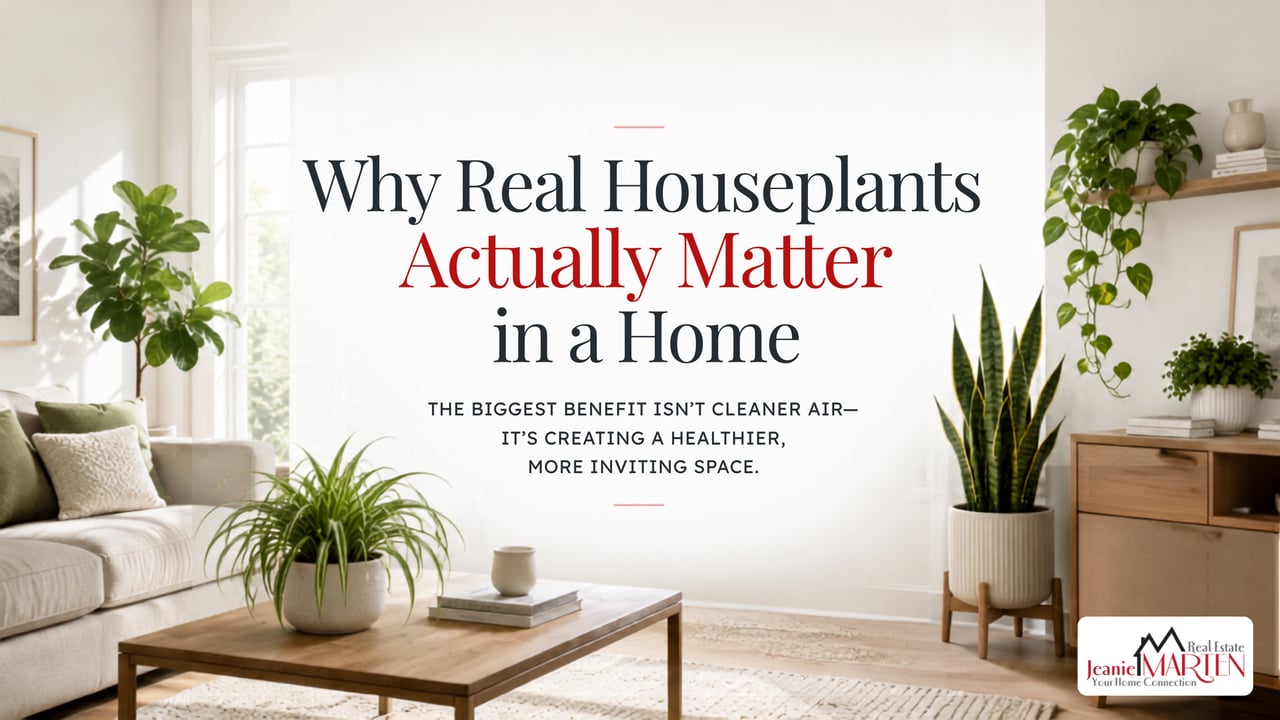
Why Real Houseplants Actually Matter in a Home
Do houseplants really improve air quality? Not meaningfully. The famous NASA study behind that claim was done in a sealed lab chamber and later research found you'd need somewhere between 10 and 1,000 plants per square meter to get any real air-purifying effect in an actual home. What plants do offer is real, it's just different.
Let's start with the myth, because it's the thing everyone thinks they know about houseplants and it's not quite true.
Let's Clear Up the Air Quality Myth First
Back in 1989, NASA published a study looking at whether plants could remove toxic compounds from the air, research aimed at space stations, not living rooms. In a small, sealed chamber, certain plants did remove a meaningful percentage of specific chemicals within 24 hours. That result got repeated for decades as proof that a peace lily on your kitchen counter is quietly purifying your air. The problem: a sealed lab chamber has almost nothing in common with a real house with normal airflow, windows and HVAC systems constantly exchanging air.
A rigorous review from researchers at Drexel University, published in 2019 and reaffirmed by broader reviews since, looked back across three decades of this research and concluded that to get any measurable air-purifying benefit in a real room, you'd need somewhere between 10 and 1,000 plants per square meter. That's not a typo. Even the American Lung Association, which once pointed to the NASA study as a reason to add plants, has walked that back and now states plainly that houseplants do not meaningfully improve indoor air quality. If clean air is your actual goal, a window and a good HVAC filter will do far more than any plant collection.
So What Do Plants Actually Do for a Home?
None of this means plants aren't worth having. It means the reason to have them isn't air purification, it's everything else they actually do well:
They're genuinely good for your mood
This part isn't a myth. Multiple studies on indoor greenery and mental health show real reductions in stress and measurable boosts in mood and sense of well-being, especially during darker winter months. That's a real, defensible benefit, just a psychological one rather than a chemical one.
They add humidity, modestly
Plants release moisture through their leaves as part of normal transpiration. It's a small effect per plant but a room with several healthy plants will run slightly less dry than one with none, which matters more than you'd think during a Texas summer with the AC running constantly.
They make a home show better
This is the part I care about professionally. A room with a few healthy, well-placed plants reads as lived-in and cared for in a way an empty corner doesn't. Buyers respond to that, the same way they respond to good lighting or a clean baseboard. The reverse is also true: a struggling, yellowing plant does the opposite of what you want during a showing, more on that below.
Real Easy-Care Plants Worth Having
Snake Plant (Sansevieria)
About as close to indestructible as houseplants get. It tolerates low light, irregular watering and genuine neglect and it actually releases oxygen at night rather than absorbing it, a real, distinct botanical quirk from its type of photosynthesis, unrelated to the air-purifying myth above. Great for a bedroom, a low-light hallway or anywhere you'll forget to check on it for two weeks.
Pothos
A trailing vine that's nearly impossible to kill and tells you when it's thirsty by drooping slightly, then perks right back up after watering. It tolerates low to medium light, which makes it perfect for a kitchen shelf, a bathroom counter or a high spot where you want some trailing greenery without much fuss.
ZZ Plant
Extremely drought tolerant and genuinely thrives on benign neglect. It handles low light better than almost anything else on this list, which makes it the right call for a windowless home office or an interior room that doesn't get much natural light at all.
Spider Plant
Adaptable to a range of light conditions and forgiving on watering. It also produces little “babies” you can propagate and share, which makes it a fun, low-stakes plant for a living room hanging basket or a bright shelf. It's also one of the few common houseplants that's genuinely pet-safe, worth knowing if you have a curious dog or cat.
Peace Lily
One of the most forgiving plants for communicating exactly what it needs: it droops dramatically when thirsty, then fully recovers within hours of watering. It tolerates low light and appreciates humidity, which makes a bathroom a genuinely great spot for one. Worth knowing it's mildly toxic if pets chew on it, so keep that in mind for a household with animals.
Placement, Room by Room
Bathrooms: peace lily or pothos, both like the humidity a bathroom naturally provides and both tolerate the lower light many bathrooms get.
Bedrooms: snake plant, low maintenance, tolerates low light and that nighttime oxygen release is a nice bonus even if it's not going to purify your air.
Kitchens: pothos on an open shelf or a small pot of an actual herb like basil on a bright windowsill if you want something useful as well as green.
Home offices: ZZ plant or snake plant, both handle inconsistent light and inconsistent watering equally well, which matters if you're focused on work and plant care is an afterthought.
Living rooms: spider plant in a hanging basket catches good indirect light in most living rooms and adds movement and texture without demanding much attention.
What This Means When You're Selling
A few healthy plants add warmth to a showing. A dying one actively works against you, buyers notice yellowing leaves and dry soil the same way they notice a stain on the ceiling, it reads as neglect even if it's just one plant you forgot to water. My advice before a listing goes live: only keep plants out that you know you can actually maintain through the whole time your home is on the market and don't overwater right before a showing either, soggy soil has a smell of its own. When in doubt, fewer healthy plants beat more struggling ones every time.
Frequently Asked Questions
Do any houseplants actually purify indoor air?
Not in any way that matters in a real home. The effect exists in a sealed lab chamber but research shows you'd need dozens to hundreds of plants per room to get a measurable real-world benefit, far more than anyone actually keeps.
Which houseplant is hardest to kill?
Snake plants and ZZ plants are both exceptionally tolerant of low light, irregular watering and general neglect, making them the safest choice for a beginner or a busy household.
Are common houseplants safe for pets?
It varies. Spider plants are pet-safe, while snake plants, pothos and peace lilies are all mildly toxic if chewed on. If pets are part of your household, it's worth checking a plant's pet safety before bringing it home.
Getting Your Home Ready to Show?
Small details like healthy greenery genuinely add up when it comes to how a home feels to a buyer. Jeanie Marten Real Estate can walk through your specific home and tell you what's actually worth doing before you list, plants included. Visit MartenTeam.com or book a consultation.