The Drop Zone North Texas Homes Actually Need
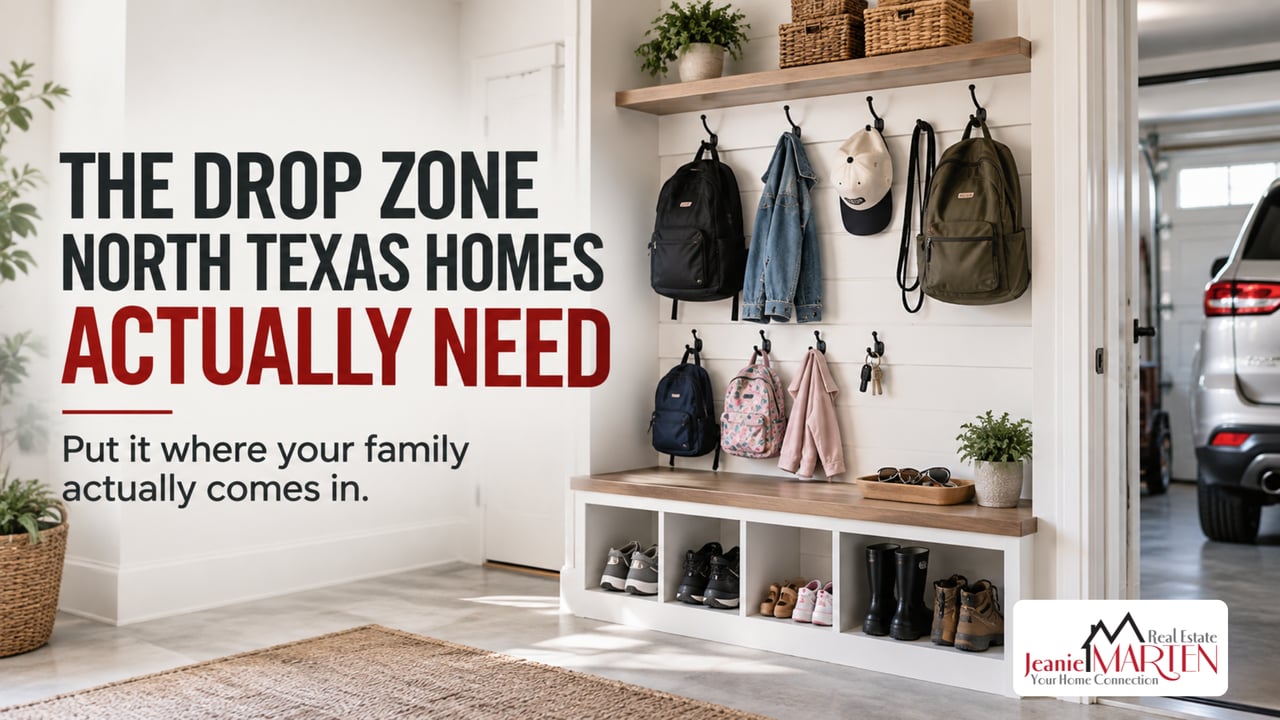
Where should a drop zone go in a North Texas home? On the wall you actually walk past coming in from the garage, not at the front door. Four feet of wall with two rows of hooks, open shoe cubbies and a small tray for keys handles a family of four.
Almost nobody in Sachse, Wylie or Murphy comes into their own house through the front door. The front door is for guests, deliveries, the UPS driver and showings. Everybody who lives there comes in through the garage, hands full, usually in a hurry.
So here is the mistake I see constantly. The nice bench, the hooks, the basket, the little mirror, all of it gets built at the front entry, where it holds nothing but decorative pillows. Meanwhile the garage door opens into a narrow hall or straight into the laundry room, where there is no hook, no shelf and no bench and that is where twelve pairs of shoes live.
It was build at the wrong door.
This matters more than it used to because the houses are not getting bigger. NAHB's research found the typical buyer wants about 2,067 square feet while new homes ran a median of 2,179. When square footage is flat, every foot of storage works harder. Same reason a walk-in pantry has been the top-rated kitchen feature in every round of that survey, at 80 percent. Buyers are not asking for more house. They are asking for a place to put things.
Count What Actually Comes In
Before you buy a single hook, inventory the real traffic. Most drop zones fail because they were sized for a photo, not a Tuesday.
- Shoes in active rotation. Two to three pairs per person, not the whole collection. A family of four means eight to twelve pairs living at that door.
- One bag per person that needs to hang, not sit.
- A purse or work bag that needs a home that is not the kitchen counter.
- Keys, sunglasses, badge, wallet. Small, easy to lose, and they need a tray at hand height.
- Mail and packages, which are the number one source of kitchen counter pileup. I made that case separately in the counter clutter pros say to ditch before listing, and a drop zone is the actual fix.
- Pet gear. Leash, harness, waste bags, plus the food bin and the bowls.
- Ball caps, sunscreen, bug spray and an umbrella.
- Reusable grocery bags, which multiply without supervision.
- Seasonal sports gear and cleats, which is the thing that breaks every system in March and again in September.
And here is what you do not need: a wall of coat storage. Our coat season runs about eight weeks and it is mostly a fleece. Designing a DFW drop zone around bulky winter gear is a mistake borrowed from another climate. Two hooks for jackets is plenty. Spend that wall on shoes and bags instead.
The Four Zones
Assign everything by how often it moves and how big it is.
- Hooks, for daily things that hang. Bags, jackets, the leash, caps.
- Open floor-level storage, for daily things that are bulky. Shoes, in cubbies or on a shelf under a bench. Open, not behind a door, or nobody uses it.
- A tray or small drawer at hand height, for daily things that are small and valuable. Keys, sunglasses, badge.
- A closed bin or basket, for the ugly weekly stuff. Pet supplies, shoe overflow, reusable bags, sunscreen.
The order matters. Anything that requires opening a door, bending down or moving something else out of the way will be abandoned inside two weeks.
The Measurements That Make It Work
This is where most DIY drop zones go wrong, and the fix is just knowing the numbers.
- Adult hooks: 48 to 54 inches off the floor. Kid hooks: 36 to 40 inches, on their own row.
- Hook spacing: 8 to 12 inches apart. Closer than that and one loaded backpack covers the next hook.
- Bench seat: 18 inches high, 15 to 18 inches deep.
- Shoe cubby: roughly 12 inches wide, 12 inches high, 14 inches deep. That takes adult shoes and a boot laid on its side.
- Tray or catchall: 40 to 44 inches high, so you can drop keys without bending.
- Wall you need: 36 inches makes a real drop zone. 48 inches is comfortable for four people.
- Walkway clearance: keep 30 to 36 inches of clear floor in front of it.
That last one is the veto. If you cannot keep 30 inches of walkway, do not install a bench. A bench in a narrow hall is a shin bruise waiting to happen, and it will end up holding shoes anyway.
Three Versions, Depending on the Wall You Have
If you have a narrow hall and no depth. Go shallow and vertical. A hook rail plus a wall shelf no deeper than 6 inches. Shoes go into a low, shallow tray, or out to the garage entirely.
If the garage path runs through the laundry room. Put the drop zone on the wall opposite the machines, or on the garage-door side, and keep the traffic lane between the two doors completely clear. Nothing on the floor in that lane, ever.
If you have four feet of wall or an actual mudroom. Build one column per person: a hook, a cubby, a bin, and that person's name on it. Shared bins become archaeology. Put the seasonal gear in closed storage up high where it is out of the daily flow.
The option most people skip: put the shoe storage in the garage, immediately beside the door, on a simple resin or wire shelving unit. Shoes never come inside, the clay and red dirt stay in the garage, and you free the entire interior wall for hanging. The one caution is our summer heat, so nothing that melts and no leather you care about.
When You're Selling, It Empties Out
Different job. For photos and showings, the drop zone strips down to two or three matching baskets and nothing else. No shoes, no bags, no leash, and the pet bowls come out of the shot.
But do not remove the drop zone itself. This is the distinction that matters: buyers have the exact same problem you do, so a clean, organized drop zone reads as a feature, while a full one reads as clutter. Same cabinetry, opposite message. It is also money well spent, since NAR's 2025 Remodeling Impact Report put closet renovation at 83 percent cost recovery, near the top of the list.
Keeping it that way during a listing is its own discipline, which is the whole subject of how to keep your home show-ready all week.
Every Drop Zone Fails at the Same Place
Overflow. Not design, not product, not effort. It works beautifully until soccer season and then there is nowhere for cleats.
Two rules fix it. Build about 20 percent more capacity than your inventory says you need and agree in advance that when a bin is full you edit instead of stacking. Then reset it in five minutes on Sunday. A drop zone is not furniture, it is a habit with hardware attached.
Frequently Asked Questions
How much wall space do you need for a drop zone? Thirty-six inches is enough for a functional one, and 48 inches is comfortable for a family of four. Depth matters more than width, so if you have less than about 15 inches of depth, skip the bench and go with hooks and a shallow shelf.
What is the right hook height for kids? Thirty-six to 40 inches off the floor, on a separate row below the adult hooks at 48 to 54 inches. Two staggered rows hold twice as much in the same wall space, and a hook a child cannot reach does not get used.
Does a mudroom or drop zone add value when selling in North Texas? Buyers respond well to it because it solves a problem they recognize, and storage improvements tend to return more of their cost than most remodels. A built-in drop zone will not move an appraisal much on its own, but it helps a house show as thoughtfully laid out, which is what buyers are actually reacting to.
If You Found This Useful, Read These Next
- The Most Overlooked Feature in North Texas Homes covers the storage spaces buyers skip during showings and then live with, including garage capacity and laundry room door swing.
- 8 Things to Do in Your First 30 Days as a North Texas Homeowner is where to start if you just closed, and setting up the garage entry belongs on that list.
If you are weighing whether a built-in is worth it before you list, or just trying to figure out which wall can take one, that is a quick conversation. Visit MartenTeam.com or book a consultation.
Jeanie Marten Real Estate 972-414-0719 | MartenTeam.com