
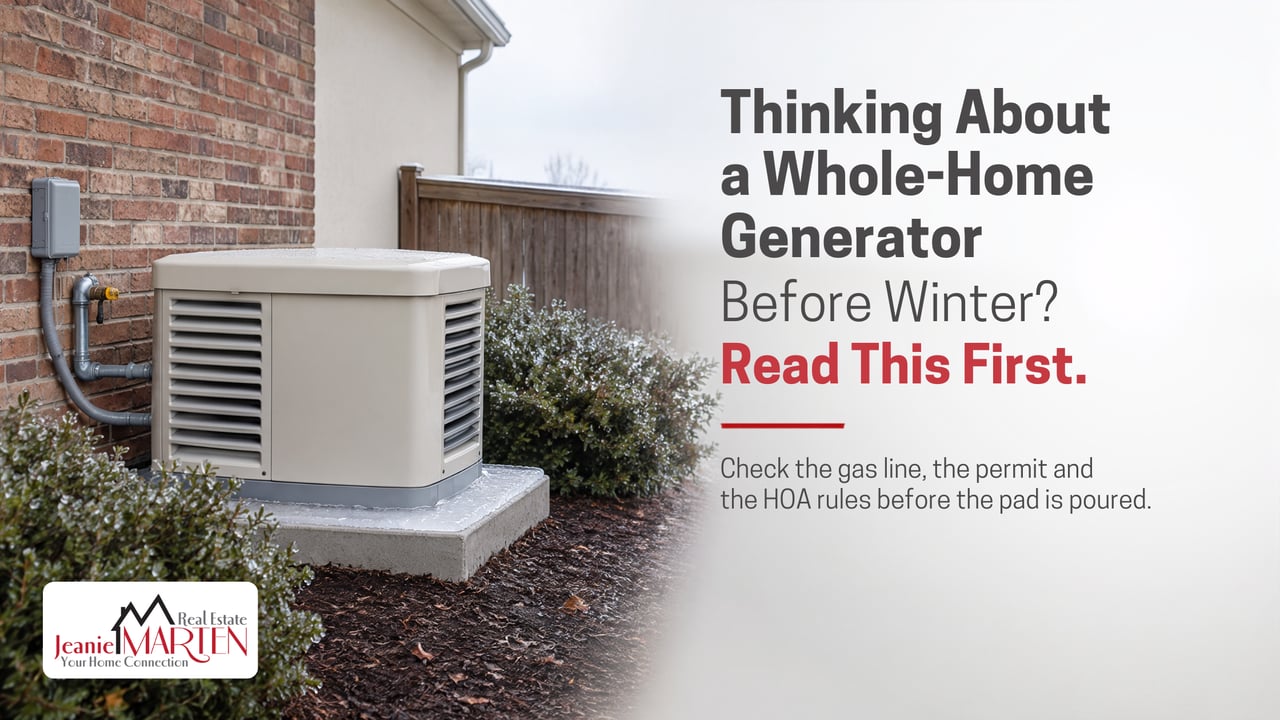
Is a whole-home generator worth it in North Texas?
For some homeowners, yes. A standby generator runs on natural gas or propane and starts on its own when the power drops. Expect a five-figure project, a permit and, in some neighborhoods, an HOA approval.
Texas remembers February 2021. Winter Storm Uri left about 4.5 million homes and businesses without power. Since then, standby generators have gone from rare to regular in Northeast DFW.
Standby vs. portable
Standby (whole-home) | Portable | |
|---|---|---|
Fuel | Natural gas or propane | Gasoline or propane |
Starts | Automatically, within about 30 seconds | You start it by hand |
Powers | Central heat and AC, the whole house or key circuits | A refrigerator, a few lights and outlets |
Typical cost | About $5,000 to $25,000 plus installation | About $500 to $3,000 |
Works while you're away | Yes | No |
Cost ranges are from Texas Farm Bureau Insurance and vary widely by home size and fuel setup.
Before you buy one
- Check your gas service. A natural gas standby unit needs a line sized to carry the load. Your installer will check the meter and the line.
- Pull the permit. Most cities require electrical and sometimes plumbing permits for a standby generator. Your installer should handle it.
- Ask your HOA. Texas law generally stops HOAs from banning standby generators, but they can set rules on placement, screening and testing. Get approval before the pad is poured.
- Plan the placement. Manufacturers and local codes set minimum distances from windows, doors and vents. Ask the installer to show you the spec.
- Budget for maintenance. Standby units need regular service and a weekly self-test run.
Running a portable generator? Keep it outside.
Portable generators produce carbon monoxide. Never run one in the house or the garage, even with the door open. Keep it outdoors and away from windows.
What the Texas contract says now
The updated TREC resale contract, required for use since July 1, 2026, lists generators in Paragraph 2 among the improvements that come with the house. A permanently installed standby generator is generally treated as part of the property unless the contract says otherwise.
If you're selling and want to keep a portable generator, take it with you before the listing photos. If you want to keep anything that looks permanent, talk to your agent before you list.
What will an appraiser give you for a generator?
Usually less than you paid. There's no standard percentage. You'll see "a generator adds 3% to 5%" online but that figure traces back to industry marketing, not appraisal research.
Here's how appraisers actually handle it:
- It's treated as part of the house. A permanently installed standby generator is valued as a fixture, not personal property.
- The adjustment comes from local sales. Appraisers look for nearby sales of similar homes with and without a generator (called paired sales). Where few homes have one, there's little data, and the adjustment is often small or folded into the home's overall quality rating.
- Installed cost isn't the number. A system that cost $13,000 to install can get a contributory value well below that, especially as it ages.
That could change here. Since Winter Storm Uri in 2021 and the grid strain in the winters since, more Northeast DFW homeowners are installing generators. As more homes with generators sell, appraisers will have more local sales to measure them against.
If you're selling a home with a generator:
- Have it serviced before you list, and keep the service records.
- Gather the installation invoice and permit. Give copies to your agent for the appraiser.
- Make sure the generator is in the MLS listing, so it shows up when appraisers search for comparable sales.
Buy a generator because you want the backup power. Count anything it adds at resale as a bonus.
FAQ
Does a standby generator need a permit? In most cities, yes. Check with your city's building department, or ask your installer to confirm.
Can my HOA say no? Generally, no. Texas Property Code Section 202.019 bars HOAs from prohibiting permanently installed standby generators that meet the statute's requirements. HOAs can still require licensed installers, screening from the street and reasonable location and test-time rules.
Do generators transfer with the house? Under the 2026 TREC contract, generators are listed as improvements. Anything you plan to keep should be excluded in writing.
Final takeaway
A standby generator buys peace of mind for the next ice storm. Check the gas line, the permit and the HOA rules first, and know it conveys with the house when you sell.
Selling a home with a generator?
Jeanie will help you highlight it in the listing and make sure the contract is clear on what stays. Call (972) 414-0719 or visit the sellers guide.
This post is general information, not legal advice. Your contract and your HOA's documents control.
Related posts
- Solar Panels and Texas Home Sales: What to Know
- How an Ice Storm Impacts the Dallas Real Estate Market
Sources: Texas Farm Bureau Insurance: Generators, Independence Title: New TREC Form Updates, Texas Property Code Section 202.019, GenDealers: Does a whole-house generator increase home value?