Can you really judge a North Texas home in January?
Mostly. But winter hides a few big things: the air conditioning, the pool, the lawn and the trees. Plan your option period to check what the season covers up.
Winter buyers often have less competition. That's a real advantage. The tradeoff is that some systems and features look different or can't be tested at all in cold weather.
1. The air conditioning
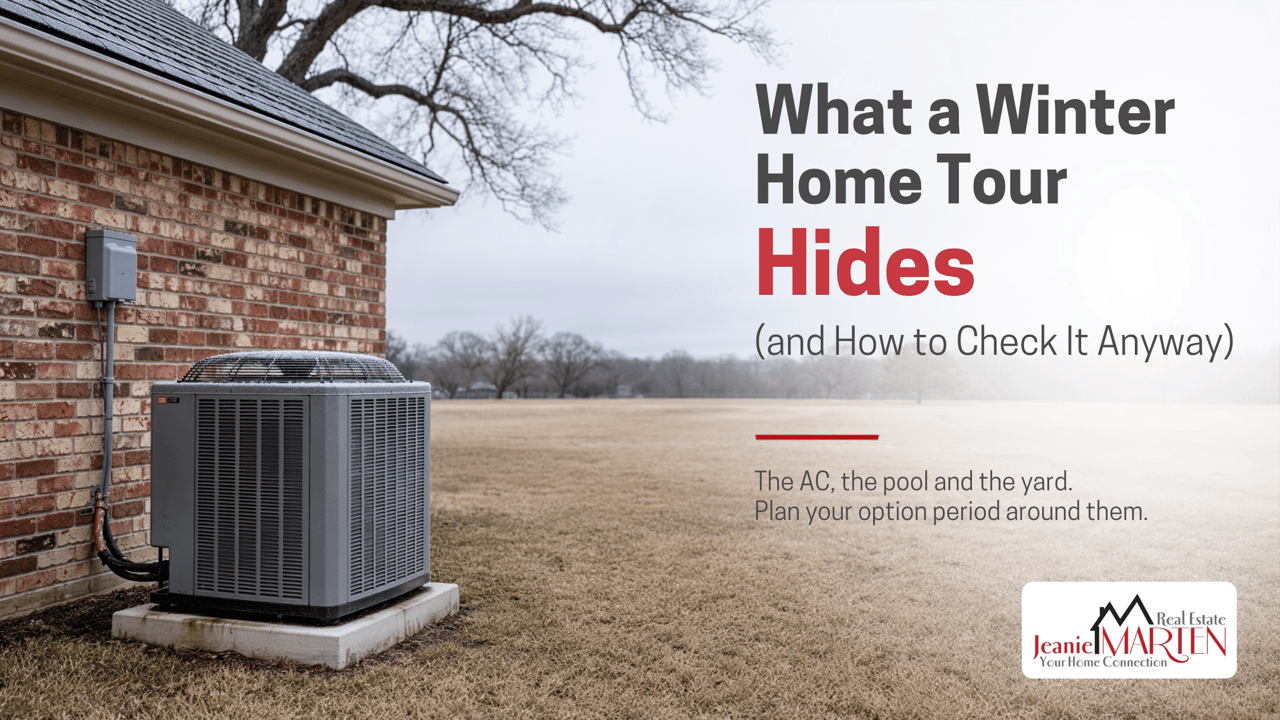
Home inspectors often won't run the AC when it's been cold. Running a compressor in low temperatures can damage it, so many inspection reports note the AC as "not tested" in winter.
What to do:
- Ask the seller for HVAC service records and the age of the outdoor unit.
- Check the data plate on the condenser for the year it was made.
- If the AC can't be tested, ask the seller to have the units serviced, and repaired if needed, before closing.
2. The pool
A pool in January may be covered, green or running in winter mode. You can't see much of the plaster, tile or equipment from the patio.
What to do:
- Ask whether the pool has been maintained through the winter.
- If the general inspector flags anything on the pool, add a pool specialist during the option period. A specialist can test the pump, filter, heater and visible surfaces even in cold weather.
How Jeanie handles winter inspections
Let the general inspector do their job first. If they note issues with the pool, the AC or anything else, add specialist inspections from there.
Inspectors are good about warning buyers when they can't test the AC in cold weather. When that happens, ask the seller to have the units serviced and repaired if needed, before closing. That gets an expert to take another look.
3. The lawn and landscaping
Bermuda and St. Augustine grass go dormant and brown. You can't tell a healthy lawn from a struggling one in January. Bare trees can also hide problems with limbs over the roof.
What to do:
- Look at the listing photos from earlier in the year, if available.
- Ask about the sprinkler system and have it tested.
- Look up. Bare branches show exactly which limbs hang over the roof.
4. Drainage
This one works in your favor. Winter rain shows you where water goes. If you tour after a rain, walk the yard and look for standing water near the foundation.
5. Natural light
The sun sits lower in winter, so rooms look different than they will in June. A bright west-facing room in January may be very hot in July. Check the home's orientation on a map.
What winter shows you better
- The heating system runs, so you can test it.
- Drafts around windows and doors are easy to feel.
- Attic insulation problems show up as cold rooms.
- The roofline is easier to see without leaves.
FAQ
Will the inspector check the AC in winter? Often not if it's been cold, to avoid damaging the compressor. The report will usually say so. Ask the seller to have the system serviced, and repaired if needed, before closing so an expert takes another look.
Should I wait until spring to buy? Not necessarily. Winter often brings less competition. Just plan your inspections around what the season hides.
Can I ask the seller to warranty the AC? You can negotiate for repairs or a credit. Talk to your agent about what's reasonable based on the age of the system.
Final takeaway
Winter tours hide the AC, the pool and the yard, but they show you the heat, the drafts and the drainage. Use your option period to check what the season covers up.
Buying this winter?
Jeanie will help you plan inspections around the season so nothing gets missed. Call (972) 414-0719 or visit the buyers guide.
Related posts