
Do I really need a carbon monoxide detector in my home?
Yes, if your home has a gas furnace, water heater, stove, fireplace or attached garage. Carbon monoxide has no color, smell or taste. A working CO alarm is the only way to know it is there.
About 20 years ago, my mom was here in Dallas visiting me when the phone rang.
It was the call that her husband, Anthony, had been found. He was gone. Carbon monoxide from a pilot light in his RV that had not been lit properly.
We flew back to New Mexico together, me with a 6-month-old, to plan a funeral that never should have happened.
That is the part I cannot shake. It was preventable. A small alarm, the kind you can buy for less than the cost of a pizza, could have woken him up.
I just listened to an episode of the podcast This Podcast Will Kill You about carbon monoxide and it boggles my mind that this is still happening. So this holiday season, I want to do something about it.
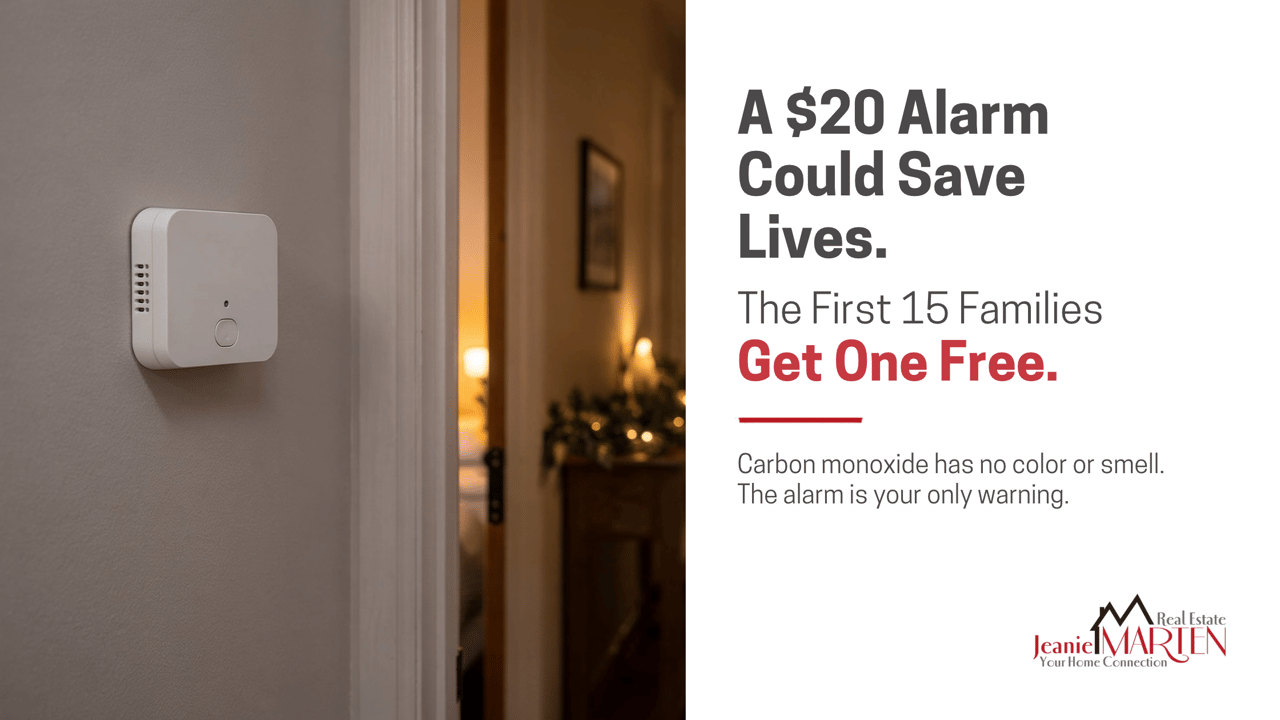
My Offer: A Free Carbon Monoxide Detector for the First 15 Families
The first 15 people who reach out to me will have a carbon monoxide detector delivered to their door, free. No strings. You do not need to be buying or selling a home.
Call me at (972) 414-0719 or email [email protected]. One detector per household, delivered in Sachse, Wylie, Murphy, Lavon, Rowlett, Rockwall, Garland, Princeton, Royse City and Fate, while the 15 last.
If you miss the first 15, I will still tell you exactly which one to buy. It is below.
Why This Is Still Happening
Carbon monoxide, or CO, is a gas made when fuel does not burn completely. Natural gas, propane, wood, charcoal, gasoline. Any of them can produce it.
You cannot see it. You cannot smell it. And early on, it does not feel like poisoning. It feels like the flu.
Here is the scale of it:
- More than 100,000 emergency room visits a year. CDC researchers estimate unintentional, non-fire CO poisoning causes about 101,800 emergency department visits every year in the U.S. (CDC, Annals of Emergency Medicine, 2023).
- More than 200 deaths a year from household products alone. The U.S. Consumer Product Safety Commission says more than 200 people die each year from CO tied to consumer products, and more than 100 of those deaths are linked to portable generators (CPSC).
- Winter is the worst time of year. CPSC reports that more than half of CO deaths happen in November, December, January and February (CPSC), and the CDC found poisonings peak in December and January.
- It has happened here. During the February 2021 freeze, 19 Texans died of carbon monoxide poisoning, from generators, grills and heaters used indoors, cars running in enclosed spaces and ice blocking the vents on gas heaters (Texas Department of State Health Services, via Fox Weather).
Those are not people who did something reckless. Most of them were trying to stay warm.
Where Carbon Monoxide Comes From in a North Texas Home
Most homes in Sachse, Wylie, Murphy and the rest of Northeast Dallas have at least one fuel-burning appliance. Check yours:
- A gas furnace, especially the first time it kicks on in the fall
- A gas water heater in the garage or a closet
- A gas range or oven
- A gas or wood-burning fireplace
- An attached garage, where a car left running fills the house fast
- A portable generator during a power outage
- An RV, camper, hunting cabin or lake house with propane appliances
That last one is personal for me. If your family travels or camps over the holidays, take a battery-powered CO alarm with you. It will easily fit in a suitcase.
The Symptoms Look Like the Flu
The CPSC describes mild to moderate CO poisoning as flu-like symptoms without a fever: headache, fatigue, shortness of breath, nausea and dizziness. Higher levels cause confusion, vomiting, loss of coordination, unconsciousness and death.
Two warning signs that point to CO instead of a bug:
- Everyone in the house feels sick at the same time, including pets.
- You feel better when you leave the house and worse when you come back.
And the hardest truth: at high levels, CO can cause confusion and loss of muscle control before milder symptoms ever show up (CPSC). If you are asleep, you may never get the chance to react. That is why the alarm matters more than anything else on this list.
If Your CO Alarm Goes Off
- Get everyone outside into fresh air. Do not try to find the source first.
- Call 911 or the fire department from outside.
- Count heads. Make sure every person and pet is out.
- Do not go back in until emergency responders say it is safe.
- Have a licensed technician check every fuel-burning appliance before you use it again.
Never ignore a CO alarm, and never assume it is a false alarm.
Where to Put Your CO Alarms
The CPSC recommends a battery-operated CO alarm, or one with a battery backup, on every level of your home and outside each sleeping area. A few more tips:
- Do not put one in the kitchen or directly above a fuel-burning appliance.
- Keep it away from heating vents and anywhere furniture or curtains could cover it.
- Test it every month by pressing the test button.
- Replace the battery once a year and the whole unit when it reaches its end-of-life date.
A good habit: when you change your clocks in the spring and fall, test every smoke and CO alarm in the house.
The Detector I Recommend for Under $20
My pick is the First Alert CO400 battery-operated carbon monoxide alarm. It is the one I am giving away.
- It uses an electrochemical sensor, the most accurate type for detecting CO, according to First Alert.
- It sounds an 85-decibel alarm, loud enough to wake you.
- It runs on a battery, so it keeps working when the power goes out, which is exactly when generators and space heaters come out.
- No outlet is needed, so you can put it right outside the bedrooms or pack it for a trip.
Bought one at a time, it usually runs a little over $20. Bought in a 6-pack, it comes out to under $20 each. A 6-pack covers most homes, so split one with family or neighbors.
The sensor lasts about five years and the alarm will chirp to tell you when it is time to replace it.
Frequently Asked Questions
Do I need a carbon monoxide detector if I have an all-electric home?
If you have no gas appliances, no fireplace and no attached garage, your risk inside the home is much lower. But a portable generator, a grill or a car can still bring CO in, so a CO alarm is still inexpensive protection.
Does my smoke detector also detect carbon monoxide?
Only if it says so. Many smoke alarms do not detect CO. Look for "carbon monoxide" or "CO" on the label, or buy a combination smoke and CO alarm.
How long do carbon monoxide detectors last?
Most CO alarms last five to 10 years, depending on the model. Check the date on the back and replace the unit when it reaches its end-of-life date or starts its end-of-life chirp.
If You Found This Useful, Read These Next
- Before You Light the First Fire, Look Up the Chimney walks through what to check before you use your fireplace this winter.
- Thinking About a Whole-Home Generator Before Winter? Read This First. covers the safer way to keep the power on during the next ice storm.
The Best Gift This Year Costs Less Than $20
I cannot change what happened to Anthony. I can make sure 15 more homes in our community have the alarm he did not have.
Call me at (972) 414-0719 or email [email protected] to claim yours. Get one from me or buy your own this week. Either way, please put one outside every bedroom in your home.
Jeanie Marten Real Estate | (972) 414-0719 | https://martenteam.com/