
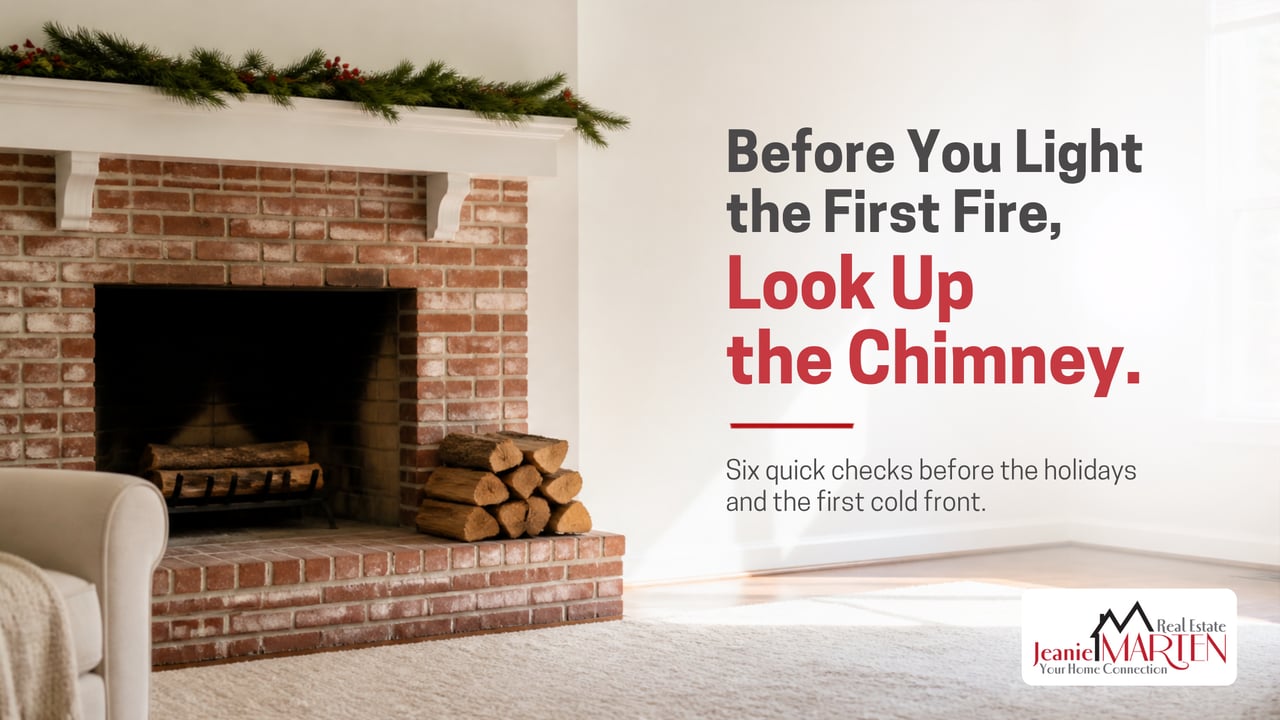
When was your chimney last inspected?
If you can't remember, schedule it before your first fire. The national standard (NFPA 211) calls for an inspection at least once a year, even for chimneys that barely get used.
In North Texas, a fireplace might get used 10 nights a year. That's exactly why problems hide. Birds nest in the flue over the summer. Dampers rust shut. Gas logs sit unused for nine months.
The first-fire checklist
- Schedule a chimney inspection. The Chimney Safety Institute of America recommends an annual inspection for every chimney, including ones that vent gas appliances. Ask for a Level 1 inspection with the sweep.
- Open the damper and look up. You should see daylight or a clear flue. Leaves, nests or debris mean call a pro before you light anything.
- Check the chimney cap. A missing or damaged cap lets in rain, birds and squirrels.
- Test your smoke and carbon monoxide detectors. Any home with a fireplace or gas appliance needs working CO detectors.
- Look at the firebox. Cracked firebrick or gaps in a metal firebox should be repaired before use.
- For gas logs, check the valve and key. Make sure you know where the gas key is, and that vented gas logs have the damper clamped open.
Gas vs. wood-burning: what you'll find in North Texas homes
Many Northeast DFW homes built in the 1990s and 2000s have a wood-burning firebox with a gas starter, or gas logs installed in a firebox built for wood. Newer homes often have a gas-only fireplace.
Gas | Wood-burning | |
|---|---|---|
Starting a fire | Flip a switch or turn a key | Kindling, matches and patience |
Cleanup | Almost none | Ash removal after every few fires |
Heat | Steady, adjustable | More heat, less control |
Maintenance | Annual inspection, burner and pilot check | Annual inspection and regular sweeping |
Feel | Clean and quick | The crackle and the smell |
Jeanie's take: gas logs win. They take less maintenance and burn cleaner and you'll actually use a fireplace you can start in 10 seconds.
What buyers look for
Buyers notice the fireplace in fall and winter showings. A clean firebox, working gas logs and a remote or wall switch all help. A fireplace with missing logs, a stuck damper or a strong smoke smell sends buyers the wrong message.
If you're selling, have the fireplace inspected and serviced before you list. Leave the receipt for buyers to see.
Not sure who to call? The Chimney Safety Institute of America's "find a certified pro" tool (linked below) lists certified sweeps near you.
FAQ
Do gas fireplaces need a chimney inspection? Yes. CSIA recommends annual inspections for all chimneys, including those that vent gas. Nests and debris can block a gas flue too.
Can I convert a wood-burning fireplace to gas? Usually, if there's a gas line nearby. A licensed plumber or fireplace pro should handle the gas line and the logs.
Does a home inspector check the chimney? A home inspector will look at what's visible. A chimney sweep with a camera can see the inside of the flue. For an older chimney, ask for both.
Final takeaway
The fireplace gets used a handful of nights a year, so it gets ignored the rest. Check it once a year before the first cold front, and it'll be ready when you want it.
Buying a home with a fireplace?
Jeanie will tell you what to look for during the option period and when to bring in a chimney specialist. Call (972) 414-0719 or visit the buyers guide.
Related posts
- Do You Really Lose Most of Your Home's Heat Through the Roof?
- 8 Things to Do in Your First 30 Days as a North Texas Homeowner
Sources: Chimney Safety Institute of America: Homeowner Resources, CSIA: Find a Certified Pro